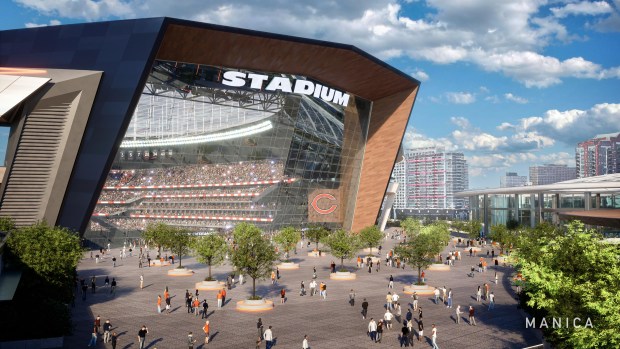
A public debate is underway regarding the payments the Chicago Bears would make to local governments in exchange for support in building a suburban stadium. While these payments have been the focus, a new analysis from the Cook County treasurer’s office highlights broader effects of a megaprojects proposal under discussion in Springfield. Approved by the Illinois House last month, this measure creates a framework for ‘tax certainty’ for development projects costing at least $100 million.
The proposal includes several tax changes that could impact the whole state. These changes involve eliminating sales taxes on construction materials, expanding existing bond programs, and creating new incentives to revamp railroad facilities. These provisions could affect numerous other projects that are yet to be proposed or considered.
Hal Dardick, the research director for Cook County treasurer Maria Pappas, noted that people often overlook the widespread implications of the ‘payments in lieu of taxes’ (PILOT). He added that the proposal involves more than just PILOT, as it also aims to create sales and hotel tax increments to support developer borrowing.
Pappas’ report could influence discussions among Governor JB Pritzker and the Democratic-controlled General Assembly. They are working towards a compromise on the proposal to deter the Bears from moving to Indiana. Some state lawmakers have responded coolly to the proposal, which could undermine the benefits of large developments by not expanding the property tax base.
Tax incentive programs, though touted to create jobs and promote economic activity, often leave taxpayers such as homeowners and small businesses coping with fluctuating assessments and levies. Meanwhile, stadiums are frequently not the economic or social catalysts they are claimed to be, as noted in the treasurer’s report.
The Illinois House proposal, sponsored by Rep. Kam Buckner, includes several benefits for developers. These benefits are intended to provide financial breaks that make projects more viable. New provisions like the exemption of construction materials from the state’s 6.25% sales tax and access to STAR bonds in suburban Cook County are examples.
According to the treasurer’s office, the $2 billion stadium plan often cited by the Bears is inflated and doesn’t reflect its true development value. For instance, Inglewood, California’s SoFi Stadium was built for around $5 billion but was assessed at approximately $775 million. Similarly, the estimated true value of the Bears’ stadium could be around $675 million.
If the proposal freezes the preconstruction assessment, the tax bill for the stadium could be significantly reduced, giving the Bears a substantial tax break over time. Current studies show concerns that the decrease in tax obligations may transfer the burden to homeowners and other businesses, raising questions about the balance of incentives and benefits.
The proposal’s impact on other projects also remains a topic of scrutiny. Important questions include whether local governments can cover the costs of necessary services for new developments, such as roads and emergency services, and what the effects on local tax rates will be. Overall, while megaproject developers like those associated with the Bears stand to gain, benefits to the broader Illinois population remain unclear.
 Flight 93 Hero’s Father Criticizes Ties Between Hasan Piker and Abdul El-Sayed
  House Races Shift Amid Democratic Momentum
  Iowa Senate Race: Marist Poll Shows Democrat Josh Turek Leading Republican Ashley Hinson
  Kamala Harris and Abdul El-Sayed Campaign Together in Detroit
  Challenges Facing the Supreme Court’s Public Perception
  California Democratic Aide Arrested for Visa Overstay by Federal Authorities