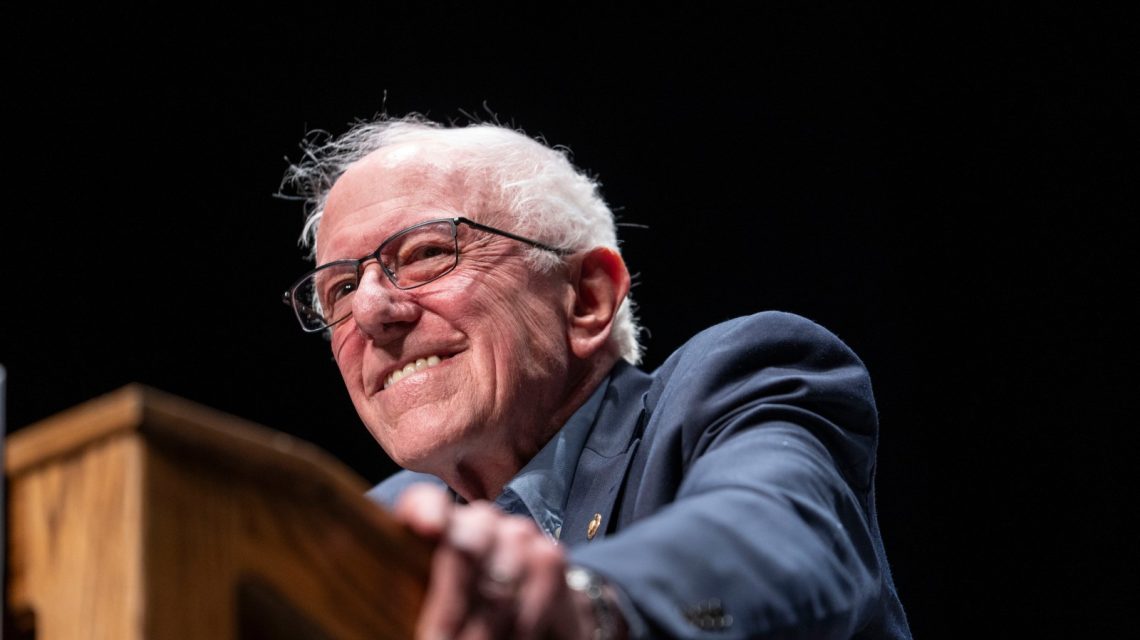
Vermont Senator Bernie Sanders, an independent who aligns with Democrats, is once again pushing for his key healthcare proposal, Medicare for All, supported by new research. As the ranking member of the Senate Health, Education, Labor, and Pensions Committee, Sanders issued a statement following a study by Yale University researchers. The study concludes that his Medicare for All legislation could save 114,000 lives annually and reduce national healthcare expenses by over $1 trillion each year.
Sanders stated, “This study confirms what we have known for years: Medicare for All saves lives and saves money. It would cost $1 trillion less than our current dysfunctional system.” This push aligns with a resurgence of support for Medicare for All within the Democratic Party, fueled by candidates aligned with Democratic Socialists of America (DSA) and progressives who have prioritized the policy in recent primary victories.
DSA and Progressive Candidates Fuel a Medicare for All Comeback
Several recent Democratic primary successes have provided new momentum for Sanders and the progressive movement behind Medicare for All, a healthcare proposal he has championed for nearly a decade. The DSA includes Medicare for All as a central part of its platform.
New York City Mayor Zohran Mamdani supported three progressive congressional candidates who won their June primaries. In Colorado, Melat Kiros defeated long-standing Representative Diana DeGette. In Michigan, Abdul El-Sayed, supported by Sanders and Mamdani, ousted Representative Haley Stevens in the state’s Senate primary, heavily campaigning for Medicare for All.
In Maine’s vital U.S. Senate race, progressive populist Troy Jackson prioritizes Medicare for All in his contest against Republican Senator Susan Collins. Despite promoting some version of Medicare for All in the Senate for almost a decade without success, Sanders has introduced it several times, culminating in the current bill, S. 1506, in April 2025.
Medicare for All has consistently stalled in the Senate Finance Committee despite having several Democratic co-sponsors over the years.
What the New Yale Study Found
The Yale study, led by epidemiologist Alison Galvani, found Medicare for All could cut total U.S. healthcare expenses by nearly 20%. According to Sanders’ release, savings would stem from measures such as aligning prescription drug costs with those in other wealthy countries, reducing administrative waste, curbing fraudulent billing, and more equitable reimbursement to providers.
Researchers project the plan could prevent 114,000 deaths annually, including over 33,000 among uninsured Americans and about 20,000 related to coverage losses under Republicans’ ‘One Big Beautiful Bill’ tax and spending legislation. A prior study led by Galvani published in The Lancet in 2020 suggested an earlier version of the plan could save roughly 68,000 lives and $450 billion a year.
Not all studies agree. A frequently cited counterpoint is a 2018 analysis by Charles Blahous of the Mercatus Center at George Mason University, describing Sanders’ plan as potentially raising federal health spending by $32.6 trillion over a decade, more than doubling federal income tax revenue could cover. Sanders’ team criticized this study as misleading, emphasizing assumptions of unrealistic payment reductions.
What Recent Polls Show on Medicare for All
While labelled as radical by critics, polls show growing support for government involvement in healthcare, though results vary based on question phrasing. A 2025 Gallup poll showed 64% of U.S. adults believe the government should ensure healthcare coverage, the highest since 2007. A Pew Research Center survey found similar trends with 66% favoring government responsibility, an increase from 62% in 2021, especially among Republicans.
Data for Progress’ 2025 survey discovered 65% of likely voters supported a Medicare for All system replacing most private insurance, with 78% of Democrats, 71% of independents, and 49% of Republicans in agreement, despite concerns about increased taxes and government intervention.
Wording influences responses notably. A 2026 study by Tavern Research for the Searchlight Institute revealed low support for a plan replacing private insurance funded by higher taxes; many respondents preferred keeping their existing plans.
Recent polling indicates rising interest in government healthcare action and majority backing for Medicare for All under specific descriptions. Support declines when proposed as the full replacement of private insurance, which Sanders advocates.
Sanders continues to argue for the viability of this plan, citing international comparisons. “If every major country can guarantee healthcare to all, achieving better outcomes while spending less per person, it is irrational to suggest the U.S. cannot do the same,” he stated.
 Scott Jennings Provides Update on Mitch McConnell’s Health
  Connecticut House Primary: John Larson Faces Challengers
  Wisconsin Voters Head to Polls for Key House Elections
  Alabama Holds Special Primaries in Key Congressional Districts
  Minnesota Primary Elections Underway
  Connecticut Governor Ned Lamont Aims for Third Term