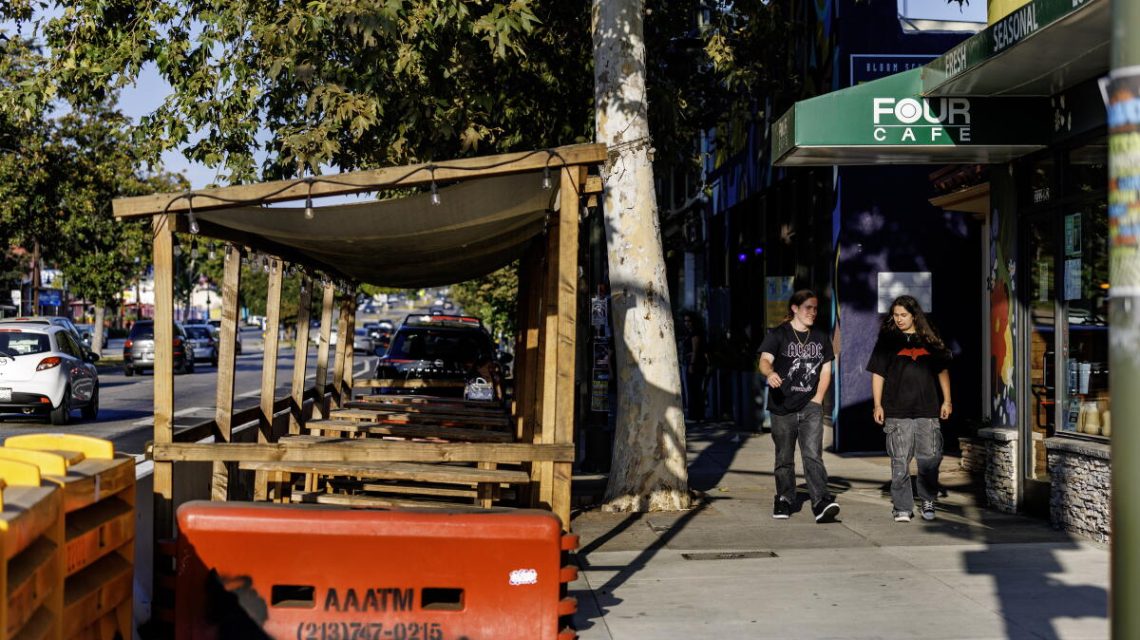
Anthony Cafarchia’s roots in Eagle Rock are deep, with his family running the Eagle Rock Bakery and Deli since the 1960s. Despite overcoming personal losses and external challenges like the pandemic and Eaton fire, Cafarchia now fears a proposed bus lane might threaten their business. ‘I don’t know how we’re going to benefit with this big change,’ he said. ‘I think it’s going to kill the business.’
The proposed bus route measures 19 miles, connecting North Hollywood to Pasadena, traversing Eagle Rock’s busy Colorado Boulevard. This is part of Metro’s plan to boost public transit for the 2028 Olympics. Metro aims to transport many fans with a large-scale bus network. Eagle Rock is one in a series of bus projects, spanning Northridge to Long Beach, and Pasadena to Mid-City, slated for completion before the Games.
This route won’t directly reach Olympic venues but offers a car-free option between the San Fernando and San Gabriel valleys. Nonetheless, Eagle Rock residents and business owners have criticized the designs for snarling traffic, reducing already scant parking, and diminishing Eagle Rock’s charm. Beyond Eagle Rock, Burbank blocked Metro’s construction permits over concerns it would disrupt local traffic. Metro sued, but a judge doubted their claim that the delay would derail Olympic plans.
Transit advocates argue enhancements will boost traffic flow for the Games and beyond. According to Metro, the route could carry about 30,000 passengers daily. ‘By providing people a reliable way to move between the valleys, Metro is investing in mobility and giving travelers more choices for regional travel,’ stated Metro. ‘The BRT will use dedicated lanes for better speed and reliability, along with improved stations and frequent service.’ The project costs nearly $500 million, funded mainly by Measure M, and construction is underway.
In Eagle Rock, the bus lane will eliminate a car lane, hinder left turns onto over 10 streets from Colorado Boulevard, but create dedicated turn lanes on other streets. Street parking will decrease where a sole public lot exists.
Cherryl Weaver, a real estate agent and former resident, supports transit expansion but questions the plans. An earlier option with shared bus and bike lanes wouldn’t have impacted traffic as severely. ‘These longtime community members, who helped shape Eagle Rock, are considering moving due to this project,’ Weaver stated.
Nadine Levyfield, residing in Eagle Rock where she grew up, worries about traffic diverted into her neighborhood near her child’s school. ‘I want to consider street safety and the walkable routes to school with my kids,’ Levyfield said. ‘We’re frustrated, not being transit experts but locals managing this among other responsibilities.’ Levyfield and others have repeatedly voiced concerns to Metro and local officials, suggesting mitigation steps like speed bumps for side streets.
Councilmember Ysabel Jurado, overseeing the district, regularly interfaces with Metro to advocate for the community’s needs. Despite supporting the project, she acknowledges valid concerns raised by locals, demanding definitive solutions.
“Eagle Rock deserves both improved transit and a project respectful of the community it serves,” Jurado remarked.
Passersby on Colorado Boulevard worry about reduced parking potentially harming local businesses.
Eagle Rock, anchored by a large boulder resembling an eagle’s face, lies between Pasadena and Glendale, bordered by major freeways. Colorado Boulevard is filled with restaurants, shops, motels, churches, and offices, while residential areas boast varied architecture.
Michael Schneider from Streets for All advocates the project as transformative for the business district, noting previous fears often dissipate once infrastructure is in place. ‘There’s a gap between business owners’ parking concerns and how customers truly commute,’ Schneider said, adding that Angelenos might support multimodal streets once properly developed.
Michael Sweeney, longtime Eagle Rock resident and former Neighborhood Council President, believes the project will enhance safety and improve the area. ‘Safe streets benefit everyone, regardless of bus usage,’ Sweeney noted.
Tom Anderson, who runs Talon Tap and Wine, doesn’t foresee major impacts for his business but worries about the potential harm to central town businesses. Decades revived businesses may struggle. Mark Arnott, operating an Art Deco martial arts studio, doubts traffic can manage increased congestion. ‘I have reservations about the new plan eliminating parking and reducing lanes,’ he said.
Another local business owner fears the bus lane may deter families with children, affecting their choice between bus and car. Reduced parking might lead to fewer customers. ‘I think this could be a fatal hit for us,’ Marcel Wittfeld of Peekaboo Playland stated.
 Department of Homeland Security Updates Seal Symbolism
  Harris County Commissioners Approve Large Property Tax Increase
  Cortland Street Bridge Closure Sparks Urban Debate
  Reviving Lahaina: Hawaii’s Housing Struggle Post-Fire
 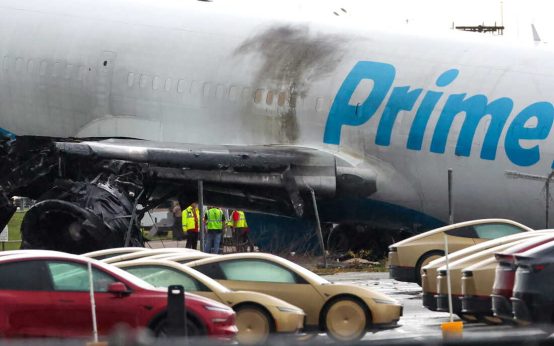 Amazon Cargo Plane Crash Investigation at Miami Airport
  Controversy Over Mayor’s Participation in 9/11 Memorial Event