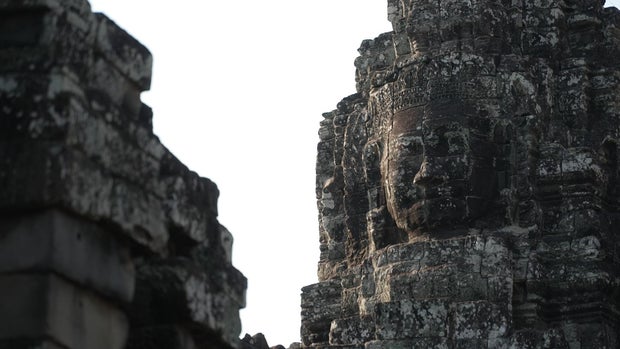
The theft of Cambodia’s cultural treasures, including thousands of sacred stone, bronze, and gold artifacts from religious locations across the country, may be considered one of the largest art heists in history. The looting began nearly a century ago when France colonized Cambodia but intensified during the 1970s, 80s, and 90s amidst genocide, civil war, and political upheaval. This illicit trade became a global enterprise, largely orchestrated by a British man named Douglas Latchford. While he kept some artifacts, Latchford sold many to wealthy private collectors and renowned museums worldwide.
Cambodia’s government has been working tirelessly for over a decade to reclaim these lost treasures and restore their heritage. Angkor Wat, with its towering spires, epitomizes the glory of Cambodia. Constructed nearly a thousand years ago, it is among the largest and most spectacular religious temples globally, spanning 400 acres. Initially built to honor the Hindu deity Vishnu, it then transitioned into a Buddhist temple and remains a place of worship today. Visitors may immerse themselves for weeks in this ancient labyrinth of stone corridors and sacred chambers. However, the wounds of plunder are evident: looters have decapitated statues, stolen bodies, and left empty pedestals where gods and deities once stood.
Other temples, over 4,000 across Cambodia, have also suffered dire looting. Sandak, situated a hundred miles northeast of Angkor Wat on a remote mountain, was heavily targeted by looting gangs. Looters discovered gold, statues, and many other valuables. Brad Gordon, an American lawyer working with the Cambodian government for 14 years, has been involved in retrieving these stolen treasures. He led a team of investigators, archaeologists, and art scholars to Sandak, where he found mostly empty pedestals amid overgrown Sralao trees.
The significance of these statues to Cambodians extends beyond artistic value, as they represent sacred deities believed to hold the souls of ancestors. Phoeurng Sackona, Cambodia’s minister of culture, oversees the government’s efforts to recover their stolen gods. In a secured warehouse near Angkor Wat, over 6,000 pieces from various temples are stored for protection, each crafted by artisans from the ancient Khmer Empire.
The Khmer Rouge’s seizure of power in 1975 led to a genocide, destroying many families, including Phoeurng Sackona’s. Around two million Cambodians were killed or starved to death, marking a dark chapter in the country’s history. The loss of protection for Cambodia’s temples offered an advantage to unethical antiquities dealers like Latchford.
Douglas Latchford, living in Thailand, collected Cambodian antiquities from the 1960s. He promoted himself as a scholar of Cambodian culture, donating sculptures to remarkable institutions like the Metropolitan Museum of Art in New York. However, it later emerged that many of these artifacts were stolen. His publications served as catalogs for distributing these stolen items to collectors.
Gordon’s team gained valuable information from Toek Tik, a former Khmer Rouge child soldier and leader of a looting gang. Toek Tik shared details about Latchford’s operations, provided insight into the stolen artifacts, and expressed remorse for his past actions. His cooperation was a turning point for investigators, enabling them to document and trace stolen items back to Latchford and unscrupulous antiquities dealers.
In 2011, a significant case arose involving a stolen 500-pound sandstone statue from Koh Ker. Its appearance in Sotheby’s auction catalog alerted archaeologists and U.S. law enforcement. The statue’s feet, matching the remaining pedestals at Koh Ker, and the hefty price tag drew attention, leading to its eventual return to Cambodia.
The indictment of Douglas Latchford by U.S. authorities in 2019 for smuggling, conspiracy, wire fraud, and other charges marked a crucial phase in recovering Cambodia’s heritage. Although Latchford died before trial, his family agreed to return his stolen collection, facilitating the repatriation of artworks.
Efforts to return Cambodia’s treasures continue, with missing artifacts still residing in prestigious museums worldwide. The Metropolitan Museum of Art’s Southeast Asian art wing contains many looted artifacts. Not all evidence showcasing these items’ origins has been acted upon, highlighting the need for heightened accountability in the art community.
Under pressure, the Met announced it would reevaluate the provenance of its collections and return looted items. This shift may inspire other museums to explore their acquisition histories and ensure ethical standards.
The return of Cambodian artifacts offers a sense of national healing, alleviating some of the cultural damage endured. As attempts continue to recover these treasures, the voice of a nation remains robust in reclaiming its cultural heritage and living ancestors.
 Federal Appeals Court Decision Against Trump’s ‘Third-Country’ Deportation Policy
  President Trump’s Controversial Ban on Media Outlets Sparks Press Freedom Concerns
  Ed Sheeran’s Philadelphia Concert Amid Controversy
  U.S. Secures Strategic Control Over Greenland
  U.S. Security Agreement in Greenland Sparks Optimism and Concerns
  Cook County’s Property Tax Bridge Loans