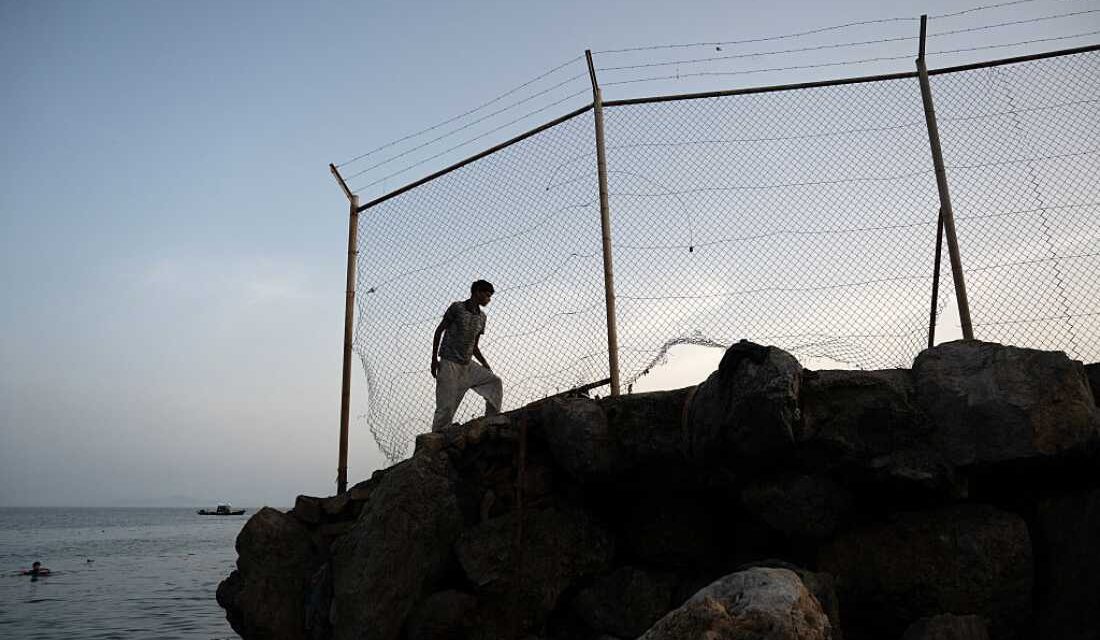
In Seville, Spain, Spanish Prime Minister Pedro Sánchez took prompt action amid a crisis in the enclave of Ceuta, located on the border with Morocco. On Friday, he addressed media, a skill he has honed over the years, and reinforced his control over the situation. By Saturday, the Spanish government declared the situation manageable, with military deployment in the region and the erection of a 500-meter floating barrier at the Moroccan border. Sánchez also communicated with European leaders, accusing some of undermining Spain.
However, this didn’t prevent widespread international responses as images of tens of thousands of migrants entering Spanish territory spread globally. U.S. President Trump labeled the crossings a “catastrophe” and accused Spain’s laws of being too liberal. The U.S. State Department echoed similar criticisms. Italian Prime Minister Giorgia Meloni reflected on the threat irregular migration poses, temporarily halting the Schengen agreement with Spain and reinstating border checks for arrivals from Spain.
Domestically, Sánchez’s political opponents seized the moment. The far-right VOX party, rising in influence with its anti-immigration stance, called for stronger border militarization and immediate deportations, including of minors. The center-right Partido Popular called for a national emergency declaration, border closures, and further military mobilization.
A Surge in Border Crossings
The sudden surge in border crossings remains puzzling. Initially a moderate increase, the situation escalated on Thursday when nearly 60,000 migrated in days. Reports indicate at least 67 fatalities, mostly by drowning. Previous mass attempts have occurred in Ceuta and Melilla, typically involving sudden group movements.
This incident differed as many migrants were Moroccan, sparking criticism of law enforcement’s absence. Riccardo Fabiani of the International Crisis Group stated, “This was a manufactured crisis.” Evidence and testimonials indicate coordinated efforts to cross, allegedly aided by Moroccan authorities.
Morocco’s ambassador to Spain, Karima Benyaich, distanced Moroccan officials from the chaos, advocating for “legal, orderly, and safe migration.” Factors like a Spanish Supreme Court ruling easing deportations for migrants entering Ceuta or Melilla may have contributed to the influx. Some incoming migrants believed they’d be welcomed and sent to mainland Spain, based on circulating social media messages.
Complex Historical Tensions
Ceuta and Melilla have sparked longstanding tensions between Spain and Morocco, with Morocco contesting Spain’s control over them. Relations escalated when Spain hosted Polisario Front’s leader for medical treatment. This group seeks independence for Western Sahara. Spain’s policy briefly shifted against Morocco’s claim but recently realigned, potentially restoring some diplomatic strain.
International Reactions
Reactions included Spanish accusations of external influences exploiting the situation. Antonio Maíllo from Izquierda Unida accused Israel and the U.S. of manipulating events, citing Spain’s opposition to actions in Gaza and limitations on U.S. military use of bases in Spain. Prior tensions with Trump over military spending and base access fueled speculation on motives.
The crisis gave momentum to European right-wing critiques. Italian officials, like Foreign Minister Antonio Tajani, justified suspending Schengen with Spain for security reasons, linking free movement to potential terrorism. A majority of EU state leaders, led in part by Meloni, called for emergency discussions, arguing Sánchez’s policies endangered the EU.
Despite such pressure, Sánchez remained committed to regulated migration, a policy supported by lower illegal entry numbers compared to other EU nations. His administration actively funds West African patrols and has opened legal migration pathways, receiving extensive application numbers and integrating migrants into Spain’s workforce.
Sánchez’s resilience and past success in managing crises will be tested by the unfolding events in Ceuta, as he navigates increasing hostility from both domestic and international fronts.
 U.S. Appeals Court Supports New Missouri Congressional Map
  GOP Candidates Call to End Iran War Amid Rising Fuel Costs
  Trump Administration Seeks to Influence NIH Grantmaking
  Protests in Austin: Analyzing the Coordination Behind Anti-ICE Demonstrations
  Controversy Surrounds Inglewood Mayor Amid Allegations
  White House Launches Trump TV Amidst Press Dispute