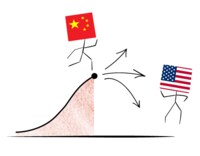
The relationship between the United States and China, the two largest economies globally, is characterized by mutual dependency. They remain trading partners and economic competitors, yet adversarial in various contexts. Over time, both countries have sought to reduce this dependency. Terms such as ‘decoupling,’ ‘derisking,’ and ‘rebalancing,’ particularly during the Trump administration, describe these efforts.
Trade Dynamics
In early 2018, the U.S. and China began imposing tariffs on each other. Under President Joe Biden, these tariffs, originally applied during Trump’s administration, remain in effect. Trump initiated a global trade war, with China as the main target. In response, Chinese President Xi Jinping restricted exports of essential minerals. This prompted Trump to moderate the tariffs for a temporary peace.
Despite these tensions, U.S. exports to China have continued at a steady rate. As of 2024, the value of these exports remains significant.
U.S. exports to China have persisted, highlighting ongoing trade engagement despite geopolitical strains.
U.S. Treasuries
Foreign investors finance about 31% of U.S. public debt through Treasury securities, amounting to $9.2 trillion. In 2013, China was the largest holder with over $1.2 trillion in U.S. government debt but has diversified since then. As of December 2025, China still plays a significant role in the U.S. treasury market.
Countries like Japan and the UK continue to be significant holders of U.S. Treasury securities alongside China.
Impact on U.S. Businesses
Despite geopolitical tensions and tariff impositions, China remains crucial for U.S. multinational companies. Many companies have diverted production to countries like India, yet their sales in China are substantial. CEOs accompany political leaders to Beijing, underlining the importance of the Chinese market. For example, Intel and Nvidia’s revenues indicate significant operations within China.
Apple’s market share in the Greater China region also reflects the ongoing significance of Chinese consumer bases for U.S. companies.
Educational Exchanges
Attitudes in China towards the U.S. have become more negative, viewing the U.S. as a declining power. Chinese student enrollment in U.S. higher education peaked in 2019 but decreased following the pandemic. By 2025, the number reflects changes in academic exchanges.
Other countries continue to send significant numbers of students, but the patterns are shifting.
Tourism Trends
Chinese tourism to the U.S. peaked in 2015, with a notable decline in enthusiasm seen since the pandemic started. The share of Chinese short-term visitors has decreased, reflecting the impact of mutual political antagonism and health concerns.
Visa issuance data shows a distinct drop in Chinese tourist numbers post-2020.
 Religion’s Persistence in Modern Society
  Impeachment and Limiting Executive Power: A Democratic Imperative
  We’ve Seen This Supposed AI Steamroller Before
  Lane Kiffin Criticized After Ole Miss Loss While Florida Football Faces Social Media Fiasco
 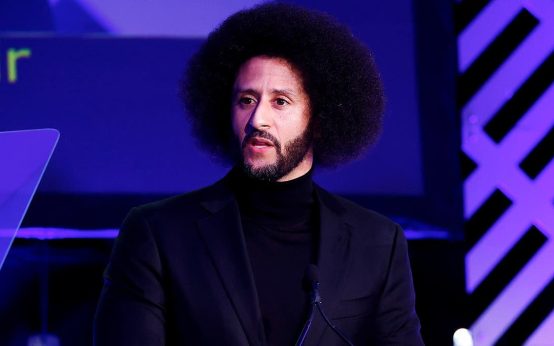 Criticism of Kaepernick’s NFL Draft Comparison
  Handling Rumors About Neighbors When Selling a Property