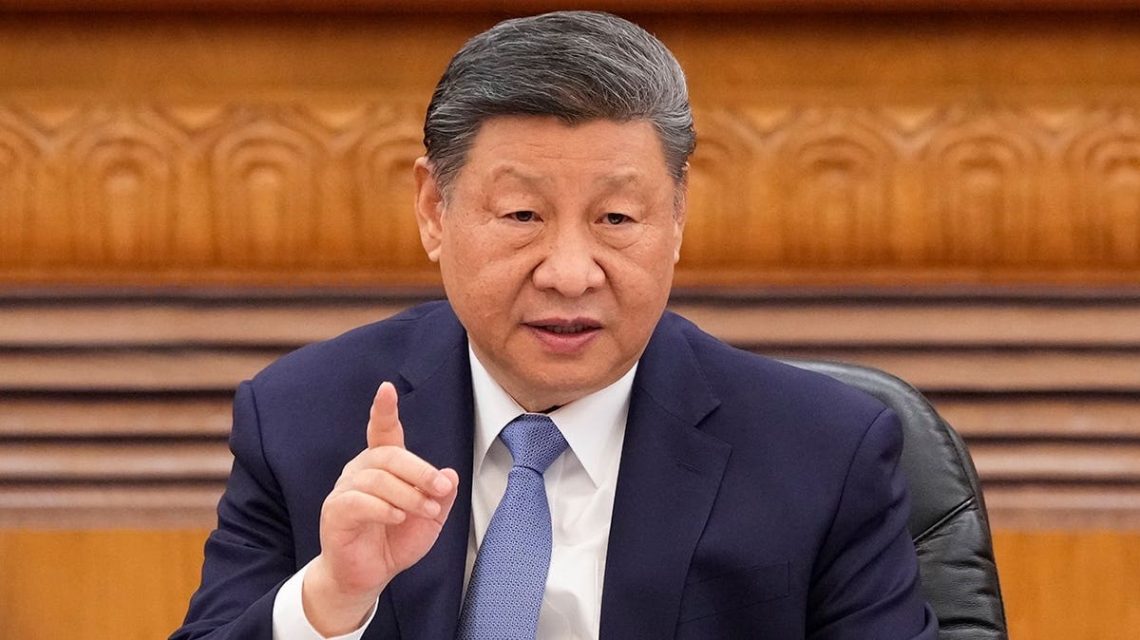
President Donald Trump recently addressed the nation, claiming Chinese interference in American elections, which has sparked renewed interest in Beijing’s influence efforts in the United States. Federal records highlight various Chinese government entities, state-controlled media organizations, and companies that have registered under the Foreign Agents Registration Act (FARA) to disclose politically driven operations in the U.S.
The Lobbying Disclosure Act filings reveal Chinese companies pursuing commercial interests, providing a glimpse into how these entities shape U.S. policy and public opinion. According to these filings, the Department of Justice (DOJ) recorded over $20 million in FARA expenditures from Chinese sources in 2025, with additional funds noted in congressional lobbying disclosures. Chinese government sources spent around $80 million on FARA expenses during the same period.
China dismisses Trump’s election interference accusations as ‘entirely fabricated’ and threatens countermeasures.
Not all Chinese influence operations are documented. The State Department has linked some campus groups, such as the Chinese Students and Scholars Association, to the Chinese government, but these groups do not file paperwork with the DOJ. Moreover, some entities under China’s United Front Work Department operate clandestinely, avoiding disclosures.
Some powerful domestic nonprofits, with purported links to the Chinese Communist Party (CCP), add another layer to China’s influence mechanisms in the U.S. A Chinese embassy spokesperson claimed that China promotes mutual understanding and cooperation in areas like trade, education, and culture, and criticized portrayals of China’s exchanges as influence operations.
The true extent of China’s influence in the U.S. remains uncertain, yet available evidence indicates a wide-reaching effort to shape American perspectives.
‘Propaganda’ Operations
One of China’s notable influence tools is its state-run media, often described by academics and the federal government as a ‘propaganda’ operation. The State Department estimated in 2023 that China spends billions annually on foreign information manipulation.
Five Chinese media entities are registered as active foreign agents in the U.S. CCTV, Xinhua News, and China Daily have direct CCP affiliations, while Sing Tao News Corporation, though privately owned, takes a pro-Beijing stance. CCTV runs CGTN America, China’s main English-language media operation, which received $66.8 million from CCTV in 2025, indicating a significant foreign influence effort.
A 2022 study from King’s College in London suggested that CGTN’s goal is not to influence voter behavior directly but to portray the U.S. as poorly governed and China as stable and rising.
An appendix in one of Xinhua’s filings reveals that the federal government required it to register under FARA because of attempts to influence American public and policymakers on topics like U.S. policy or foreign relations. A Chinese embassy spokesperson rejected the labeling of outlets such as Xinhua, CGTN, and China Daily as propaganda tools.
The China Lobby
Representing Chinese companies’ interests is a lucrative business for U.S. lobbyists. Records show numerous contracts between American lobbyists and partially or fully Chinese-owned companies. FARA records show entities like Huawei and Hikvision maintain active foreign agent registrations in the U.S.
Chinese companies advocating for commercial interests file lobbying disclosures with Congress under the Lobbying Disclosure Act. Organizations charged with political or governmental influence activity must report under FARA.
Hikvision, a state-owned video surveillance manufacturer, reported to the DOJ and faced sanctions for allegedly supporting CCP repression of Uyghurs. It has spent millions lobbying to remove these restrictions. FARA’s disclosure requirements provide public access to Hikvision’s materials shared with policymakers.
A disputed lobbying practice is the use of the LDA to avoid FARA’s stricter disclosure requirements, some argue this practice conceals full activity scope.
Trade and Development
Like other nations, China invests heavily in influencing American trade, tourism, and investment perceptions. The China Council for the Promotion of International Trade (CCPIT) receives large sums from Beijing to facilitate trade and economic cooperation between China and the U.S.
While CCPIT’s operations might seem benign, critics argue they serve dual purposes. The Jamestown Foundation notes CCPIT’s historical identification as a front entity for Chinese diplomatic goals, supported by a 1957 CIA memo. Sinopis, a Czech research project, also claims CCPIT advances Chinese geopolitical aims.
A Chinese embassy spokesperson refuted allegations about organizations linked to the United Front Work Department and denied CCPIT’s involvement in geopolitical objectives.
Apart from political influence, Chinese offices in the U.S. promote travel to China and solicit investments, highlighting China’s broader strategy.
Despite these accusations, Trump invited Chinese President Xi Jinping to discuss artificial intelligence and bilateral relations in September.
 National Railroad Safety Campaign Launches in Chicago
  Zohran Mamdani Faces Backlash Over Columbus Day Parade Invitation
  Details Emerge on Trump’s Response During WHCA Dinner Incident
  Ohio Governor Race: Ramaswamy’s Chances Decline on Prediction Markets
  FAA Ground Stops, Paramount Settlement, and ICE Shooting Incident
  Venezuelan Leadership at the United Nations