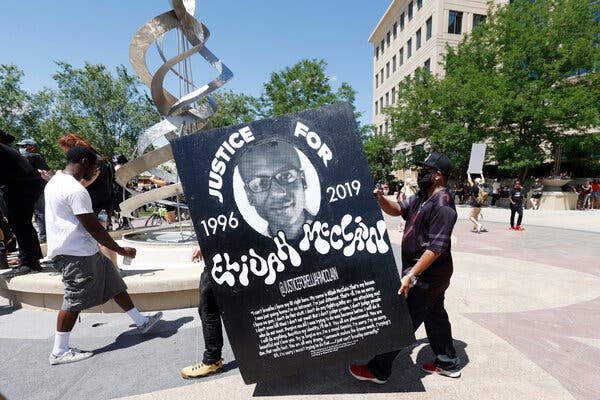
The Colorado Court of Appeals has reversed the homicide convictions of two paramedics in the 2019 death of Elijah McClain. McClain, a Black man, died after being injected with ketamine by paramedics following a confrontation with police in Aurora, Colorado.
On Thursday, the appeals court overturned the convictions of Peter Cichuniec and Jeremy Cooper. The court pointed to errors in jury instructions related to the charges they faced.
In 2023, Cichuniec was found guilty of criminally negligent homicide and second-degree assault. The same jury found Cooper guilty of criminally negligent homicide but acquitted him of second-degree assault. Despite the reversed convictions, the appeals court upheld Cichuniec’s second-degree assault conviction.
McClain, 23 at the time, was returning home from a convenience store when police confronted him. They were responding to a report of suspicious activity. Officers used a chokehold on McClain, a method later banned by Aurora and other police departments.
Cichuniec and Cooper injected McClain with ketamine, calling it a “therapeutic” dose. The powerful sedative led to McClain suffering cardiac arrest on the way to the hospital. He died several days later.
After their convictions, Cichuniec received a prison sentence of five years, which a judge later reduced to four years of probation due to “unusual and extenuating circumstances.” Cooper managed to avoid prison time altogether.
The paramedics’ case marks one of the few instances of criminal charges against emergency medical personnel. Following McClain’s death, multiple states, including Colorado, placed restrictions or bans on paramedics’ use of ketamine.
Lawyers for Cichuniec and Cooper had not responded to requests for comments at the time of publication.
The case gained significant attention as part of broader discussions about police and emergency medical personnel’s responses, contributing to policy changes regarding the use of force and sedation methods.