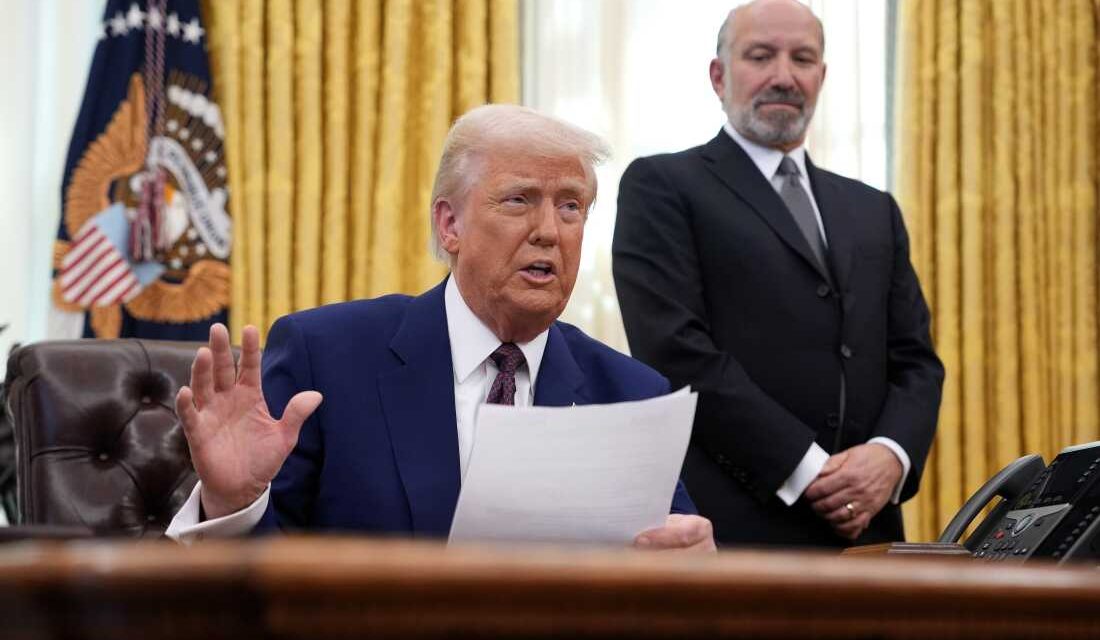
President Trump, along with Commerce Secretary Howard Lutnick who manages the Census Bureau, addressed the media in the White House’s Oval Office in 2025. A unique report from the Census Bureau is being used by President Trump to support claims of widespread illegal voting by non-U.S. citizens. NPR discovered the report is connected to a think tank aligned with Trump.
In a recent social media statement, Trump mentioned that the bureau’s preliminary analysis of over 128 million voter records revealed “over 24,000 Noncitizens voted illegally” in the 2020 presidential election. He said the final figure will increase as more records are examined.
The seven-page report, lacking an author, claims to use a 2020 voter file and various federal records. However, experts question its methodology and results. The analysis was not performed by regular staff of the Census Bureau, but by individuals linked to the America First Policy Institute—a think tank started by Trump officials—according to a bureau employee who spoke to NPR under anonymity for fear of workplace retaliation.
The bureau, America First Policy Institute, and the White House did not respond to NPR’s requests for comment. AFPI mentioned the report on social media, highlighting transparency to restore confidence in elections. The report is another effort by Trump to promote unfounded claims of widespread voter fraud.
Despite Trump’s ongoing false claims of a rigged 2020 election and his calls for new voting restrictions, the report’s numbers are debated. Figures recently released by the Trump administration are based on disputed methodologies to estimate noncitizen voting, a rare issue according to many studies.
Last month, the Department of Homeland Security identified 250,000 noncitizens on voter rolls in several states but did not disclose how these figures were obtained. Election officials in these states doubted the accuracy of such claims.
Experts have pushed back against the Census Bureau report’s findings. David Becker, the Center for Election Innovation & Research’s executive director, remarked, “This analysis is laughable. Census data cannot reliably be matched to voter data.” He acknowledged that the tiny percentage of alleged noncitizen votes couldn’t change the 2020 election outcome.
Michael Morse of the University of Pennsylvania also criticized the report’s methods, highlighting potential issues like outdated records and lack of transparency. The findings suggested a minor fraction of the votes involved alleged noncitizen voting.
“I’d expect that the Census data matching [exercise] is plagued by the lack of unique identifiers in voter records and outdated or incomplete naturalization records.” – Michael Morse
Concerns have arisen about the Census Bureau’s reputation as a nonpartisan statistical agency. Former employees criticized the report’s lack of authorship and thoroughness. Misty Heggeness, a previous bureau economist, emphasized that extensive testing is standard for Census reports. Amy O’Hara, former chief of the bureau’s research center, highlighted the risk of generating inflated numbers through mismatched data.
O’Hara found the report’s capacity claim surprising, pointing out that data anomalies don’t imply fraud. The report emerged after numerous departures of key personnel from the bureau following workforce cuts by the Trump administration. Changes to the 2030 census proposed by the administration are raising concerns about the bureau’s role in future political battles.
The report suggests upcoming similar analyses. Heggeness urges vigilance, warning that the public’s trust in official data is shaken. Documents lacking transparency and proper citations signal a need to question their validity.
 Trump Highlights Ravens During Industrial Site Visit
 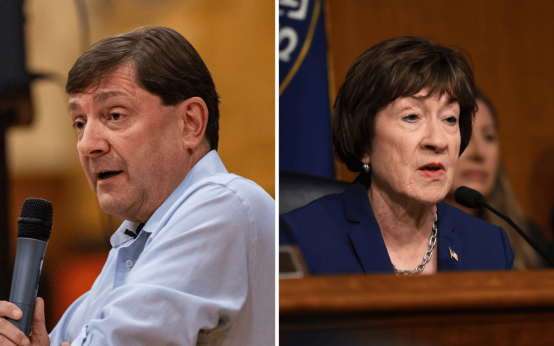 Collins vs. Jackson: Maine Senate Debate Highlights
  Sen. John Curtis Calls for Hearings Involving Donald Trump Jr. and Hunter Biden
 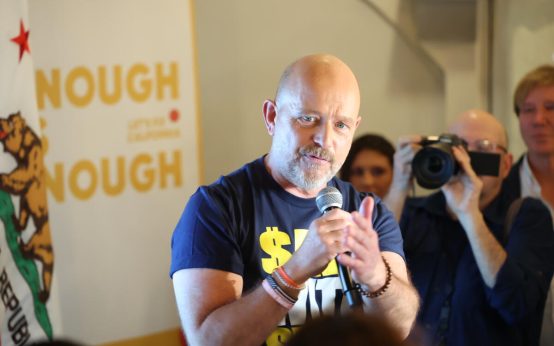 Understanding Immigration and Identity in California Politics
 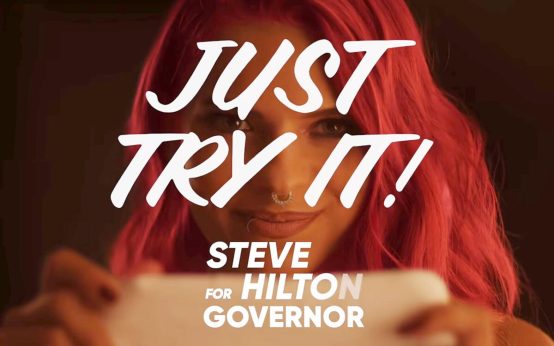 Republican Steve Hilton’s Unconventional Campaign for California Governor
  Race for Kane County Board District 3: Candidates Address Key Issues