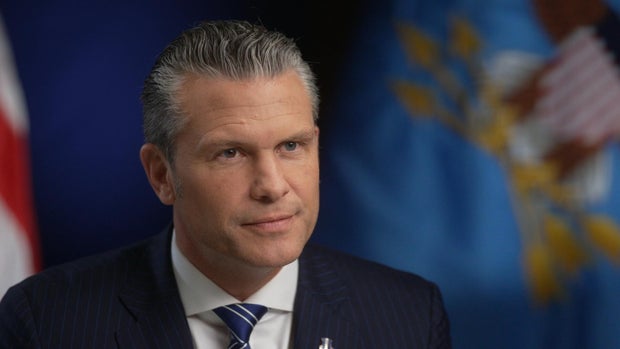
On April 2, an American fighter jet was shot down over Iran, leaving two U.S. Air Force officers stranded in a rugged mountain area. The U.S. military responded with one of its largest search and rescue operations in history, determined to prevent their capture just five weeks into a costly war with Iran.
The Mission
When the conflict with Iran began in February, the U.S. conducted its operations primarily from the air. Adm. Brad Cooper, the commander in charge, explained that while the U.S. had air superiority with around 13,000 missions flown, the environment was vastly different from operating over familiar territory like Kansas.
The mission that led to the jet’s downing involved striking industrial facilities tied to Iran’s drone and missile programs, not the nuclear facility in Isfahan. The F-15E fighter jet, valued at $30 million, fell victim to a $100,000 shoulder-fired missile.
Downed Pilots
Bravo, one of the officers using his mission call sign for security, described the moment of being hit as akin to a freight train. When ejected, he narrowly survived the descent with significant injuries, including a broken back and arm. Bravo worked to find safety and communicated that he was alive by sending out a message: “God is good.”
Separated from his crewmate Alpha, who was rescued first, Bravo’s precarious situation demanded another rescue effort. U.S. military sources indicated Iranian forces were alarmingly close to capturing him.
Search and Rescue
As the rescue unfolded, American forces executed a well-coordinated operation. Initially, Alpha was rescued amid heavy gunfire. Plans for Bravo’s extraction had to be delayed due to safety considerations, leaving him exposed for nearly two days.
The final rescue involved a large contingent of military personnel, including around 92 individuals on the ground and support from the CIA. The operation successfully extracted Bravo after complex maneuvers that included deception and advanced technology to pinpoint his location.
A Hero’s Return
The force landed on a makeshift airstrip to collect Bravo, facing challenges when the plane became stuck in the sand. Other elite members were extracted, and the U.S. destroyed its marooned aircraft to prevent technology theft.
Bravo’s survival and subsequent rescue serve as a testament to the resiliency and dedication of the U.S. military. Both officers expressed deep gratitude for the expertise and bravery exhibited by their rescuers.
The operation concluded with Bravo safely home, sharing the experience as a narrative of teamwork and unwavering commitment to the principle of leaving no one behind.
Produced by Keith Sharman, with associate producers Roxanne Feitel and Julie Morse Goff, and edited by Thomas Xenakis.
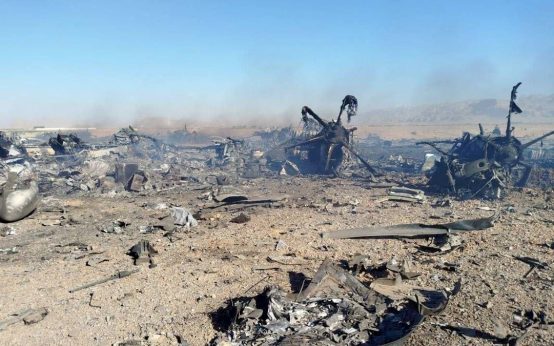 Inside the Daring Rescue of American Airman in Iran
  Trump Discusses Chinese Surveillance and Iran’s Missile Strike
  Search for Missing Passengers After Java Sea Ferry Disaster
  Chimps and Self-Medication: Insights from Gombe Stream
  U.S. Claims Victory Over Iran Amid Concerns
  U.S. and China Clash Over AI Governance