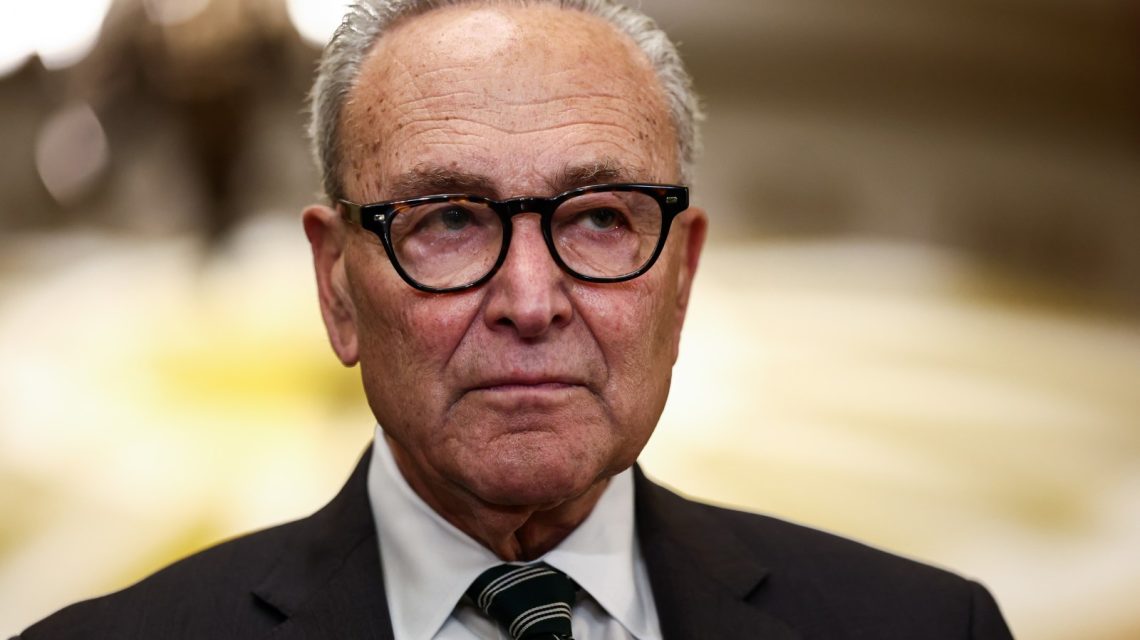
Senate Minority Leader Chuck Schumer is encountering unprecedented opposition from within his own party. Numerous Democratic Senate hopefuls and sitting senators are voicing that he should relinquish leadership after the upcoming November elections.
Pressure from Democratic Nominees and Senators
Minnesota Democratic Senate nominee Peggy Flanagan recently joined this growing faction. Following her primary victory, she emphasized the need for a ‘progressive champion’ in the Senate—a role she believes Schumer cannot fulfill. Echoing this sentiment are several other Democratic nominees and sitting senators.
Democratic Senate Nominees:
- Peggy Flanagan, Minnesota
- Abdul El-Sayed, Michigan
- Juliana Stratton, Illinois
- Troy Jackson, Maine
Sitting US Senators:
- Elissa Slotkin, Michigan
Democrats in Primaries:
- Seth Moulton, Massachusetts, challenging Ed Markey
Schumer’s Response and Reelection Considerations
Schumer remains indifferent to the criticisms. When questioned about his low approval ratings in 2025, he stated, “Polls come and go. Our party is united.” His plans for reelection in 2028 remain undisclosed. Despite the contention with several Democratic candidates, he continued to support and campaign alongside them.
The Catalysts for Growing Opposition
The discontent with Schumer’s leadership heightened in March 2025. His support for a Republican-backed funding bill infuriated the party’s progressive wing, prompting some House Democrats to encourage Alexandria Ocasio-Cortez to challenge him.
Tensions mounted again following an extended government shutdown attributed to Schumer’s strategy. As a result, over 50 progressive groups called for his resignation. The criticism has steadily shifted from advocacy groups to Democratic candidates, as many are winning primaries while opposing Schumer’s leadership.
Key Remarks from Top Democrats
Multiple Democratic figures have openly criticized Schumer:
Peggy Flanagan: Flanagan supports Maryland Senator Chris Van Hollen as a potential leader and aims to collaborate with a Senate group called “The Fight Club.”
Abdul El-Sayed: El-Sayed endorsed Van Hollen in a campaign speech, stating his preference for him as the next Senate majority leader.
Juliana Stratton: Stratton was the first primary victor to reject Schumer’s leadership, expressing her stance in a January debate.
Troy Jackson: Although Jackson met with Schumer, he criticized Schumer’s ability to strengthen ties with working-class voters, preferring Bernie Sanders as a leader.
Seth Moulton: Moulton expressed a need for leadership change without endorsing a specific alternative.
Elissa Slotkin: Slotkin advocates for substantial new leadership and criticizes outdated approaches.
Van Hollen: Van Hollen, a possible successor to Schumer, remains noncommittal about challenging him and stresses waiting for the 2026 election results.
Sanders: Sanders has not explicitly called for Schumer’s removal but acknowledged growing frustration with the current system.
Public Opinion on Schumer
Recent polls depict Schumer in a challenging position. An April CNN poll revealed that only 17% of Americans view him favorably, marking his lowest favorability since 2017. Among New York voters, his ratings have also hit a new low, with only 27% approving his performance.
A November 2025 national survey from Echelon Insights showed Schumer’s favorability at 24%, with disapproval at 54%. Polling data throughout 2025 and 2026 consistently indicate a negative net favorability among likely Democratic voters.
Potential Leadership Changes
Speculation abounds about Schumer’s potential successors, with Chris Van Hollen and Brian Schatz frequently mentioned. Cory Booker and Chris Murphy are also considered possible candidates. Long-term considerations include Alexandria Ocasio-Cortez, who hinted that she might challenge Schumer in the future.
Ultimately, Schumer’s leadership will be determined by the Senate Democratic caucus following the elections, with sitting and newly elected senators casting secret ballots. Schumer retains advantages due to his incumbency and deep-rooted relationships within the party.
 White House Chief of Staff Susie Wiles on Battling Cancer While Working
  Trump Criticizes Supreme Court Over Missouri Redistricting Decision
  The Challenges Facing Federal Oversight of Disability Education
  Senator John Fetterman Clarifies Political Affiliation After Misstatement
  Gov. Newsom Signs New Rules for Industrial Companies
  Senator John Fetterman Discusses Democratic Party and Support for Israel