President Donald Trump’s approval rating among independent voters has declined significantly according to various national polls. Recent data shows record-low approval rates and notable decreases since the start of his second term.
Independent voters can often influence midterm elections. If this trend continues, it may reshape the political landscape leading up to 2026. It could affect Republicans’ prospects, especially in competitive House and Senate races. The shift away from the president among independents is a crucial factor.
Key Statistics
- Civiqs tracking: Trump holds 30% approval and 63% disapproval among independents, reflecting a net -33. This is a 38-point negative swing from a net -5 at the start of his term.
- The Economist/YouGov poll (May 29 to June 1): Independents show a -50 net approval, an all-time low, marking a 46-point drop from early 2025.
- PRRI data: Independent favorability is at 25% in May, down from 35% in early 2025.
- AP-NORC analysis: Independent support fell to about one-quarter from four in ten during the 2024 election period.
Multiple polls and datasets published through June 2026 confirm a sharp decline in Trump’s approval among independent voters during his second term. This downward trend is consistent across different methodologies and surveys.
Detailed Polling Analysis
Civiqs Tracking
The longest-running dataset comes from Civiqs, with more than 110,000 responses collected from his inauguration on January 20, 2025, to mid-June 2026.
At the start of Trump’s second term: 44% approved, 49% disapproved (net -5). By June 2026: 30% approved, 63% disapproved (net -33), reflecting a 38-point negative swing.
The Civiqs data indicates the sustained change reflects a consistent decline rather than a temporary disturbance.
Economist/YouGov Poll
The Economist/YouGov weekly tracker shows a sharper decline. A survey conducted from May 29 to June 1 found Trump’s net approval among independents at -50.
In January 2025: -4 net approval from independents. In June 2026: -50 net approval.
This 46-point decline over approximately 16 months is historically significant. YouGov’s Allen Houston noted this as a record low for his current term.
AP-NORC Analysis
An AP-NORC analysis, based on 21 surveys from July 2024 to April 2026, shows significant erosion in independent support.
- Around the 2024 election: About four in ten independents supported Trump.
- By spring 2026: Support fell to about one-quarter.
Support among independents without a college degree fell from about half around the election to one-quarter in 2026. This highlights a uniform negative sentiment across various demographic groups.
PRRI Data
Data from the Public Religion Research Institute reveals a similar decline in personal favorability for Trump.
PRRI survey (May 1-18): 25% of independents viewed Trump favorably, down from 35% in March 2025.
This trajectory aligns with other datasets, indicating a consistently negative opinion shift among independents.
Consistent Trend Across Pollsters
Despite different methods used—rolling tracking, weekly panels, large-scale probability samples—all indicate the same downward trend. Trump’s approval and favorability ratings among independents have significantly dropped.
Current levels show Trump facing significant disapproval from independents, reinforcing the trend of a genuine shift in public sentiment.
White House Response
The White House cited Trump’s 2024 election win as an indicator of his mandate. In a statement, spokesperson Davis Ingle highlighted Trump’s agenda’s popular and practical nature.
Ingle emphasized Trump’s focus on job creation, cooling inflation, and housing affordability as key priorities. He highlighted the historic progress both domestically and internationally.
Looking Ahead
Whether this decline persists may depend on upcoming political and economic developments. Polling highlights factors like inflation, the economy, and foreign policy influencing public perceptions.
For now, the trajectory is clear: independent voters who impacted the 2024 election have become more skeptical. This trend may affect outcomes in the midterm elections and influence close races.
 Darline Graham Faces Scrutiny Over National Security Knowledge Ahead Of South Carolina GOP Senate Runoff
  ActBlue Investigation and Plea Amid Allegations
 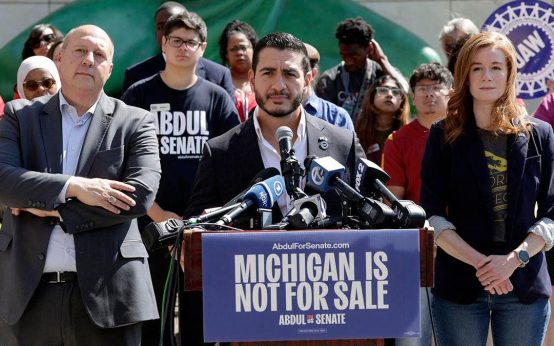 Michigan Senate Nominee Abdul El-Sayed Discusses Politics and Faith
  Trump Showcases White House Construction Projects
  Court Orders and Construction Plans for Washington Institutions
  Federal Agents Seize Devices from Former Rep. Eric Swalwell Amid Allegations