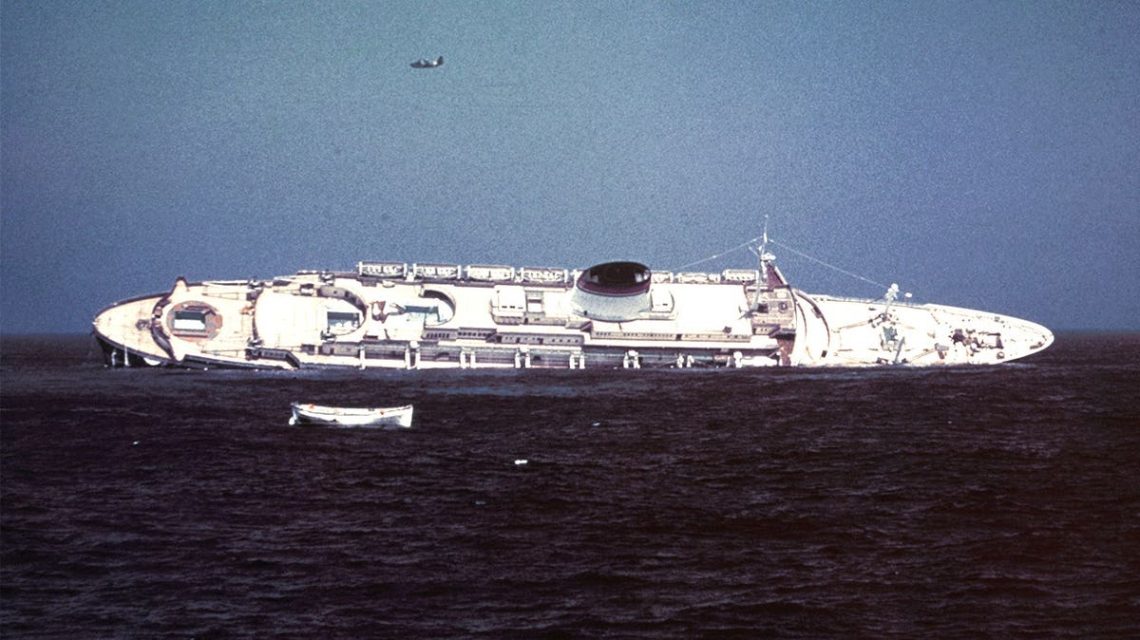
Situated approximately 240 feet beneath the ocean, the Andrea Doria shipwreck presents immense challenges for divers. Dubbed the ‘Mount Everest of shipwrecks,’ the wreck lies off the U.S. coast, posing difficulties due to its depth and harsh conditions.
‘Even expert divers have had challenges,’ remarked retired U.S. Coast Guard Capt. Aaron Davenport. The wreck’s deteriorating state further increases the hazards of exploration.
After 70 years beneath the Atlantic Ocean, the Andrea Doria is witnessing continuous deterioration. ‘The wreck is breaking apart, and things are falling as it moves,’ Davenport explained. Divers like John Moyer, who has explored the site over 100 times, have seen it decay significantly. In a 2022 interview, Moyer shared that the ship’s steel hull is collapsing and flattening. The Andrea Doria sank following a collision with the Swedish liner Stockholm in July 1956 off Nantucket, Massachusetts.
A report from Divers Alert Network highlighted the wreck’s swift deterioration, citing research from OceanGate. This could potentially impact future diving experiences.
The Haunted Hull
The collision involved 52 fatalities, yet remarkably, over 1,600 people aboard the Andrea Doria were saved, thanks to the U.S. Coast Guard’s rescue efforts. The accessibility of the shipwreck makes it appealing to ordinary divers, offering a chance to recover artifacts from the luxury liner.
Unfortunately, diving this wreck has claimed lives; at least 17 scuba divers had died by 2016. In 2017, British diver Steven Slater also perished during an expedition, raising the total to at least 18 diving-related deaths.
Davenport emphasizes the wreck’s accessibility compared to deeper sites like the Titanic, which require submarines for access. ‘It’s considered the Mount Everest of dives because it’s so challenging, so dangerous,’ Davenport stated.
Diving Risks and Rewards
Preparing to explore the Andrea Doria demands extensive experience. The wreck is filled with nets, wires, fishing lines, and debris, all prone to movement. The ship sank on its side, leading to stairways and corridors at odd angles, unbalancing divers.
‘It’s very easy to get tangled,’ Davenport said, adding that disorientation is a genuine risk due to the sideways layout.
Despite challenges, those with proper training and preparation could explore the site. Davenport indicates that a highly experienced recreational diver might manage this dive. The ship, nearly 70 years submerged, still attracts those eager to experience the legendary wreck before its eventual disappearance.
 Exploring the Cost-Effectiveness of Balcony Solar Panels
  Floating Island in Canada’s Williston Reservoir Found
  Record-Breaking El Niño Expected: Implications for Global Weather
  Human Impact on Natural Ecosystems and the Tibet-Nepal Flood Disaster
  Three Hurricanes in the Pacific Pose Ocean Hazards for U.S. Shores
  Chevron’s Expansion in Venezuela Oil Production