
The Federal Aviation Administration (FAA) is examining a software issue found in certain Boeing 737 Max jets. This issue might cause the automated flight guidance system to disengage during a go-around, a type of aborted landing.
Software Glitch Details
In rare instances involving a missed approach where pilots use a precision approach with autopilot, modifications to the pre-programmed flight plan might trigger a problem with the flight management computer. This could lead the plane’s vertical navigation system (VNAV) to disengage, switching to a less advanced level of automated pitch control.
VNAV is meant to automatically manage the planned altitude at various waypoints during a flight. If disengagement happens, pilots must perform extra actions during the subsequent approach. Such scenarios typically unfold in challenging airport environments where pilots already have a significant workload.
Boeing’s Response
A Boeing spokesperson informed CBS News that all 737 operators were notified about this software problem last month. The company emphasized existing pilot procedures for dealing with these situations safely. Boeing engineers are working on a permanent software update.
Even if VNAV disengages, autopilot remains functional. Pilots are trained to land safely without VNAV. Boeing’s announcement clarified that this glitch is not seen as an immediate safety threat. It appears in versions 14 and 14.1 of the Max’s flight management computer operating system.
Airlines’ Actions
Southwest and United Airlines have chosen not to receive aircraft with the affected operating system, preferring a previous version. Alaska Airlines, American Airlines, Southwest, and United have assured CBS News that their in-service 737 Max fleets do not use the problematic software.
FAA and Boeing Collaboration
The FAA is working closely with Boeing and airlines to address the situation. They will convene a Corrective Action Review Board (CARB) to evaluate and respond to safety concerns if found. Boeing was initially informed of the issue by an airline in November 2024. Though initially deemed not a safety issue, additional operator information prompted Boeing to carry out a formal safety review, with findings shared with the FAA this month.
Impact on Deliveries and FAA Certification
The glitch could delay FAA certification of the 737 Max 10, as well as deliveries of the 737 Max 7, which is significant for Southwest as it holds the majority of orders for this aircraft. Boeing intends to expedite the software fix originally scheduled for readiness by 2028 and issue updated pilot procedure guidance by November.
Background and Trust Issues
The Max series is crucial for Boeing’s financial recovery following two significant crashes in 2018 and 2019, due to defective software glitches, that resulted in 346 fatalities. A mid-flight door panel incident in January 2024 highlighted existing trust issues between Boeing and airlines.
Several U.S. airlines are cautiously monitoring Boeing’s actions, applying a trust-but-verify approach. Previous complications with the Max have affected airline operations. Allegiant Air, another operator of the 737 Max, has also been contacted for comments on this issue.
 Senator Ted Cruz on America’s AI Race Against China
  Ways to Protect Your Finances from Cyber Threats
  AI Concerns and International Relations: Bill Gates Urges Oversight Amidst Global Summit
  Concerns Rise Over AI Development and Geopolitical Implications
  Impact of E.U. Regulations on Google Search
 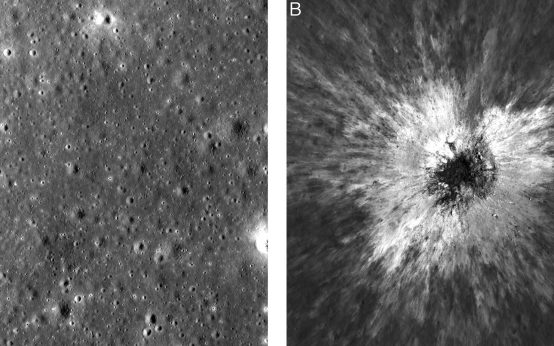 Discovery of Massive Lunar Crater Sheds New Light on Moon’s Surface