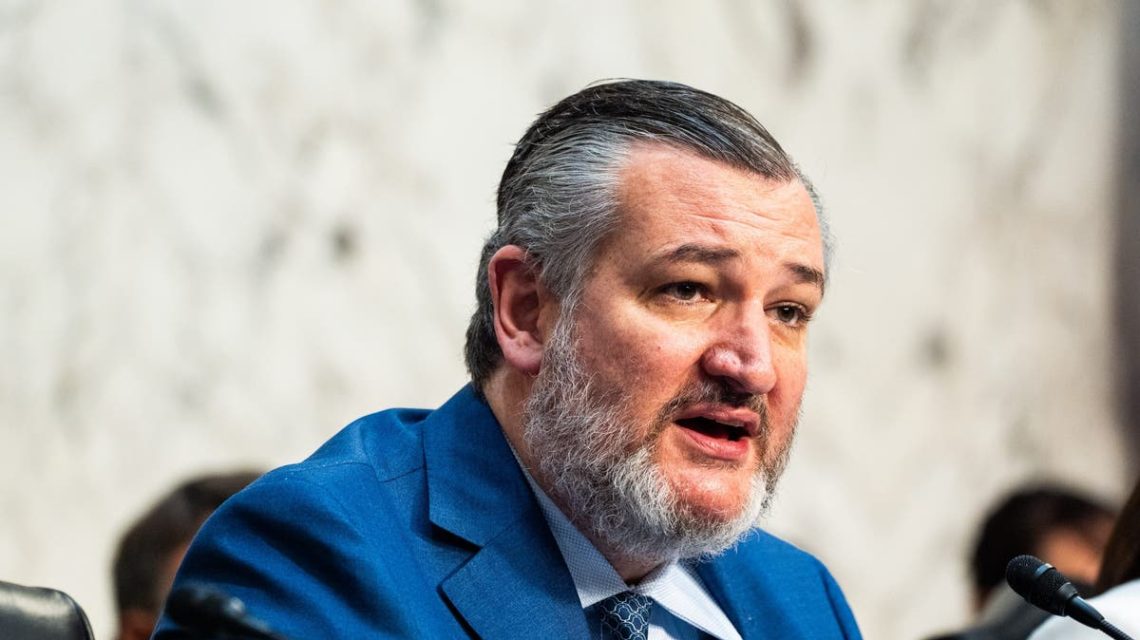
Senator Ted Cruz, a prominent Republican from Texas, has raised concerns about the AI race between the United States and China. As midterm elections approach, Cruz warns of ‘coordinated’ propaganda efforts that are influencing discussions on AI policy and data centers across America.
Cruz, who leads the Senate Commerce Committee, highlighted the manipulation of public sentiment through well-funded campaigns. ‘We saw similar tactics with Middle Eastern countries funding anti-fracking movements,’ Cruz noted. ‘They aimed to push the U.S. away from its energy independence. Now, the same strategy is being used with data centers. If Americans are persuaded against developing domestic AI infrastructure and instead rely on Chinese sources, it benefits China and harms the U.S.’
Cruz’s comments emerged during a Senate hearing involving tech leaders like Sam Altman of OpenAI and Lisa Su of AMD. Michael Intrator from CoreWeave and Brad Smith from Microsoft were also present, discussing the implications of AI on U.S. economic and national security.
China’s strategy in the AI domain involves indirect influence. In June, OpenAI reported its decision to ban certain ChatGPT accounts originating from China. These accounts were involved in operations alleging that data centers were driving up electricity costs in the U.S.
A spokesperson from OpenAI stated that the banned accounts were part of covert attempts to sway American debates on AI policy. Cruz emphasized the importance of crafting American policy to win the AI race. ‘This is the most crucial economic issue facing the U.S. today,’ Cruz asserted.
According to Cruz, if China dominates the AI landscape, their version of AI would prioritize espionage, propaganda, and surveillance, reminiscent of the Chinese Communist Party’s values. In contrast, American-led AI would champion free speech, individual rights, and enterprise. Cruz criticized opposition to AI growth and attributed a significant part of it to Democratic views and tech giants like Anthropic, which he believes, seek government support to gain market dominance.
Cruz associated this opposition with the ideology of ‘effective altruism.’ This philosophy, according to Cruz, is driven by left-leaning leaders wanting AI to spread their ideological beliefs. He argued that big companies engage in ‘rent seeking,’ where they align with government to secure advantages, thus restricting competition.
Parker Thayer of Capital Research Center described the effective altruism movement as connected to ‘AI doomerism.’ Figures like Dustin Moskovitz, Facebook co-founder and major Democratic donor, financially back this movement. Together with his wife Cari Tuna, Moskovitz has poured funds into organizations promoting effective altruism. Their initiative, Coefficient Giving, plays a pivotal role in AI safety and policy advocacy.
Coefficient Giving, formerly Open Philanthropy, has rapidly expanded its focus on AI. They’ve committed hundreds of millions towards AI safety and plan over $1 billion for AI-related policies by 2026. In 2021, they issued a call for AI safety initiatives through their ‘Project Tailwind.’ This effort illustrates the movement’s commitment to shaping AI’s future in line with their values and interests.
 FAA Investigates Software Issue in Boeing 737 Max
  Ways to Protect Your Finances from Cyber Threats
  AI Concerns and International Relations: Bill Gates Urges Oversight Amidst Global Summit
  Concerns Rise Over AI Development and Geopolitical Implications
  Impact of E.U. Regulations on Google Search
  Discovery of Massive Lunar Crater Sheds New Light on Moon’s Surface