Federal officials have declared substantial water reductions for three Western states relying on the increasingly vulnerable Colorado River. This decision will affect California, Nevada, and Arizona over the next two years. Collectively, these states will trim water usage by 1.25 million acre-feet annually, approximately 1.54 billion cubic meters. The possibility of further cuts depends on future conditions.
Arizona will experience the most considerable reductions, while upstream states—Colorado, Utah, Wyoming, and New Mexico—remain unaffected for now. Neighboring Mexico is set to diminish its intake by 250,000 acre-feet (about 310 million cubic meters) under a treaty with the U.S.
Andrea Travnicek, assistant secretary for water and science at the Interior Department, emphasized the importance of collaboration within the basin during the ongoing drought. “We’re in a 26-year prolonged drought period,” Travnicek stated. “Continued teamwork is critical as we face a prolonged drought in the future.” The rules dictating river water usage expire in October, with the seven states yet to reach a long-term agreement.
Last winter brought the poorest snowpack on record for the Colorado River Basin, exacerbating pressure on farmers, industries, wildlife, and hydropower producers. Tens of millions, including numerous Native American tribes and citizens in two Mexican states, depend on this water source.
Years of excessive consumption, combined with drought and climate change-induced rising temperatures, have severely drained the nation’s two largest reservoirs, both sustained by the Colorado River. Lake Mead recently sank to its lowest level in nine decades, followed by Lake Powell shortly thereafter. Their combined storage represents a seven-decade low.
“For 2027 and 2028, the reductions that are now memorialized here will provide substantial stability for folks,” said Tom Buschatzke, director of the Arizona Department of Water Resources.
Arizona negotiators expressed gratitude for California and Nevada’s cooperation in sharing cuts. JB Hamby, California’s chief Colorado River negotiator, described the plan as providing “some badly needed near-term certainty” amidst “extraordinary risk,” calling it “a bridge, not a permanent solution.” Nevada officials praised collaboration with Arizona and California, affirming their preference for a seven-state consensus as the river’s strategy.
Kyle Roerink, senior adviser at the Great Basin Water Network, noted efforts to develop infrastructure in Southern Nevada have stalled, illustrating the severe hydrological state noted in federal documents. He suggested further reductions could slow real estate growth in Las Vegas.
Roerink commented on the symbolic significance of the Hoover Dam: “When the Hoover Dam, a symbol of American fortitude, drops and loses its shine, it’s alarming. Yet it also presents an opportunity to prepare for the coming century.”
The Associated Press acknowledges support from the Walton Family Foundation for reporting on water and environmental policy. The AP bears full responsibility for all content.
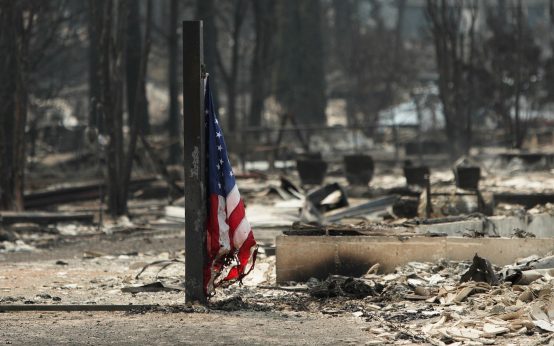 Nation Faces Unprecedented Wildfire Destruction in Recent Years
  Trump Orders Review of Gray Wolf Protections Amid Rancher Concerns
 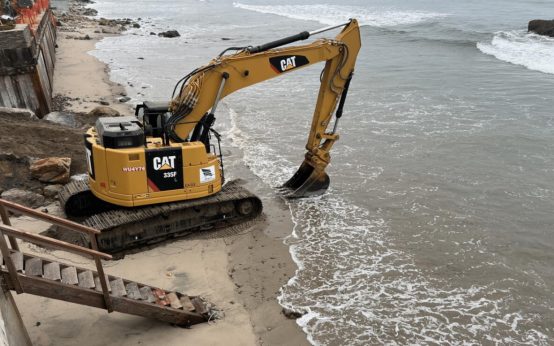 Beachgoers to Benefit from Malibu Land Donation in Coastal Commission Dispute
 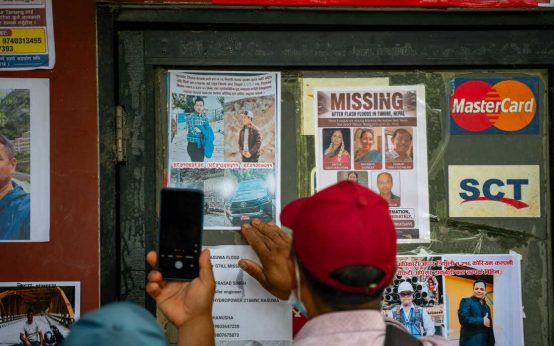 Nepal’s Flood Crisis: Health and Mental Challenges Remain
  Public Concerns on Climate Change, Energy, and Animal Welfare
  California’s EV Transition Amid Federal Challenges