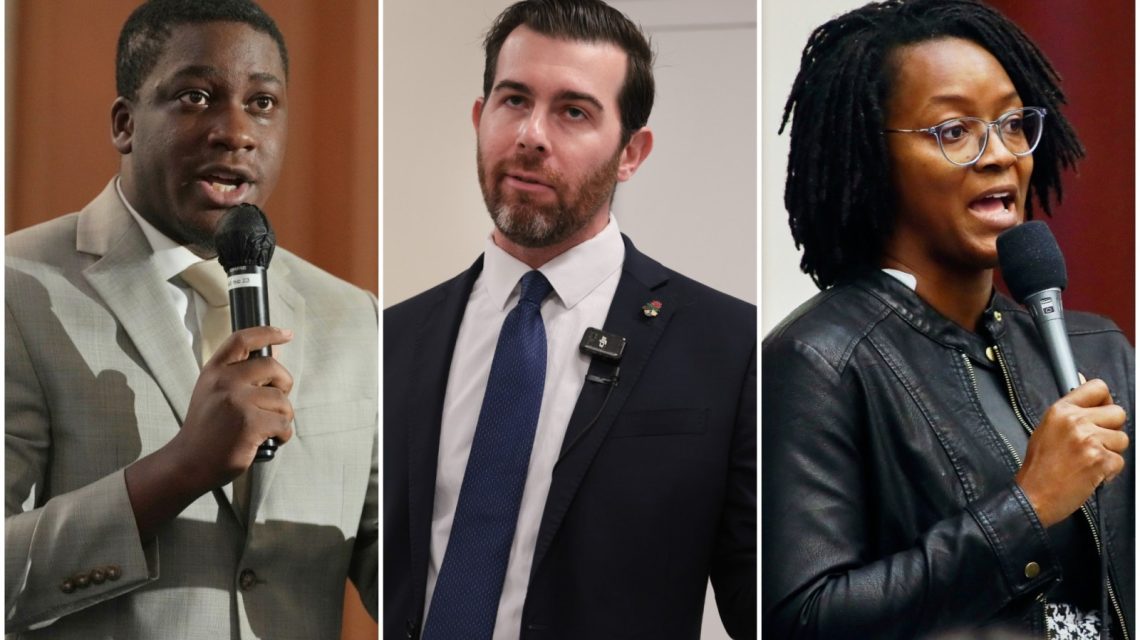
Florida’s Primary Battle
As the November midterms approach, a significant clash within the Democratic Party unfolds in Florida. The battleground involves three insurgent candidates challenging established Democrats. This competition raises questions about candidate viability and the definition of ‘electability’ in the party’s decision-making.
Oliver Larkin faces off against Jared Moskowitz in the 25th Congressional District, while Elijah Manley competes against Debbie Wasserman Schultz in the redrawn 20th District. Additionally, Angie Nixon seeks the Democratic nomination for the special U.S. Senate election against Alexander Vindman.
An event titled ‘Chomp the Oligarchy’ organized by various progressive groups, including Miami DSA, was moved due to local objections. Among these voices is Rashida Tlaib, championing the insurgents against the establishment.
Debating Electability and Viability
The concept of ‘electability’—often linked to corporate donations and moderate stances—is under scrutiny. Both Larkin and Manley criticize its application, especially after significant consecutive losses against Donald Trump, questioning its relevancy.
Manley argues that the criteria of viability systematically disadvantages progressive candidates and those from marginalized communities, particularly candidates of color and women. He emphasizes the importance of holding elections to determine electability.
Concerns about electability influencing candidate success, regardless of moderate appeal, resonate among the challengers. They propose that overly focusing on middle-road voters leads to political complacency.
Current Stats and Challenges
Despite lively campaigns, the numbers are starkly against the insurgents. Electoral predictions strongly favor the established candidates, with Moskowitz and Wasserman Schultz leading their respective polls.
Manley cites encouraging polling results showing his potential lead once voters familiarize themselves with candidates’ backgrounds. Larkin remains optimistic, highlighting robust efforts in voter outreach despite financial discrepancies.
Nixon, challenging Vindman, offers an intriguing case in the electability discussion, as varied poll results show a close race.
Funding and Endorsements
Endorsements from progressive leaders like Rashida Tlaib support Nixon, alongside unions and influential movements. Her campaign emphasizes grassroots efforts over financial muscle.
Vindman’s campaign postures unique approaches within Florida, supported by a broad base of small donors, striving for policy changes resonant with everyday Floridians.
DSA Influence and Broader Trends
The Florida elections illustrate a broader left-wing momentum seen nationally where Democratic Socialists of America (DSA)-backed candidates have unseated several incumbents. However, mixed results persist.
Contrasting successes and failures raise questions about the sustainability of progressive movements challenging entrenched Democratic figures.
Republican Strategy and Democratic Concerns
Republicans see opportunities in leveraging DSA influences as threats to national security, prompting discourse on the radicalism within progressive stances.
Concerns arise about establishing broad appeal for progressives, who face scrutiny on issues, notably crime. However, candidates like Larkin emphasize addressing immediate economic pressures as solutions.
Racial representation also forms a critical dimension, with growing tensions surrounding Wasserman Schultz’s candidacy sparking broader discussions.
Manley warns against further diminishing Black representation, highlighting the impactful consequences of this primary.
Despite uncertainties, Larkin pledges support for any Democratic nominee to prevent Republican dominance in the region.
Early voting culminates soon, setting the stage for decisive results.
 Sen. Tom Cotton Opposes Year-Round Daylight Saving Time Amid Trump Pressure
  Pressure Mounts on Democratic Governors to Join Trump’s Federal Scholarship Program
  A Meeting with Steve Hilton’s Vision Amid California’s Political Dynamics
  BP Lockout Spurs Push for Indiana Legislation on Unemployment Benefits
  Urgent Reforms Needed in Republican Nomination Process
  Debate Heats Up Over Permanent Daylight Saving Time