
The Group of Seven (G7) countries announced a plan to release 100 million barrels of oil to address rising fuel costs. This plan includes a significant release of diesel supplies. The Trump administration influenced European allies to use emergency reserves due to high fuel prices.
French President Emmanuel Macron, who holds the current G7 presidency, revealed the agreement after a videoconference with global leaders. The G7 committed to a coordinated release through the International Energy Agency (IEA) over four months, including a substantial diesel release in the first 20 days.
Details about the release remain unclear. The G7 has not disclosed the specific diesel quantity versus crude oil or other petroleum products. The daily flow-rate schedule has not been shared, and analysts say these numbers will affect the impact on prices.
This move follows a Reuters report that the Trump administration urged Germany and France to draw down diesel reserves or face restrictions on U.S. diesel exports. This increased pressure on European governments amid tight fuel markets affecting U.S. consumers.
The agreement is seen as a success for President Trump, who faces political pressure over energy prices with midterm elections approaching. Diesel prices in the U.S. have hit record highs, causing concerns about transportation costs, inflation, and winter heating expenses.
The average national price for diesel was $6.37 per gallon on Friday, close to the record of $6.52 on September 22. Price hikes stem from refinery issues in Russia and the Middle East, Russian export restrictions, and geopolitical tensions.
Trump praised the G7’s decision, stating on Truth Social that Europe agreed to release a large amount of diesel oil, initiating the process immediately.
Potential Impact on Fuel Prices
Energy analysts suggest the release may offer consumers some relief, though the effect might be modest. Patrick De Haan, head of petroleum analysis at GasBuddy, noted markets were already responding, with oil, gasoline, and diesel futures dropping.
“This is already having an impact pushing oil, gasoline and diesel futures lower, and could yes have some impacts on prices here as early as this weekend,” he told Newsweek via email.
De Haan suggested fuel prices might decrease by 10 to 20 cents per gallon. However, the impact may be more significant in Europe than in the U.S.
Tom Kloza, chief energy advisor at Gulf Oil, also observed market reactions to anticipated increased supply. He mentioned that “panic selling” of futures could lead to slightly lower prices for diesel and gasoline in the coming ten days.
The Importance of Diesel
Diesel is crucial for the economy’s transport and industrial infrastructure. It powers trucks, trains, construction equipment, and farm machinery. Price increases can affect supply chains and raise consumer costs.
Diesel resembles heating oil and is vital during colder months in North America and Europe. The supply shortage results from extended Russian restrictions on diesel exports, refinery issues related to Ukraine’s drone attacks, and the U.S. conflict with Iran.
Long-Term Effects
The crucial question is whether the G7 release will offer lasting relief or temporary respite amid ongoing refinery outages, export restrictions, and geopolitical tensions. De Haan emphasized caution, noting that the announced volumes provide relief but are not a complete solution.
“It could add a notable amount of diesel, though I’m not sure I’d say ‘significant,'” he told Newsweek. “Some of these ‘reserves’ are simply on paper, moving inventories to market. Only some of them are truly strategic. So, part of this is sort of accounting, moving barrels from one column to another.”
Ben Cahill, a nonresident senior fellow at the Atlantic Council Global Energy Center, expressed caution regarding the release composition and timing. He stressed that stockpile releases can ease pressure but won’t fully offset lost refining capacity.
“The core problem is that we’re trying to address a flow problem, due to refineries that are damaged or cut off from markets, with stock releases,” he added.
Cahill noted that Russian diesel exports remain banned until at least October 31, with refinery disruptions and Iran-related conflicts continuing to affect global fuel supplies.
Kloza was skeptical about the release’s broader impact. Assuming half of the release is diesel, it represents only a small portion of global demand. Kloza argued that a more substantial development would be the resumption of Russian diesel exports.
“A bigger piece of news would come if Russia resumes exports,” he said. “They once exported about 800,000 barrels per day of diesel, mostly to Europe and Brazil, but idle refineries have kept exports at zero. Watch Russian refining closely. It is the key to price action through the rest of 2026.”
He questioned the timing of the release, suggesting it might be premature before peak winter demand. “True crunch time for Europe and for a substantial portion of the U.S. comes with winter, when diesel, the same molecules as heating oil, goes to millions of homes to generate heat.”
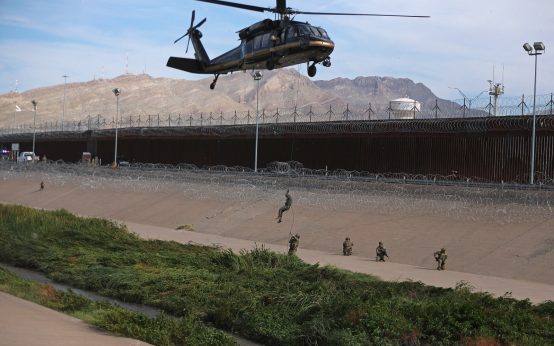 U.S. Initiates Military Reinforcement at Mexico Border
  Attempted Hijacking on FlyDubai Flight 1073
  Former U.S. Rep. David Rivera Sentenced to 10 Years for Secret Lobbying
 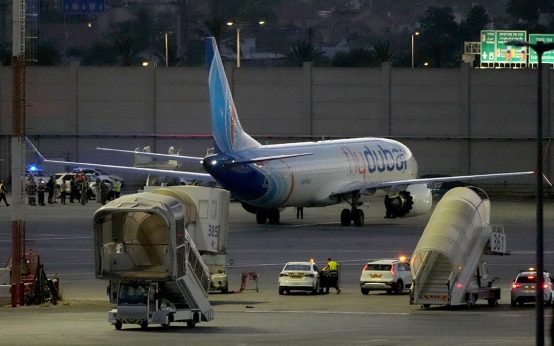 Investigation on Alleged FlyDubai Hijacking with Possible Terror Link
 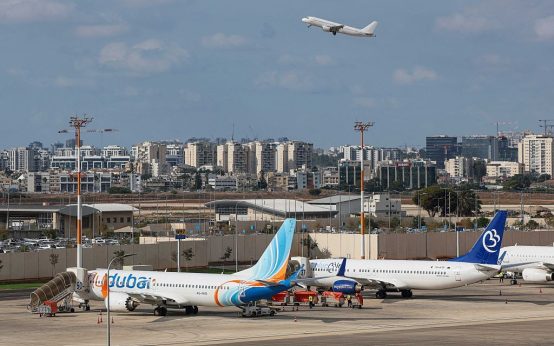 Incident of Co-pilot’s Attack on FlyDubai Flight Raises Security Concerns
  Examination of FlyDubai Co-Pilot’s Employment Despite Security Alerts