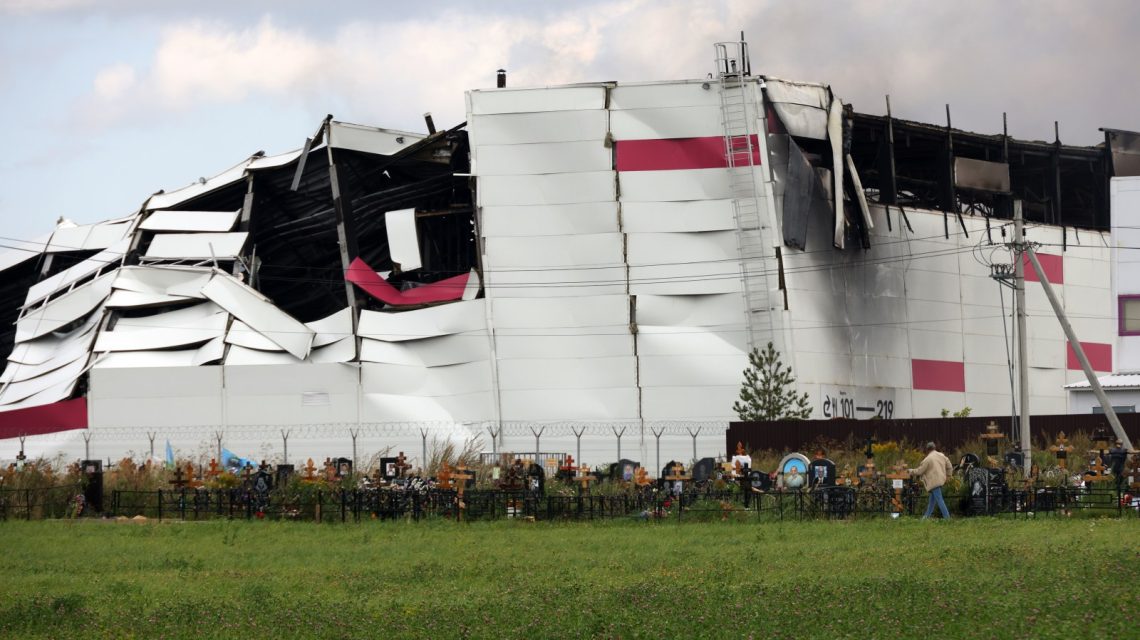
Branding on trucks carrying goods for Russian e-commerce firm Wildberries is being removed, as reported, in response to ongoing Ukrainian drone attacks. These attacks are targeting the company’s facilities, which are likened to Russia’s Amazon. Wildberries distributes a range of products, including clothing, electronics, and groceries. However, Ukraine claims its warehouses also supply military drone components, a charge Russia denies.
The firm is facing economic challenges due to frequent drone strikes on its sites. Social media has shown videos of its branding being taken off trucks. The X channel of Eastern European news outlet NEXTA noted that unmarked trucks might obscure warehouse destinations.
The Moscow Times previously noted that Wildberries removed military-related items from its website. It also eliminated tags associated with Russia’s “special military operation.” Political science professor Aurélien Colson of ESSEC Business School commented on the implications of these strikes. He highlighted that these attacks emphasize the war’s presence within Russia and blur the line between civilian commerce and military logistics.
Wildberries is significant in Russia’s economy, constituting about 8.5% of GDP and employing over 5% of the workforce. But the company is under strain, with a reported 25 strikes on its facilities by Wednesday, as per Radio Free Europe/Radio Liberty. These attacks span regions including St. Petersburg, Krasnodar, and Yekaterinburg.
The initial attack was reported on July 18 on a logistics center in Kotovsk. On August 16, Ukraine struck Wildberries’ largest warehouse in Podolsk. By early August, Ukrainian forces had decimated 1.18 million square meters of Wildberries’ warehouse space, nearly a fifth of the total capacity at that time, according to Reuters.
The Institute for the Study of War (ISW) outlined the seven largest strikes, indicating pressure on Russia’s air defenses. Aurélien Colson stated that hitting commercial sites conveys the war’s costs back to Russian society and challenges the promise of a war without domestic sacrifice.
Colson added that these strikes disrupt military supply chains, affecting the army’s reliance on informal sources for equipment like drone parts and optics. Vuk Vuksanović from LSE IDEAS noted that these Ukrainian actions, alongside attacks on Russian energy infrastructure, are part of a campaign to prompt peace talks and sustain Western support.
However, these efforts have not achieved the intended results, as Russia maintains military dominance and can escalate further. Recent Russian counterattacks against Ukrainian infrastructure highlight ongoing tensions.
For further information, Newsweek reporters Matthew Robinson and Cristina Diciu are available for contact.
 Concerns in the U.S. Over French Riots
  US Vice President JD Vance Chooses Not to Endorse Netanyahu Amid Israeli Elections
  Rising Violence in Europe and Its Political Impact
  Christiane Amanpour to Leave CNN After Over Four Decades
  Ukrainian President Responds to U.S. Abandonment Amid Strained Relations
  Trump Sues BBC Over Documentary Alterations