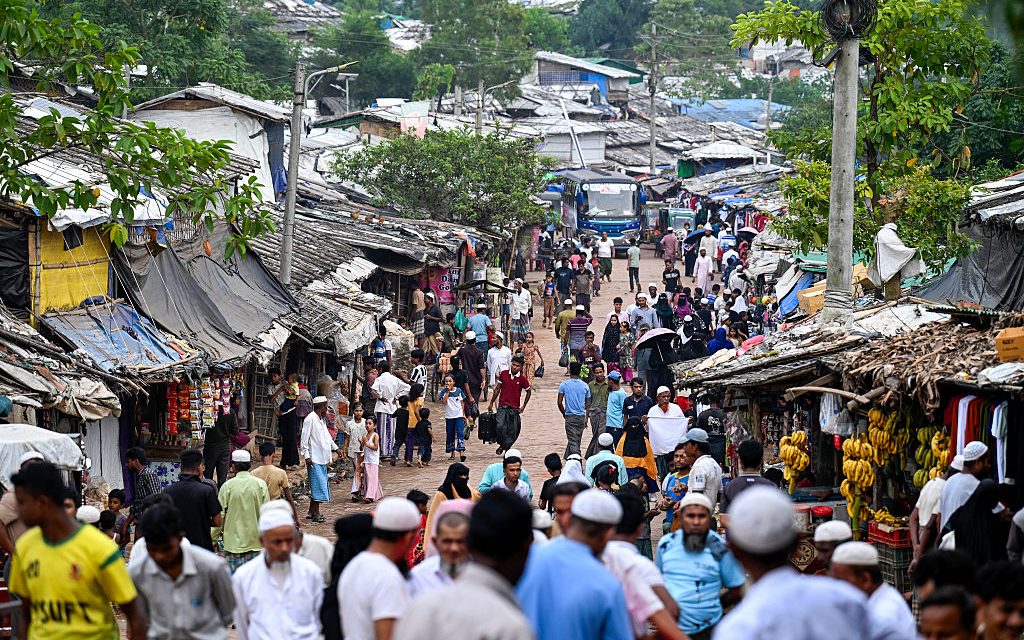
The International Court of Justice (ICJ) has issued a landmark ruling, finding Myanmar responsible for genocide against the Rohingya Muslim minority. Over a million Rohingya remain displaced following the military’s actions in 2017. During the crackdown, Myanmar’s forces killed at least 10,000 individuals, including up to 2,109 children under five, and forced over 700,000 to flee the northern Rakhine State.
The decision marks the first time the ICJ has held a state accountable for genocide since its founding in 1945. According to Melanie O’Brien, a professor at the University of Western Australia Law School, this ruling could significantly impact future cases under the 1948 Genocide Convention. The verdict arrives amid South Africa’s ongoing case against Israel regarding alleged genocide in Gaza, where Israeli forces have been accused of killing tens of thousands over the past three years.
For the Rohingya, the ruling is a significant acknowledgment in a court of lawsays O’Brien, who has researched extensively on genocide and international criminal law.
Response from Myanmar
Myanmar’s government, led by the military junta, has rejected the court’s ruling as unfair. Spokesperson Khine Khine Soe highlighted that six judges dissented from the decision. She did not clarify whether Myanmar would comply with the verdict. Meanwhile, the National Unity Government, established following Myanmar’s 2021 military coup, expressed respect for the judgment.
Rohingya community members view the ruling as a historic acknowledgment of their identity. “Myanmar denies the existence of the Rohingya,” said Sayed Ullah, a leader in a Bangladeshi refugee camp. “But now the court made it clear.”
Historical Significance of the Ruling
This decision is unprecedented in its finding of genocide by a state. Previously, cases against Serbia and Croatia related to Yugoslavia’s breakup were heard, but without a clear attribution to the state. In 2007, the court identified the genocide in Srebrenica while noting Serbia’s failure to prevent it. The 2015 Croatia-Serbia case did not establish genocide but recognized intentions of ethnic cleansing by Yugoslav and Serb forces.
According to Marko Milanovic from the University of Reading, the ICJ has taken a more nuanced approach to evidence, particularly regarding genocidal intent. Dissenting judges argued that evidence might suggest intentions of forced expulsion or collective punishment.
Implications for Myanmar
The ICJ has ordered Myanmar to safely and voluntarily repatriate the Rohingya and prosecute those responsible for genocide. Myanmar has two years to report on restitution efforts. If unable to comply, it must provide reparations, with amounts determined later. Compliance is uncertain, as enforcement mechanisms are limited. The Gambia, which brought the case, may seek UN Security Council intervention, though China’s veto power poses a challenge.
Other nations may apply pressure through diplomatic measures or sanctions. The UK has already taken steps, expelling Myanmar’s defense attaché and urging the UN Security Council to address the ruling. ASEAN could play a role, as the organization is expected to uphold international law commitments.
The conclusion of the International Criminal Court prosecutor in requesting an arrest warrant for Min Aung Hlaing in 2024 could influence ongoing investigations. However, challenges persist in achieving restitution, with over a million Rohingya still in Bangladeshi camps. Many refugees long to return, yet their homes are destroyed and past discrimination looms.
Future Genocide Cases: Focus on Israel
Attention is turning to South Africa’s genocide case against Israel. Similar to the Myanmar case, evidence of genocidal intent includes patterns of conduct like hate speech and systematic violence. Israel dismisses the allegations, claiming self-defense after a 2023 attack by Hamas. The Gaza Health Ministry reports over 74,000 Palestinian fatalities since the onset of conflict.
The ICJ emphasized that genocide encompasses more than killing, acknowledging acts such as systematic violence and destruction following village clearances in Myanmar. South Africa may argue similarly in its case against Israel. While the ICJ’s decision does not predetermine future rulings, experts believe the precedent may influence proceedings.
The ruling is full of messages for Israel, observes William Schabas, an international law professor.
The ICJ’s findings on Myanmar reflect the complexities and challenges surrounding genocide cases, underscoring the court’s role in addressing such grievous violations.
 Mass Shooting at Private Concert in Tulare County: Nine Injured
 A Family’s Struggle Amid Devastation in Zawtar al-Gharbiyah
 Concerns Rise Over Tear Gas and Reproductive Health in France
 Escalating Paris Protests Lead to Violent Clashes
 Flavio Bolsonaro’s Allegations and Political Exile
 Highlights from Recent News Stories