
Request for Iran War Supplemental Funding
The White House has officially requested Congress to approve $87.6 billion in supplemental funding. This request covers expenses related to the Iran conflict among other priorities. However, its approval faces significant challenges.
White House Office of Management and Budget Director Russell Vought sent a letter to House Speaker Mike Johnson asking for $67 billion allocated to the Defense Department. This amount is lower than the initial $200 billion proposed by Defense Secretary Pete Hegseth. Despite the reduced request, bipartisan support is necessary for Senate approval, especially amidst declining enthusiasm for further Middle East spending.
Negotiation Efforts and Defense Budget Concerns
The proposal occurs as the Trump administration seeks a $1.5 trillion defense budget, marking a 40% increase from the previous year. Concurrently, negotiations between Washington and Tehran aim to resolve the Middle East conflict, reopen the Strait of Hormuz, and abandon Iran’s nuclear program.
Russell Vought emphasized the urgency by stating, “I urge the Congress to take action on these important and urgent requests as soon as possible.”
Funding Breakdown and Senate Opposition
The comprehensive package includes several allocations: $1.7 billion for readiness, $17.3 billion for operational costs, $1.5 billion for fuel, $21 billion for munitions, $5.1 billion for cybersecurity, $2.4 billion for drones, $800 million for National Guard support, and $12.1 billion for classified programs.
Despite the breakdown, Democrats express opposition to the proposal. Sen. Chris Murphy criticized the package for deterring Democratic support, describing it as “designed not to pass.” Sen. Masie Hirono shared similar sentiments, questioning the justification for funding an “illegal war,” while domestic spending undergoes cuts.
Republican Support and Ongoing Disputes
In contrast, Sen. Roger Wicker, leading the Senate Armed Services Committee, backed the supplemental. He emphasized its importance for ensuring military readiness, including pay and training.
Meanwhile, the U.S. and Iran remain divided over permitting U.N. nuclear inspections. As negotiations advance to permanently cease the war, plans surface to alleviate shipping congestion through the Strait of Hormuz.
Public Opinion and Future Implications
The recent U.S.-Iran memorandum of understanding suggests progress toward negotiation efforts. A Quinnipiac University poll reveals that 60% of voters believe present framework terms do not justify current military operations.
Amidst these developments, Gen. Chris Donahue will retire as U.S. Army Europe and Africa commander, succeeded by Maj. Gen. Christopher Norrie. The Army confirmed Donahue’s departure is slated for July 2.
Key Events and Legislative Actions
Upcoming events impacting defense and national security include various influential conferences, seminars, and congressional hearings. Notably, the Association of the U.S. Army conference on Army acquisition and contracting is scheduled for tomorrow. Additionally, the Senate Armed Services Committee evaluates Defense Department nominations alongside Homeland Security leaders’ testimony before House Appropriations.
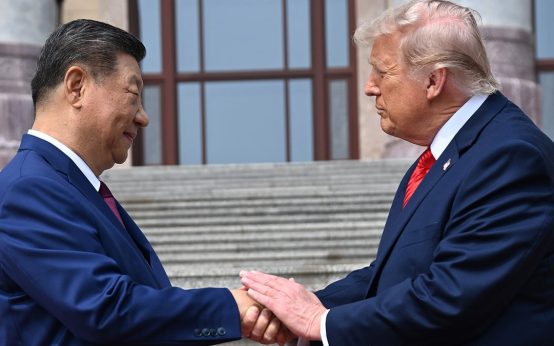 Concerns in U.S.-China Relations Ahead of Summit
  German Chancellor Friedrich Merz Vows to Continue Amid Election Losses
  Nikole Hannah-Jones Reflects on School Choice and Its Impact
  Republican Senator Criticizes Trump’s $5,000 Check Proposal
 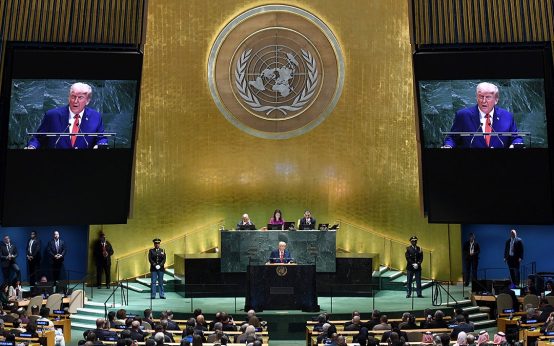 Trump’s Approach to Iran at the United Nations
 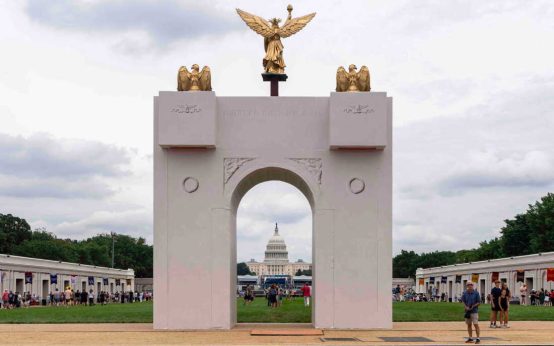 Trump’s Triumphal Arch Controversy