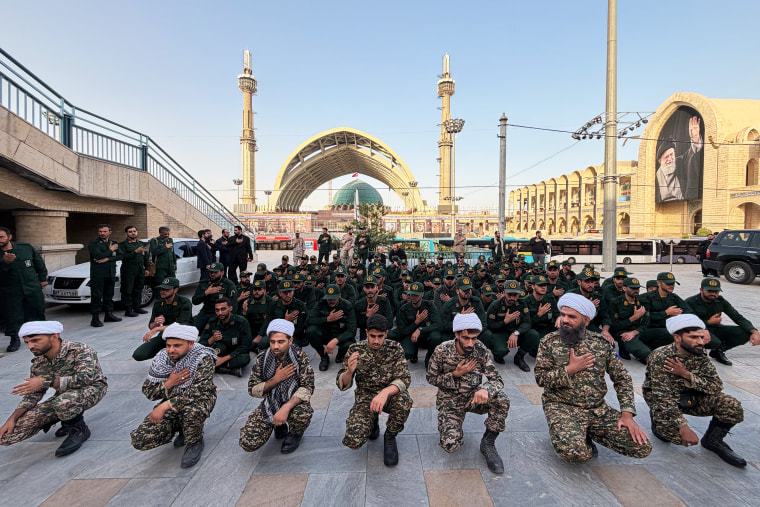
Ayatollah Ali Khamenei, Iran’s former Supreme Leader, is set to be laid to rest after an elaborate multi-day funeral ceremony. The events are planned as both religious and political spectacles. Khamenei and his family were killed in U.S. and Israeli attacks on Tehran on February 28. His influence remains strong across the various aspects of the Islamic Republic, which he controlled for nearly four decades.
This is only the second time Iran has buried a supreme leader. In 1989, the funeral of Ayatollah Ruhollah Khomeini, founder of the Islamic Republic, attracted millions to the capital, Tehran. Alireza Zakani, Tehran’s mayor, estimates up to 20 million people could attend Khamenei’s extensive funeral in the city, as reported by the Young Journalists Club, affiliated with Iranian state television.
The funeral provides a platform for those defending Khamenei’s legacy to showcase their strength, according to Sina Azodi, director of the Middle East studies program at George Washington University. “They would like to portray it as a signal of the Islamic Republic’s strength, ability to resist outside pressure, resilience,” Azodi explains. The organizers plan to gather as many people as possible to demonstrate the so-called loyalty of the people to the Islamic Republic.
Prayers and a viewing of Khamenei’s coffin are scheduled for Saturday and Sunday at the Grand Mosalla in central Tehran. A funeral procession will occur on Monday through the capital’s streets. Events are also planned in Qom, a hub for religious scholarship in Iran, and in Iraq, home to significant Shiite shrines, emphasizing regional influence orchestrated by the Islamic Revolutionary Guard Corps (IRGC).
Mourners recently attended the funeral of Khamenei’s wife, Zahra Haddad Adel, in Tehran. Khamenei will be buried on Thursday in Mashhad, home to the most prominent Shiite shrine in Iran. While Islamic tradition suggests funerals occur soon after death, Khamenei’s funeral is delayed under unique circumstances due to a peace deal with the U.S., confirmed only last month.
Alongside Khamenei, several top political and military figures were casualties of the U.S. and Israeli assaults, leaving the country’s political landscape in flux. Khamenei’s son, Mojtaba, who was injured in the attack, was appointed the new supreme leader in March but hasn’t appeared publicly, stirring concerns about his health. His participation in the funeral remains unconfirmed.
Khamenei’s image still dominates Tehran, depicted alongside Khomeini in nationalistic murals denouncing U.S.-Israeli aggression. The regime and state media refer to the deceased leader as a martyr. Khamenei empowered the IRGC, now dominating Iran’s military, political, and economic sectors.
Mohammad Bagher Ghalibaf, Speaker of Parliament and U.S. negotiation leader, has rapidly gained influence. Ghalibaf regularly criticizes President Donald Trump in statements and is vocal about avenging Khamenei’s death, asserting Iran’s resilience.
The funeral serves as an opportunity for hardened IRGC elements to show their endurance and caution domestic opposition. Massive crowds are anticipated, contrasting with the extensive protests in January that challenged Iran’s regime. Security forces violently suppressed the unrest, which resulted in thousands of casualties.
Security is a primary concern for the funeral. In 1989, chaos disrupted Khomeini’s funeral procession, resulting in deaths and injuries. Militant groups previously targeted Iranian funerals, such as the 2024 Islamic State attack in Kerman. Analysts suggest Iran faces significant challenges post-funeral. Ali Vaez, of the International Crisis Group, notes, “Khamenei fortified the Islamic Republic against its external enemies, but in the process weakened the republican foundations on which its long-term legitimacy depended.”
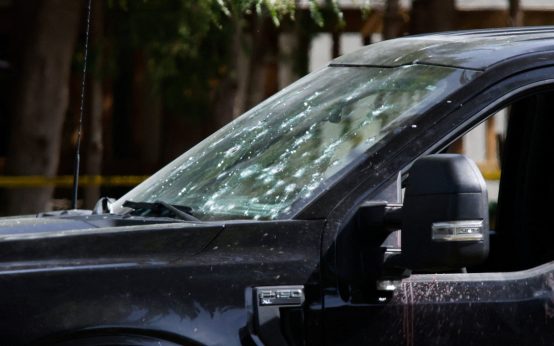 Ontario Synagogue Shooting During Yom Kippur Leaves One Officer and Shooter Injured
 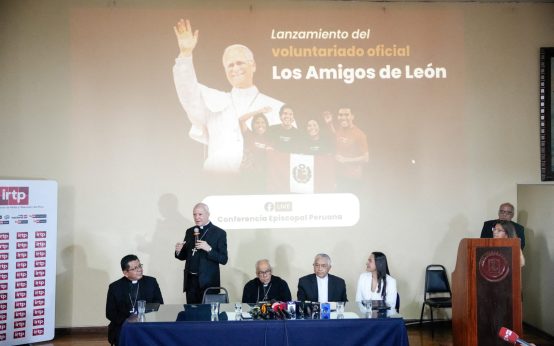 Pope Leo XIV’s Upcoming Visit to Latin America: An Overview
 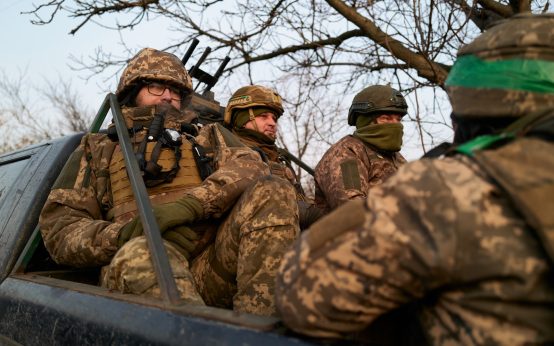 Ukraine Deploys Ground Robots in ‘Operation Vivaldi’
  Understanding AI’s Impact Compared to Historical Threats
  State Department Alerts on Middle East Travel Amid Rising Tensions
  Iran’s Attacks on Bahrain: The Impact on Military Families