
JERUSALEM (AP) – Anger erupted across the Israeli political landscape on Monday following news of a provisional deal between the United States and Iran. The agreement, labeled a disaster for Israel, was met with widespread criticism aimed at one man: Prime Minister Benjamin Netanyahu.
Netanyahu had not released an official statement by Monday evening. However, numerous officials, political rivals, and commentators quickly denounced the agreement, creating an informal referendum on his leadership ahead of the upcoming elections.
Critics highlight Netanyahu’s growing isolation within Israel, the region, and increasingly from the US. They assert that he persuaded President Donald Trump into conflict with Iran, promising outcomes he could not deliver, only for Trump to withdraw from the conflict before Israel was prepared. They claim Netanyahu misjudged Trump’s willingness for a prolonged conflict, was outmaneuvered in negotiations, and found himself sidelined by key regional actors.
“Israel is paying the price for Netanyahu’s arrogance and blindness,” said former Prime Minister Ehud Barak in a Monday interview with Israel’s public broadcaster. “Iran has emerged stronger; Israel has been weakened. This is Netanyahu’s strategic responsibility. He failed.”
Yair Lapid, Netanyahu’s challenger in the upcoming elections, described the agreement as “one of the most shocking failures in Israel’s foreign and security policy… entirely attributed to Netanyahu.”
“It can be fixed, it must be fixed,”
Lapid asserted. “Netanyahu can no longer fix it; we will.”
Potential Impact on Israeli Operations in Lebanon
The US-Iran agreement traps Israel in a predicament, exacerbated by its invasion of southern Lebanon after missiles were fired by the Lebanese group Hezbollah against northern Israeli communities during the conflict’s first week.
Iran insisted throughout negotiations that any US-Iran agreement include the cessation of Israeli hostilities in Lebanon. As negotiations progressed and Trump sought an exit, he grew frustrated with Israel’s attacks in Beirut, warning they might jeopardize an agreement. Ultimately, the American president decided to end the conflict with Iran, limiting Israel’s options in Lebanon.
This decision places Netanyahu in a difficult position, potentially requiring him to scale back a military campaign in Lebanon widely supported within Israel. On Monday, Defense Minister Israel Katz pledged to maintain troop presence in Lebanon.
“Hezbollah only needs to launch a single rocket into a northern Israeli town, and the pressure on Netanyahu—from his base and the opposition—will intensify,” stated Daniel Shapiro, former US ambassador to Israel and member of the Atlantic Council. “Resisting that pressure will be extremely difficult,” Shapiro added, highlighting how Hezbollah and Iran can manipulate this dynamic.
Some hawkish members of Netanyahu’s coalition have strongly criticized the agreement, urging the prime minister to continue the Lebanese campaign—even at the risk of angering the US and derailing the agreement.
“We must demand nothing less than Hezbollah’s dismantlement,”
wrote Itamar Ben-Gvir, the ultra-nationalist Minister of National Security, on X.
Failed Objectives in Lebanon
In Lebanon, the agreement casts uncertainty over Israel’s future campaign, while in Iran, it restricts Netanyahu before achieving his objectives.
Netanyahu and the US initiated the conflict on February 28 with the aim of dismantling Iran’s nuclear ambitions. Almost four months later, Iran resists a devastating air campaign, with Tehran emerging stronger, according to analysts and critics. Its indirect network of allies remains intact, capable of launching missiles at Israel. Tehran holds control over the strategic Strait of Hormuz, impacting global trade and inflating essential commodity prices worldwide.
The extent of damage to Iran’s nuclear infrastructure and ballistic missile program remains unclear.
“Israel believes the war delayed Iran’s nuclear program but did not alter its goals,” wrote political commentator Anna Barsky for Ma’ariv, a leading Hebrew daily. She noted Israeli officials’ concerns that the US-Iran agreement might provide Iran a significant monetary infusion. According to three regional officials who requested anonymity due to negotiation sensitivities, the agreement includes gradual sanction relief and the release of frozen Iranian assets.
“Trump signed an agreement funneling billions of dollars to the ayatollah regime, leaving the nuclear infrastructure intact, maintaining the ballistic threat, and throwing a lifeline to Tehran’s murderous regime,”
wrote Yair Golan, leader of a center-left party and former Israeli general, on X.
This story was translated from English by an AP editor with assistance from a generative AI tool.
 Trump Administration’s Plan to Resettle Afrikaners as Refugees
 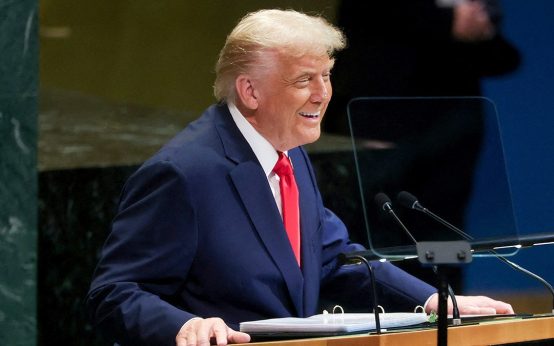 Trump’s Vision on Iran, AI, and Global Security at the UN
 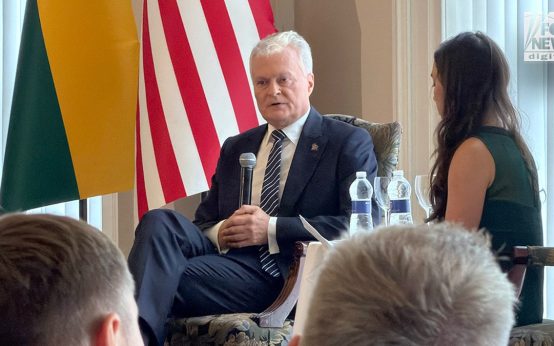 Lithuanian Leader Seeks U.S. Military Commitment Amid Rising Russian Threats
 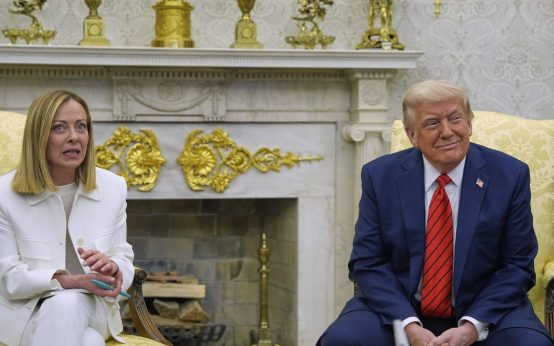 Italian PM Giorgia Meloni Skips UN General Assembly Amid Growing Tensions
 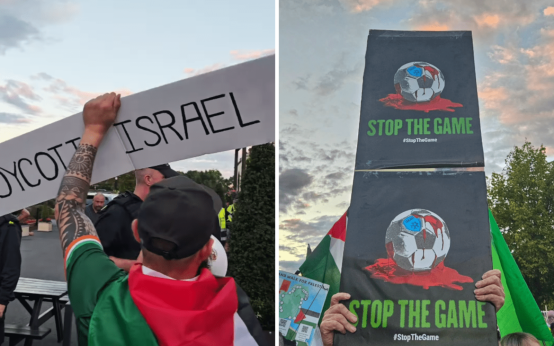 Calls Grow for Ireland’s Soccer Team to Boycott Matches Against Israel
  New U.S. Military Bases Planned in Greenland Amid Strategic Security Deal