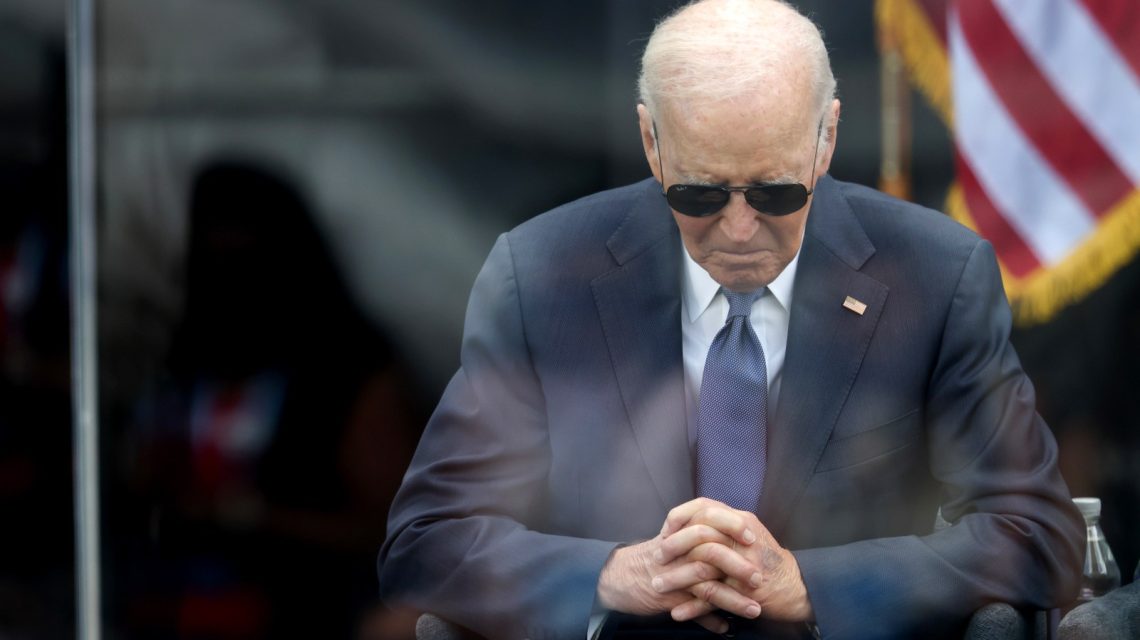
A federal judge appointed by President Donald Trump has ruled against former President Joe Biden’s attempt to prevent the release of audio recordings and transcripts connected to a probe into his management of classified documents.
U.S. District Judge Dabney L. Friedrich determined that the public has the right to access significant evidence behind the Department of Justice’s (DOJ) decision not to charge Biden. The evidence, consisting of private discussions with his ghostwriter for his 2017 memoir, is crucial to understanding the prosecutors’ handling of a major investigation.
This decision allows the DOJ to release these materials, with redactions, to The Heritage Foundation, a conservative think tank, and Congress. Newsweek has contacted The Heritage Foundation and Biden’s office for comments.
The Case Details
The Heritage Foundation submitted a Freedom of Information Act (FOIA) request for information used in special counsel Robert Hur’s investigation into Biden’s handling of classified documents.
Initially, the Biden administration’s DOJ declined to release certain recordings and transcripts, citing FOIA privacy exemptions. After the presidential transition, the Trump administration’s DOJ authorized the release with redactions. Biden, intervening as a private citizen, sued to stop the release, arguing it violated privacy rights.
Reasons for the Judge’s Decision
The legal argument involved 70 hours of recordings made during interviews for Biden’s 2017 memoir, “Promise Me, Dad.” The debate centered on delineating between personal reflections and federal records.
Mike Howell from The Heritage Foundation claimed the tapes would reveal Biden’s lack of readiness for office and demonstrate his disclosure of classified information. Biden’s legal representatives argued that making the tapes public would invade privacy, noting they discuss personal matters like his son Beau’s death.
TJ Ducklo, Biden’s spokesperson, stated Biden cooperated by giving the recordings under the condition they stay private. Ducklo pointed to a lack of public interest justification from the DOJ for releasing the tapes, labeling the effort politically motivated.
Judge Friedrich’s Ruling
Judge Friedrich, appointed during Trump’s first term, determined the intended redactions address privacy concerns well. Her ruling stated that the materials do not cover topics like illness or personal family matters.
She noted the significant public interest in how the special counsel managed prosecutorial boundaries outweighs remaining privacy concerns. The recordings gained attention following a 2024 report by Hur labeling Biden as a sympathetic, elderly man with memory issues, a description criticized by Democrats as politically biased.
Republican lawmakers and conservative groups argue that written transcripts alone are inadequate. They believe the audio is crucial to assess Biden’s cognitive abilities during the interviews.
Next Steps
Biden’s legal team plans to appeal the ruling, seeking a rapid review by the D.C. Circuit Court of Appeals. They may request an emergency administrative stay of Friedrich’s order, delaying the DOJ’s release of any files while privacy issues are reviewed.
If the D.C. Circuit declines to intervene, it could set a precedent for handling private conversations in federal investigations under FOIA. While Friedrich’s decision advances the DOJ’s ability to release files, an appellate court might still delay the process.
 Concerns in U.S.-China Relations Ahead of Summit
  German Chancellor Friedrich Merz Vows to Continue Amid Election Losses
  Nikole Hannah-Jones Reflects on School Choice and Its Impact
  Republican Senator Criticizes Trump’s $5,000 Check Proposal
  Trump’s Approach to Iran at the United Nations
  Trump’s Triumphal Arch Controversy