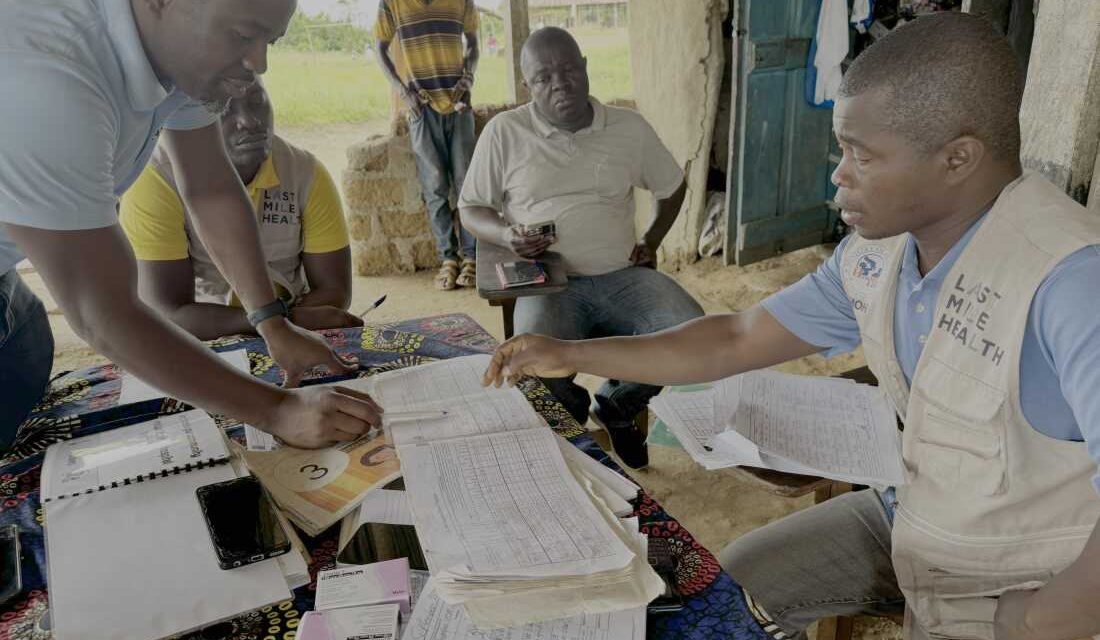
Genesis Whegelee, a community health worker for Last Mile Health in Rivercess County, Liberia, since 2018, plays a vital role in monitoring sick children, pregnant mothers, and individuals needing diagnoses. His work exemplifies the organization’s mission to extend life-saving medical care to remote regions.
In 2007, Dr. Raj Panjabi
, a physician at Brigham and Women’s Hospital in Boston, visited Liberia, his birthplace, post-marriage, bringing $6,000 raised from wedding guests to co-found a crucial health initiative. The organization, Last Mile Health (LMH), strives to ensure no one is left out of reach of essential medical services.
Currently, LMH is receiving the Conrad N. Hilton Humanitarian Prize, with a substantial $3 million gift. This recognition highlights their impactful contributions towards alleviating human suffering, proving how a modest start can lead to substantial influence.
The organization’s journey towards remote healthcare involved deploying community health workers. These workers often have primary education and undergo eight weeks of training to diagnose and treat common childhood diseases like malaria, pneumonia, and diarrhea. They assist pregnant women in formulating birth plans for safer clinic deliveries and monitor potential new disease outbreaks.
The initial funds allowed LMH to hire its first 17 workers, eventually expanding with support from governments and philanthropic bodies. By 2010, LMH offered care for HIV/AIDS patients across 12 of Liberia’s 15 counties, collaborating with the Government of Liberia and the Global Fund to Fight Aids, Tuberculosis, and Malaria.
During the Ebola epidemic from 2014 to 2016, LMH trained over 1,300 health workers to help control the outbreak. During the COVID-19 pandemic, they provided 6.2 million personal protective items, leading to an 81% vaccination rate in Liberia through door-to-door campaigns urging vaccinations.
Presently, LMH supports 20,000 community health workers serving 32 million people in Liberia, Ethiopia, Malawi, and Sierra Leone. They have developed a digital training program as well.
Lisha McCormick, CEO of LMH, acknowledges the challenges faced by those in remote areas seeking medical services, emphasizing the organization’s focus on extending healthcare to these populations. Approximately two billion individuals reside beyond the reach of conventional healthcare.
Peter Laugharn, president and CEO of the Hilton Foundation, underscores the importance of LMH’s work, highlighting the strain on health systems in remote regions, with LMH confronting these challenges directly.
Dr. Panjabi, now president emeritus of LMH, warns of potential millions of deaths by 2030 due to funding cuts by major donors like the United States and European countries. A study published in Lancet indicates U.S. foreign aid reductions by 2025 may result in over 14 million additional global deaths by 2030, including more than 4.5 million children under five.
Panjabi emphasizes the necessity of early disease detection to avoid cutting healthcare funds, with community health workers playing a crucial role in this approach.
A 2025 analysis of 255 studies published on SSRN highlights that community health workers provide cost-effective primary care, significantly reducing expenses while delivering essential services.
Genesis Whegelee exemplifies this impact, actively addressing healthcare concerns in Rivercess County. He visits 42 households every rotation, providing care, health education, and essential medical supplies, available for emergency calls and visits.
His interventions, like treating a feverish baby for malaria, display the direct benefits of community health workers. Such actions prevent the escalation of health issues and foster trust within communities.
Whegelee’s efforts extend to hospital referrals and prenatal care advice, showcasing the broad capabilities of community health workers. His consistent presence promotes vital practices like breastfeeding and vaccinations.
LMH aims to utilize the Hilton Foundation grant to reach more individuals across several countries by 2028, continuing their co-founded Africa Frontline First initiative to expand community health worker programs.
Community health workers, like those supported by LMH, are evolving into professional frontline practitioners offering diagnostic and curative services, according to McCormick and Panjabi. This approach counters the universal issue of illness not met with adequate healthcare access.
LMH’s existence underscores their commitment to placing healthcare within everyone’s reach, anywhere, by training local neighbors as health workers.
Diane Cole, the author and journalist who covers various publications, reflects on these developments and insights.
 Initiative for Safe Integration of Psychedelic Therapies
  Debate Over SNAP Restrictions for Soda Purchases
  U.S. Cancer Foundation Expands Effort in Bangladesh
  The Vision of Lifelong Joint Health: Howard Luks’ Approach
  A Woman’s Journey to Breast Cancer Diagnosis and Advocacy
  Baby Boomers’ Economic Impact on U.S. Markets