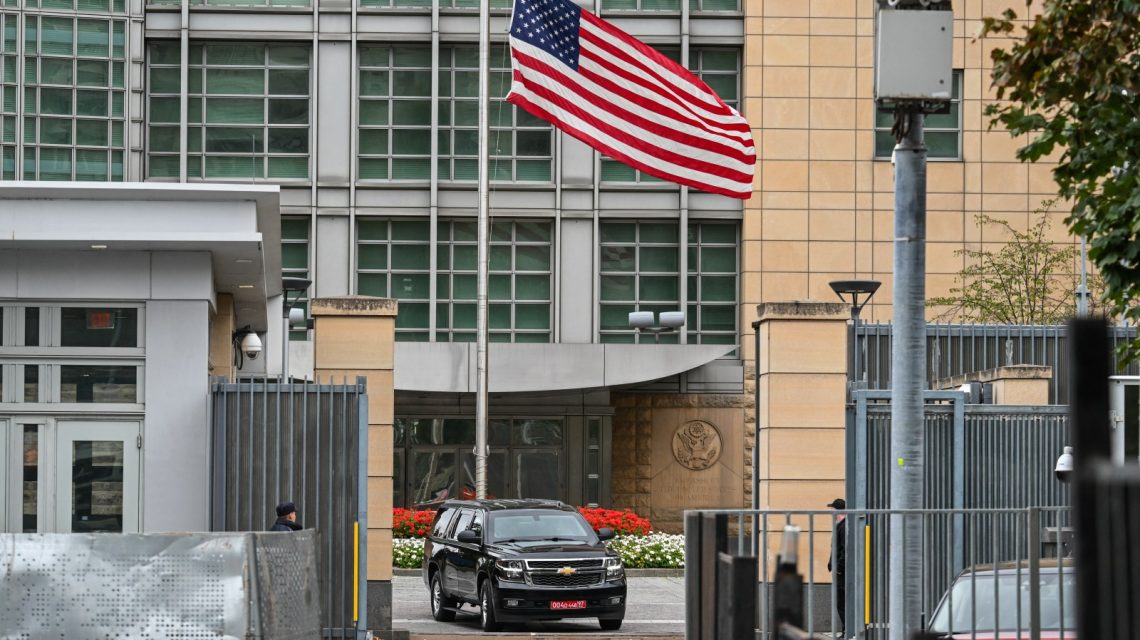
The U.S. Embassy in Russia is closely monitoring reports from the media about a suspected case of pneumonic plague resulting in a death, along with hospital closures and quarantine measures in the Irkutsk region. An official statement issued by the Embassy on Tuesday did not announce a new travel warning, nor did it alter the existing State Department’s Level 4 advisory. This advisory warns Americans against any travel to Russia, citing risks including terrorism, unrest, and wrongful detention. It was issued on December 29, 2025.
The alert from the Embassy stated, “The U.S. government has limited ability to help U.S. citizens in Russia, especially outside of Moscow. The State Department’s Level 4 Travel Advisory [Do Not Travel] for Russia remains in place and states U.S. citizens currently in Russia should depart immediately. U.S. citizens planning travel to Russia are again strongly advised not to travel to Russia due to risk of wrongful detention and security concerns.”
The World Health Organization (WHO) noted that Russian officials had reported no plague cases in Irkutsk in a statement to Newsweek. However, the official cause of a laboratory worker’s death remains unverified as of Tuesday.
The case gained international attention because initial reports associated Daria Shipilova’s death with pneumonic plague, a severe form of plague that impacts the lungs and can be transmitted by respiratory droplets. According to the WHO, untreated pneumonic plague can be lethal within 18 to 24 hours of symptom onset. Common antibiotics can effectively treat the infection if offered promptly.
Despite uncertainties, the WHO’s initial evaluation found the public health risk to be “moderate to low” for Irkutsk. The risk for Russia overall was deemed low and very low for the WHO European region. The assessment may change as new information is made available.
U.S. Embassy Update
In a post on the State Department’s TravelGov account, officials stated: “Irkutsk, Russia: The U.S. Embassy is aware of press reports from the Irkutsk region of suspected pneumonic plague resulting in the death of an individual and of associated quarantine measures in, and closures of, hospitals in Irkutsk. We continue to track the situation closely.”
The statement linked the suspected plague death, quarantines, and hospital closures to media reports without independently verifying those details or modifying U.S. travel guidelines. The State Department’s advisory remains at Level 4, urging U.S. citizens in Russia to leave immediately and emphasizing limited U.S. government assistance, mainly outside Moscow.
What WHO and Experts Have Said
The WHO’s monitoring system picked up media stories on October 2 about a suspected pneumonic plague death in Irkutsk Oblast. A response was sought from Russian health authorities on October 3 about the death and possible implications for international public health.
Russian authorities on Tuesday reported that the woman’s illness presented initially as a typical acute respiratory infection and clarified that no plague case had been registered. They found no dangerous pathogens among her contacts.
Dr. Amesh Adalja from the Johns Hopkins Center for Health Security stated that the reaction did not align with typical plague responses, emphasizing that plague is treatable with modern antibiotics. Normally, facilities with exposure risks have protocols for providing preventive antibiotics.
Who Was Daria Shipilova?
Daria Shipilova, aged 28, worked at the Irkutsk Anti-Plague Institute as a laboratory technician. Authorities cited pneumonia of unknown origin as her cause of death, and Russia’s health watchdog found no pathogens in her body associated with her workplace. Media reports suggested she fell ill after a lab accident involving Yersinia pestis, the bacterium causing plague. These claims have not been verified, and the WHO declared no cause of death established as of Tuesday.
Shipilova’s workplace studies dangerous pathogens in an area where plague occurs naturally among wild animals.
Experts Raise Biosecurity Questions
Some experts questioned the reported response measures if the illness was not plague linked. Adalja referred to the history of offensive biological weapons research in the Soviet Union and noted that some anti-plague institutes handled numerous pathogens.
Concerns were also raised over the 2018 Novichok incident in Salisbury, England, tying it to Russia’s use of hybrid warfare tactics.
Dr. Kevin Esvelt from MIT’s Sculpting Evolution research group emphasized caution, questioning why authorities would not disclose the agent involved, assuming expansive measures were enacted.
The alleged presence of FSB agents and hospital lockdowns has not been independently confirmed by the WHO or the U.S. Embassy. WHO assessments indicate low risk beyond Irkutsk, while Shipilova’s fatal pneumonia remains unattributed. WHO will maintain monitoring and update evaluations as new data emerges.
 Asghar Farhadi Criticizes Hollywood’s Portrayal of Iran
  Grief and Remembrance: A Mother’s Journey and National Vigilance
  Controversial Trump Statue Displayed in European Parliament
  A Mother’s Reflection on Her Son’s Ordinary Yet Remarkable Life
  Commemorating the Impact of the 2023 Hamas Attack on Israel
  French PM Defends Police Amid Student Protests, Controversies Emerge