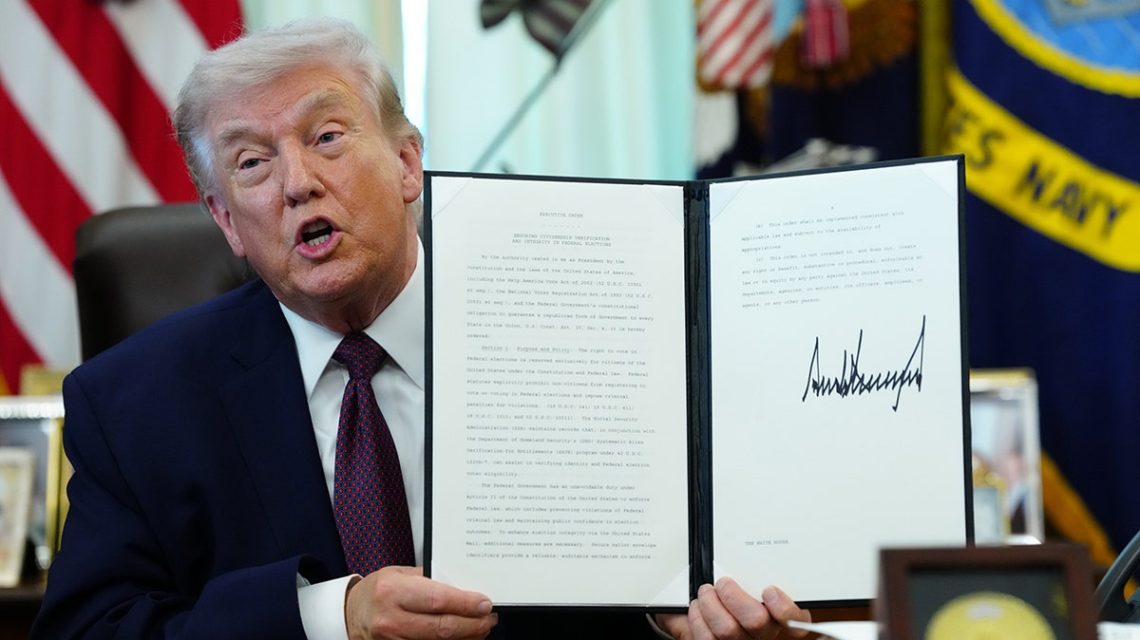
President Donald Trump’s recent executive order seeks to implement new federal mail-ballot rules before the 2028 presidential election. Legal experts express concerns about its feasibility.
Trump’s order, issued in March, directs the Postal Service to establish standardized ballot envelopes with an ‘Official Election Mail’ marker and unique machine-readable barcodes. The Postal Service could reject ballots not meeting new standards or linked to individuals not listed as eligible mail voters by states.
On September 14, the Supreme Court upheld an injunction that prevents these rules from being implemented before the upcoming midterm elections. The question remains whether these changes can be in place before 2028.
Experts believe the Supreme Court’s decision will focus on the balance between federal mail regulation and states’ authority over elections. Michael Morley, a law professor at Florida State University, argues that if perceived as an overreach into federal election regulation, the order might be invalidated. The president’s constitutional authority over elections remains limited.
Conversely, the Court might consider the order as necessary administrative postal duties. Such a view might support its implementation to ensure mail integrity and efficiency, Morley suggests.
Despite the Supreme Court ruling 7-2 against immediate implementation before the midterms, confusion surrounds potential future rulings about the Postal Service’s scope. Justice Brett Kavanaugh noted that although the Postal Service might regulate election-related mail, expedited rule implementation could conflict with existing laws.
Stephen Richer from the Cato Institute predicts the administration might lose on the merits, citing the Constitution’s allocation of electoral regulation to Congress and states.
Others view the Supreme Court’s decision as a procedural delay rather than a substantive stance against mail voting regulation. Chad Mizelle from America First Policy Institute believes the Postal Service could impose requirements for verified voter lists and tamper-resistant envelopes but needs more preparation time.
Despite these legal processes, Trump described the injunction as a major setback, criticizing it through a post on Truth Social. Although isolated fraud cases exist, widespread mail voting fraud remains unproven.
Ilya Shapiro from the Manhattan Institute highlights the ongoing debate over control of mail voting rules. Whether state, Congress, or federal agencies under postal statutes set these rules remains unresolved.
 Experts Doubt Export Ban Will Lower Fuel Prices
  Trump Delivers Warning to Iran, Cuba at UN General Assembly
  Trump Delivers Stern UN Speech on Iran, AI, and Global Security
  Lukashenko and Putin’s Unique Relationship and Belarus’ Strategic Role
 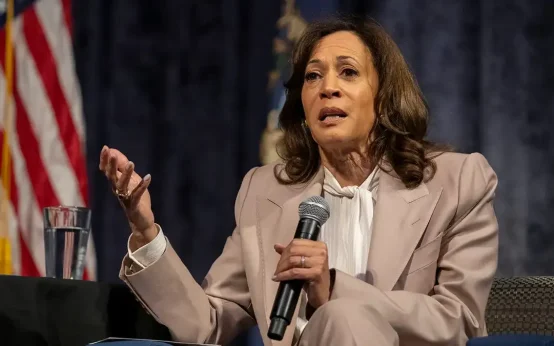 Harris Discusses Potential 2028 Presidential Run
  Far-Left Groups Allegedly Organize Protests in Austin