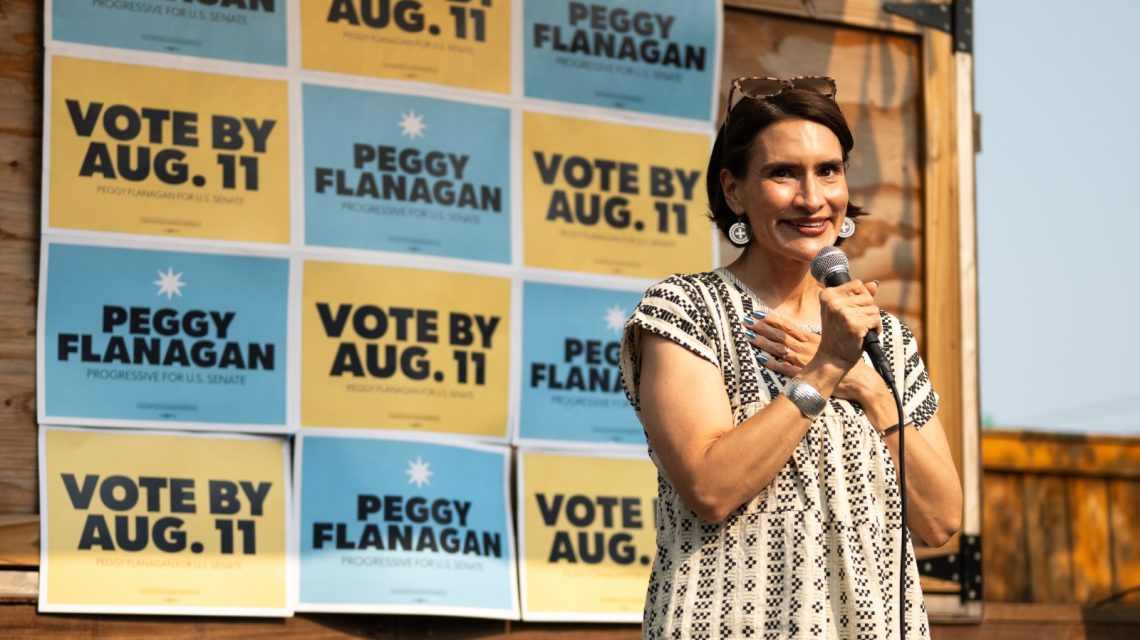
Minnesota Democrats have emphasized the merits of organizing and advocating for change over traditional advertising and party loyalty. In the race to replace Tina Smith as the Democratic candidate for the U.S. Senate, Lieutenant Governor Peggy Flanagan succeeded against Representative Angie Craig, capturing 59 percent of the vote compared to Craig’s 39.4 percent, with 99 percent of the votes counted.
Flanagan’s campaign strategy focused on criticizing Israel’s actions in Gaza and rejecting corporate PAC contributions, positioning Craig as associated with Washington’s establishment. Despite Craig’s substantial fundraising of $12.6 million, Flanagan’s less funded campaign of $6.4 million gained traction due to strategic endorsements and campaign dynamics.
Craig and Flanagan represented differing ideological approaches, with Craig seen as aligned with centrism compared to Flanagan’s progressive stance. Flanagan’s rejection of corporate PAC money required a robust ground campaign. According to AdImpact, Craig spent $9.6 million on ads and Flanagan $1.9 million, yet Flanagan’s focus on personal engagement through events and tours proved effective.
Flanagan rallied support by speaking on issues like Medicare for All, raising minimum wages, and advocating universal childcare. Her approach mobilized 40,000 people to attend the Minnesota Democratic-Farmer-Labor (DFL) Party precinct caucuses, crucial for securing delegates for the party’s endorsement. Her success at the DFL convention solidified her standing as the frontrunner.
Flanagan engaged voters through extensive door-to-door campaigns. She noted that many volunteers were first-time campaign workers, showing a grassroots surge. Her challenge against GOP’s candidate, former sportscaster Michele Tafoya, will involve similar messaging that emphasizes economic populism and critiques of Tafoya’s policies.
The Cook Political Report suggests a likely Democratic victory in this race, though Minnesota’s historical voting pattern favors Democrats. Flanagan plans to work with progressive senators, aiming to shift the Senate left. She intends to increase collaboration within the Democratic Caucus and with Republicans to promote bipartisan cooperation.
Flanagan commented on the emerging wave of progressive Democrats representing voters’ interests, distancing from corporate or special interest influences. Her aim is to use this momentum for impactful change in national politics, reflecting the growing demand for fighters over established norms.
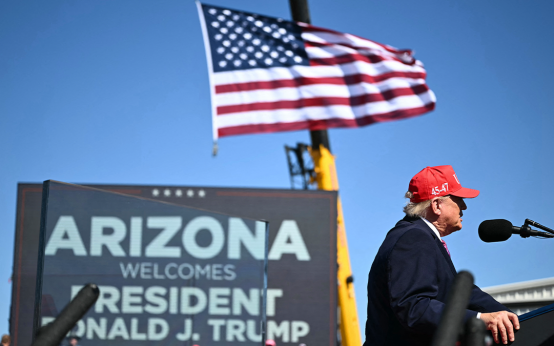 Trump Encourages Arizona Voters to Support GOP in Upcoming Elections
  The Impact of Trump’s Presidency and Midterm Elections
  Challenges Facing Polling and Public Understanding
  Former U.S. Ambassador to Greece Faces Ethical Violation Allegations
  Maintaining America’s Infrastructure: A Crucial Task
  Supreme Court’s Impact on Democratic Representation