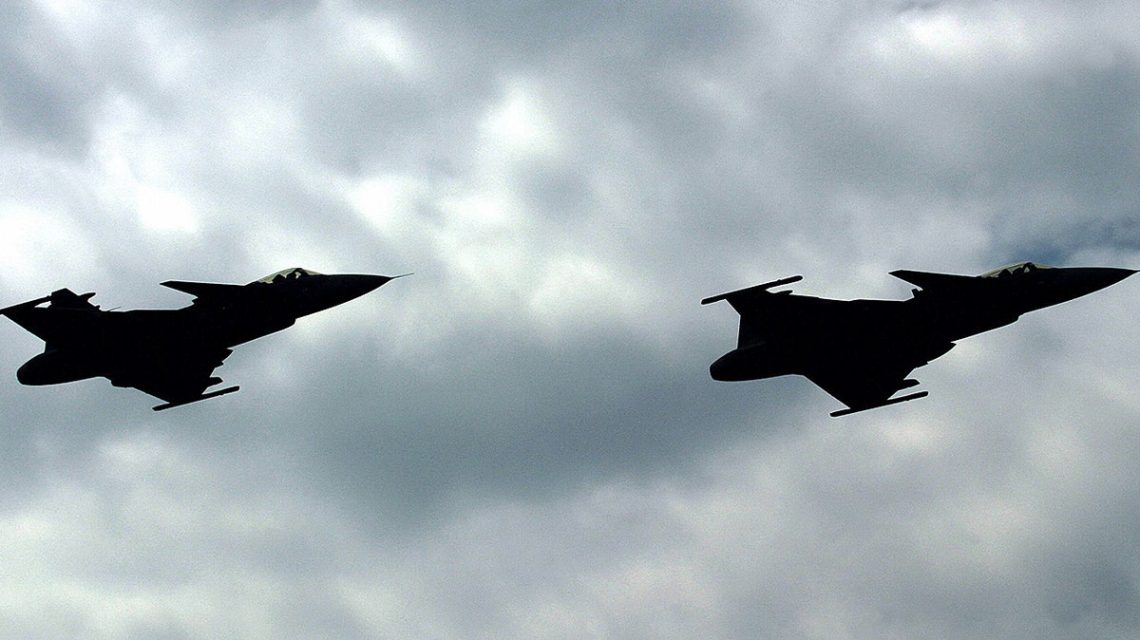
On September 24, Finnish and Swedish fighter jets scrambled to intercept Russian military aircraft flying over the Gulf of Finland. This operation marks an important step in Nordic defense cooperation amidst growing tensions with Moscow.
The mission occurred just one day before Russian President Vladimir Putin dismissed European warnings about threats from Moscow in the region. Putin also mocked Estonia’s new defense minister regarding the Baltic state’s defensive preparations against a potential Russian attack.
According to the Swedish Armed Forces, Finnish F/A-18 Hornets and Swedish JAS 39 Gripens were mobilized when Russian aircraft were detected in international airspace. The Russian formation included a Tu-134 transport plane, MiG-31 interceptors designed for long-range threat detection, and Su-30 fighter jets for air-to-air and air-to-ground combat.
This represents close cooperation in practice,” said Maj. Gen. Jonas Wikman, Swedish Air Force commander. “Years of trust and strong relationships allow seamless operation as air forces, nations, and Allies.
The concern over Russian activity along NATO’s eastern flank has increased. Past incidents include Russian drones entering Polish airspace, a helicopter crossing from Kaliningrad to Poland, drones crashing into Romania and Moldova, and Russian jets violating Estonian airspace before being intercepted by NATO aircraft on September 18.
In Estonia, Defense Minister Martin Herem warned of a potential Russian military threat within a year. Prime Minister Kristen Michal indicated readiness to close border crossing points swiftly if threat assessments change.
During the St. Petersburg International United Cultures Forum, Putin downplayed warnings from Estonian Defense Minister Herem. “We are not preparing for military action against Europe,” Putin said, labeling such concerns as “political clowning.”
Estonia shares the Gulf of Finland with Finland, and together with Sweden, they continue enhancing their defenses as part of NATO. Finland became NATO’s 31st member in April 2023, doubling the alliance’s border with Russia. Sweden joined as the 32nd member in March 2024.
The Baltic Sea region stays alert due to incidents involving pipelines, sabotage, and hybrid threats following Russia’s Ukraine invasion in 2022. NATO has focused on enhancing protection of eastern members against Russian actions.
NATO Secretary General Mark Rutte emphasized NATO’s defensive position. He warned that any attack on a member would meet a strong response. During a visit to Iowa, Rutte highlighted the close ties between the United States and Europe.
European intelligence officials cautioned that Russia could test NATO’s defenses. Denmark’s Defense Intelligence Service labeled the risk of a Russian attack on NATO as “low but growing,” though a full-scale invasion remains unlikely.
 Pope Leo XIV Visits Lourdes, Addressing Healing and Spiritual Renewal
  President Trump Praises UK Law Enforcement for Averting Terror Plot
  The Impact of Tibet-Nepal Floods and China’s Role
  Concerns Over U.S. Reliability Among Allies
  Pope Leo XIV Calls for End to Medically Assisted Suicide During Lourdes Pilgrimage
  Prospects for Negotiated Solution to Iran Conflict