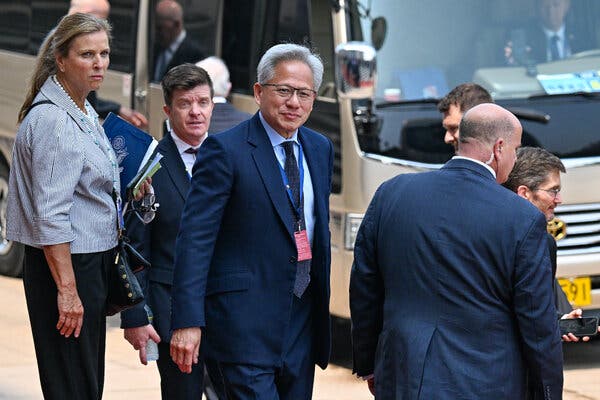
Nvidia’s powerful H200 chip, once seen as a key asset for China’s artificial intelligence advancements, remains unsold in the country. Despite hopes for improved U.S.-China relations, not a single chip has changed hands there.
Last year, President Trump announced that Nvidia could sell its advanced chips to China. The decision was expected to benefit China’s AI efforts while strengthening Nvidia’s market position. These cutting-edge AI systems demand significant computing power, and Nvidia leads this field globally.
U.S. policy had long aimed to prevent China from acquiring such technology. Officials warned that allowing the sale might diminish America’s lead in AI by enabling China to close the technological gap.
Despite these concerns, China has not purchased any H200 chips. This highlights the growing mistrust between the technological giants. U.S. and Chinese companies had previously collaborated on transformative products like the iPhone. However, the relationship has deteriorated as both nations now view technology as crucial to economic dominance.
Nvidia, a leader in AI-driven semiconductor manufacturing, faces challenges as Washington and Beijing both regard AI technology as a national security issue. The technology’s use in global conflicts underscores this point.
Chinese officials promote domestic alternatives from companies like Huawei and Cambricon, prioritizing industrial self-reliance. After a meeting with Xi Jinping, President Trump noted that China’s hesitancy to purchase the H200 chip aligns with this strategy.
 FBI Receives Over 1 Million Internet Crime Complaints
  Efforts to Control AI Content Quality by Platforms Like LinkedIn and Snap
  Elon Musk’s Plan to Expand Starlink’s Role in Ukraine
  Senate Confirms Jules “Jay” Hurst III as Pentagon Comptroller
  Closed-door AI framework surprises tech policy sector
  Advancements in Heart Monitoring with AI Stethoscope and Smart Toilet Seat