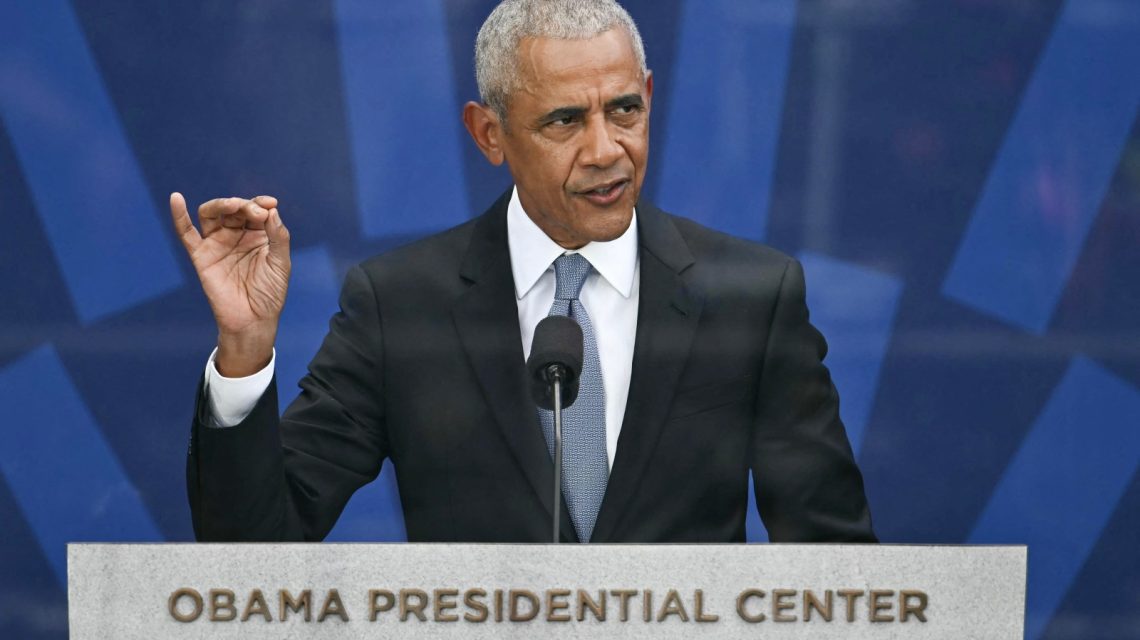
Barack Obama, the former President, expressed his “very happy” reaction to President Donald Trump’s success in securing a ceasefire with Iran. However, he warned that the United States might find itself in a weaker position despite months of military engagement.
In an interview with NBC’s Today, Obama welcomed the end of the fighting but questioned the overall achievements of the war. These comments come as the Trump administration aims to capitalize on the recent ceasefire and pursue further negotiations with Tehran.
“I am very happy to see a ceasefire,” Obama said. “I’m hopeful that it holds.”
These remarks represent one of Obama’s most direct evaluations of the conflict, highlighting the ongoing debate on its necessity and comparing it to the diplomatic efforts during his own presidency.
Obama Questions the War’s Worth
While speaking positively about the ceasefire, Obama suggested that the conflict might not have put the United States in a better position.
“We’ve now fought a war, spent billions and billions of dollars, put enormous strain on our military,” Obama commented during the Today interview. He added that the U.S. might now be “back where we were before we started the war, except maybe a little bit worse off.”
These statements come as policymakers, military analysts, and foreign policy experts continue debating whether any side can declare a clear victory. Obama’s comments also referred to the debate over the 2015 Iran nuclear agreement, known as the Joint Comprehensive Plan of Action (JCPOA), which he helped negotiate, and from which Trump withdrew in 2018.
Meanwhile, Trump touted the war as a significant success and dismissed claims that Iran is better off. In a recent Truth Social post, he declared that Iran “doesn’t, any longer, have an Air Force, a Navy, Antiaircraft Equipment, Radar, or practically anything else.”
Military Experts on the Conflict Outcome
The question of who emerged stronger remains contentious. Some military experts claim Iran faced substantial setbacks, including damage to its military assets and weakened regional proxy groups. James Stavridis, a retired U.S. Navy admiral and former NATO commander, told Newsweek it is challenging to argue the war achieved a significant positive outcome for the U.S.
Others argue that Iran survived a major military campaign and returned to negotiations without regime change, allowing Tehran to claim political success despite losses. Mark Cancian of the Center for Strategic and International Studies believes the U.S. “is in a better position.” He noted that the U.S. and Israel executed about 20,000 strikes against Iran, though their full effects aren’t widely seen due to Iranian information suppression.
These differing views reflect the broader debate referenced by Obama, as supporters argue military pressure led to the ceasefire while critics question the cost’s worth.
Obama’s Iran Nuclear Deal in Focus
Obama also highlighted his key foreign policy achievement, the 2015 JCPOA. The accord involved Iran, the U.S., and world powers, placing restrictions on Tehran’s nuclear activities in exchange for relief from sanctions. Supporters claim it restricted Iran’s nuclear program and enabled extensive international monitoring.
Trump withdrew from the agreement, arguing it did not permanently stop Iran’s nuclear ambitions. After this decision, Iran slowly began to pull back from its commitments, enhancing uranium enrichment. Obama noted in his Today interview that many current negotiation issues had been covered under the original agreement, and questioned whether new terms would differ significantly.
“This administration, or a prior version of this administration, pulled out of it [the JCPOA], which caused then Iran to develop more nuclear capacity,” Obama stated.
Republican Responses to Trump’s Strategy
Obama is not the only one to voice concern about the conflict’s resolution, as Republicans are divided over Trump’s Iran policy. Some GOP lawmakers criticized the emerging agreement. Senator Bill Cassidy called it a “tremendous foreign policy blunder” and questioned whether Iran’s nuclear ambitions could be permanently restrained.
Conversely, some Republicans support Trump’s approach. Senator Lindsey Graham noted agreement with Trump’s view that Iran’s ability to threaten and support terrorism has waned. Graham called for continued diplomatic efforts regarding Iran’s nuclear goals.
These varied responses emphasize the debate in Washington over whether the diplomatic efforts constitute a strategic success or a concession that leaves security concerns unresolved.
Future Implications
The ceasefire has temporarily halted hostilities, but significant questions remain about Iran’s nuclear program, sanctions, and the long-term viability of any agreement. Regional tensions persist, highlighted by Israeli strikes in Lebanon, raising concerns about the stability of peace efforts.
Both Obama and Trump seem to agree on the importance of avoiding a return to open conflict.
 Federal Appeals Court Decision Against Trump’s ‘Third-Country’ Deportation Policy
  President Trump’s Controversial Ban on Media Outlets Sparks Press Freedom Concerns
  U.S. Security Agreement in Greenland Sparks Optimism and Concerns
  Cook County’s Property Tax Bridge Loans
  A Controversial Stance on Immigration Policies Sparks Debate in South Carolina
  Trump Administration Challenges In-State Tuition for Undocumented Students