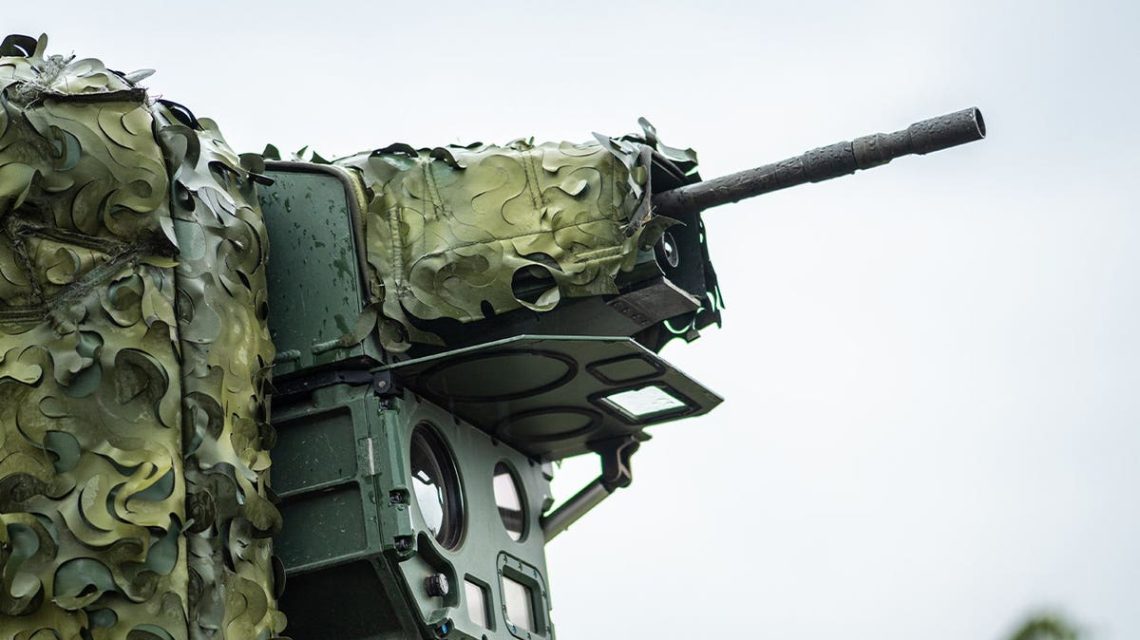
For many years, laser weapons have been one of the Pentagon’s most daring technological pursuits. These weapons promise to eliminate enemy drones and missiles quickly and without the expense of traditional interceptors. After extensive testing and setbacks, the Army is on the verge of a significant advancement in bringing this vision to the battlefield.
High-Energy Laser Developments
The Army is approaching a contract award for the enduring high energy laser (E-HEL). When implemented, E-HEL would be the first permanent laser weapon system for the service. This system represents a major development in adapting to new warfare, where cheap drones can breach conventional air defenses and deplete costly missile interceptors.
Lt. Gen. Frank Lozano, the Army acquisition chief, stated in July that negotiations were ongoing with AeroVironment for the E-HEL. He emphasized the system’s promising capabilities demonstrated during testing at White Sands Missile Range in New Mexico. A source confirmed that the Army is nearing a contract award, although discussions continue.
Branch Collaborations and Advancements
The Army’s initiative aligns with activities across other military branches. In July, the Air Force revealed its use of compact laser weapon systems at overseas locations for drone defense. The Navy has also been testing its high energy laser on destroyers, integrating these weapons into naval operations.
These efforts signal a new phase for directed-energy weapons following years of research and substantial investment. Global interest in such technology is growing. Israel and China are both expanding their own laser systems, indicating a collective international shift towards directed-energy capabilities.
Technical Challenges and Operational Integration
The U.S. Department of Defense has invested significant time addressing technical challenges associated with laser weapons. Tom Karako of the Center for Strategic and International Studies highlighted the importance of solving issues beyond laser power, such as environmental durability, operational training, and maintenance. Additionally, the military must ensure laser systems do not inadvertently affect satellites or aircraft, complicating their deployment.
The rapid deployment of low-cost drones has forced militaries to rethink traditional defense strategies. Regarding lasers, they are unlikely to replace missiles completely. Lasers are line-of-sight weapons, effective against visible threats but limited in engaging distant ones. Thus, they are becoming an added layer in the Pentagon’s defense, complementing rather than replacing kinetic interceptors.
Additional Directed-Energy Innovations
The Army is also developing a cost-efficient missile system to counter drones, projected to cost below $150,000 per interceptor. This is part of broader efforts to expand economical options for unmanned threats.
Beyond lasers, the Pentagon is exploring high-powered microwave systems like Epirus’ Leonidas for drone defense. These systems disrupt nearby drones with electromagnetic energy bursts. Additionally, radio-frequency technologies are being tested to jam drone communications or interfere with navigation, which can potentially neutralize unmanned aircraft effectively.
 President Trump Proposes ‘Super Intelligence’ as New AI Term
  First Lady Melania Trump’s AI Education Push Amid Concerns
  Expansion of Data Centers Fueled by AI Development
  Beijing’s Tactical Undermining of U.S. Supremacy Through AI
  Controversy Surrounds Automated License Plate Readers Across the U.S.
  Trump and Harp Sued Over Truth Social Subscriber Program