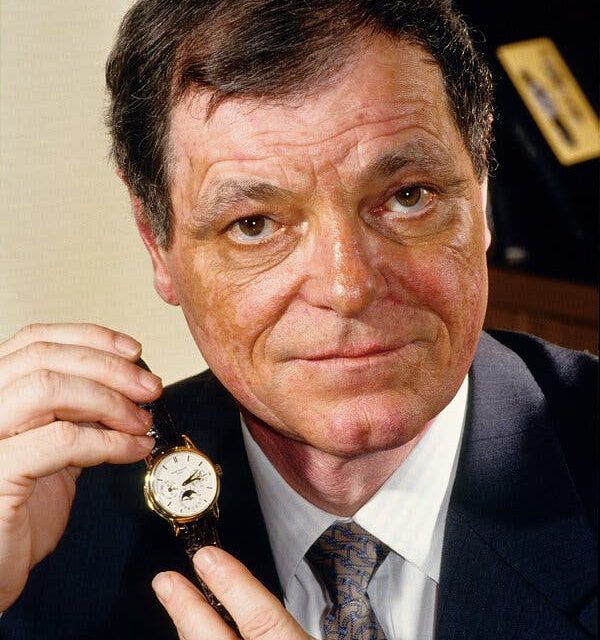
In an era dominated by electronic watches, Philippe Stern marketed $40,000 handmade watches as symbols of status, rejuvenating a struggling industry. Philippe Stern, a key figure in the luxury watch brand Patek Philippe, passed away on June 14 at the age of 88. Stern played an instrumental role in navigating the Swiss watch industry through the challenges posed by the advent of quartz timepieces in the 1970s.
Born into a family with a rich history in watchmaking, Stern became the third generation to helm Patek Philippe. Under his leadership, the company expanded its range by introducing new models that tested the limits of mechanical watchmaking. His marketing strategy emphasized the watches as a status symbol comparable to luxury cars, sparking interest among collectors and enthusiasts worldwide.
The watchmaking landscape in the 1970s was dramatically altered by the ‘quartz crisis,’ a period characterized by the rise of electronic watches. Initiated by Seiko’s release of the first quartz wristwatch, these timepieces offered unparalleled accuracy at a fraction of the cost of traditional mechanical watches. This innovation led to a sharp decline in the demand for Swiss mechanical timepieces, causing significant job losses in the industry.
Despite these challenges, Stern’s vision and determination provided a blueprint for survival and growth in the Swiss watch sector. His influence is noted by various watch enthusiast platforms, including Italian Watch Spotter, which lauded him as a guardian of a vision that shaped contemporary watchmaking. Patek Philippe’s commitment to craftsmanship and tradition, championed by Stern, stood as a testament to resilience in the face of technological disruption.
Stern’s efforts to revive the industry focused not only on innovation but also on cultivating a collector culture. He engaged directly with enthusiasts through magazines and websites, emphasizing the value and prestige associated with owning a handmade mechanical watch.
Philippe Stern’s legacy in the watch industry reflects the importance of balancing tradition with innovation, ensuring the survival of an art form threatened by technological advances. His contributions continue to influence the modern approach to luxury watchmaking.