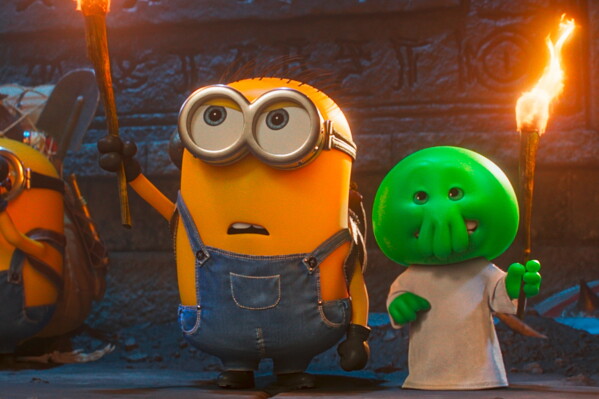
Filmmaker Pierre Coffin is renowned for creating the language of Minionese. It is a dialect that, like most elements of the Minions’ universe, took time to develop. Coffin keeps a file on his phone filled with unique words and phrases to inspire the language. The challenge, he states, is in finding the right melody for the dialogues.
Sixteen years have passed since Coffin co-directed the first “Despicable Me” film for Illumination. Since then, he directed “Despicable Me 2,” “Despicable Me 3,” and the “Minions” movie. Yet, the Minions have remained a complex and somewhat mysterious creation for him.
Coffin, a French Indonesian animator based in Paris, has balanced the expectations of a major Hollywood franchise and the unique storytelling challenges posed by supervillain narratives and gibberish-speaking sidekicks. Coffin reflects on his experience with the series, noting a sense of distance after the first film introduced a villain transformed by three young girls. In contrast, the second film’s story arc felt less clear to him.
The still-playful Coffin, who has mixed feelings about the franchise, admits to having reservations about past projects, including 2022’s “Minions: The Rise of Gru,” which he chooses not to discuss. The last sequel he directed was “Despicable Me 3” in 2017, after which he decided to step back. Conversing with Chris Meledandri, Illumination’s CEO, Coffin expressed his decision to move on, content to help with the voices but eager to explore new avenues.
Yet, the lure of the Minions proved strong. Coffin returned for “Minions & Monsters,” marking the third standalone feature focusing on these popular characters. Here, Coffin experienced more satisfaction, embracing a project in which they become filmmakers alongside legendary figures like Charlie Chaplin in 1920s Hollywood. The concept was compelling enough to draw Coffin back to writing, collaborating with Brian Lynch on the script.
In “Minions & Monsters,” the yellow characters emerge as true protagonists, reminiscent of silent film stars. According to Meledandri, the film strikes a balance between classic Minion humor and a captivating narrative. Despite years of filmmaking and billions in box office revenue, the Minions continue to surprise Coffin.
Their evolution traces back to “Despicable Me,” where initial designs depicted them like bulky thugs, later molded into robotic figures, and eventually becoming charming mole-like men. The creativity of Coffin, Chris Renaud, and Eric Guillon refined them further, adding goggles, overalls, and names like Stuart and Kevin, cementing their legacy.
While Minionese remains mostly unintelligible, it poses a challenge when they take center stage. The risk lies in sidelining them or creating tiresome dialogue stretches without real human interaction. Coffin emphasizes the importance of maintaining engaging sequences, noting that adjustments are made if something becomes too lengthy or annoying.
Coffin’s improvisational approach to voicing the Minions required adaptation when writing the latest film. He advised Brian Lynch against scripting in gibberish, opting instead to draft in English, which allowed for clarity and collaboration.
Regarded as more than mascots, the Minions embody spirit and personality. They are integral to Illumination’s success, driving billions in merchandise. Coffin acknowledges varied interpretations but stresses their essence as characters with distinct personas.
Through “Minions & Monsters,” Coffin explored friendships, discovering that many lifelong bonds form in childhood. This revelation helped him understand the Minions as akin to children, unruly and mischievous, beyond mere animated tasks, shaping their actions and interactions in relatable terms.
 Alan Ritchson Faces Backlash Over Political Remarks
  Ella Langley’s Record-Breaking Chart Success: The Rise of ‘Choosin’ Texas’
  Presley Gerber’s Death: Tributes from Friends and Family
  Exploring the 2025 Booker Prize Shortlist
  Speculation Around Aaron Rodgers and Mallory Edens’ Alleged Relationship
  Circumstances Surrounding Hayden Panettiere’s Death