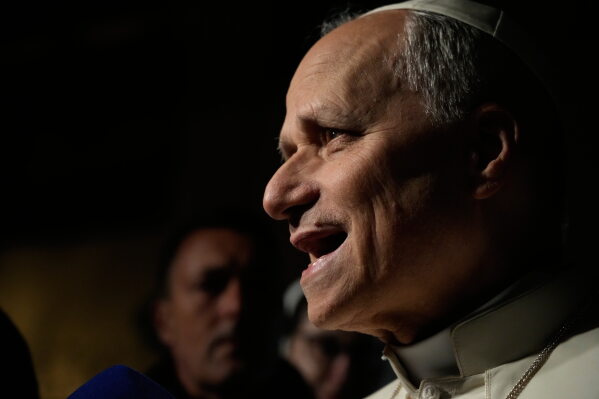
On Monday, Spanish lawmakers warmly welcomed Pope Leo XIV with a standing ovation after his address to parliament, where he emphasized the importance of respecting migrants’ rights and international law. This historic speech marked the first time a pope addressed Spanish lawmakers. It signified a level of acceptance of the Catholic Church in Spain, a country with a largely secular outlook.
During his visit, Pope Leo XIV called for a ‘moral renewal’ in political and public life to ensure the dignity of all individuals, including the vulnerable, unborn, and migrants. He stated, “The moral greatness of a nation is manifested, above all, in its capacity to accompany, protect and love those lives that are most fragile.” The enthusiastic response from lawmakers, including a seven-minute standing ovation and chants of “Viva el Papa!” underscored the significance of the occasion.
Pope Leo XIV’s visit to Spain attracted large crowds. An estimated 1.5 million people attended a mass on Sunday, while 600,000 young attendees gathered for a prayer vigil. This visit was the first papal visit to Spain since Pope Benedict XVI’s in 2011.
Plea for Dialogue Amid Global Tensions
Amidst escalating tensions between Israel and Iran, Pope Leo XIV urged for dialogue and “diplomatic courage” to resolve disputes peacefully. He expressed concern over the rising defense budgets in Europe, especially after the Russian invasion of Ukraine, noting that rearmament is returning as a prominent response to global insecurity. He repeated his call for rigorous ethical control over artificial intelligence in weapon systems, emphasizing that life-and-death decisions should remain a human responsibility.
Emphasis on Migrant Dignity and Integration
Pope Leo praised the efforts of Spain’s Socialist-led government to promote immigration on economic and humanitarian grounds. Earlier in the year, the government launched an initiative to legalize hundreds of thousands of unauthorized immigrants. He stressed the importance of creating conditions that allow migrants to remain in their home countries while providing safe and respectful opportunities for those fleeing conflict or climate issues. He stated, “This gives rise to a twofold demand for social justice: to offer safe and legal pathways, a respectful welcome and real opportunities for integration; and to promote the right to remain in one’s own land.”
Historical Context of Justice and Rights
Referencing the 16th-century Spanish School of Salamanca, Leo acknowledged the Church’s past failures, particularly its role in the slave trade and colonial conquests. He highlighted the theologians who advocated for the moral limits of power, emphasizing that reason should not justify self-interest or force. Leo recently apologized for the Vatican’s historic role in legitimizing slavery.
Pope’s Visit Amid Political Turmoil
Pope Leo’s visit coincided with a challenging period for Prime Minister Pedro Sánchez. Sánchez’s Socialist Party has faced corruption scandals, impacting his government’s legislative efforts. The pope noted the need for political pluralism without descent into divisive rhetoric, reflecting Spain’s current political landscape.
Sánchez, despite being an atheist, found common ground with the pope on various issues like opposing the war with Iran, revealing a shift in the relationship between the Vatican and progressive governments in Spain.
The Associated Press’s religion coverage, including this event, receives support from The Conversation US, funded by Lilly Endowment Inc., but the AP maintains full editorial control over its content.
 Pregnant Haitian Woman Faces Uncertainty as TPS Ends
  Iran Issues New Demands Over Strait of Hormuz
  Toddler Causes Flight Cancellation Due to Seat Belt Issue
  Pentagon Urges Defense Industry to Increase Weapon Production
  Middle East Developments: Iran’s Stance on Strait of Hormuz and Regional Tensions
  Nigerian Forces Rescue Hundreds from Captivity in Major Operation