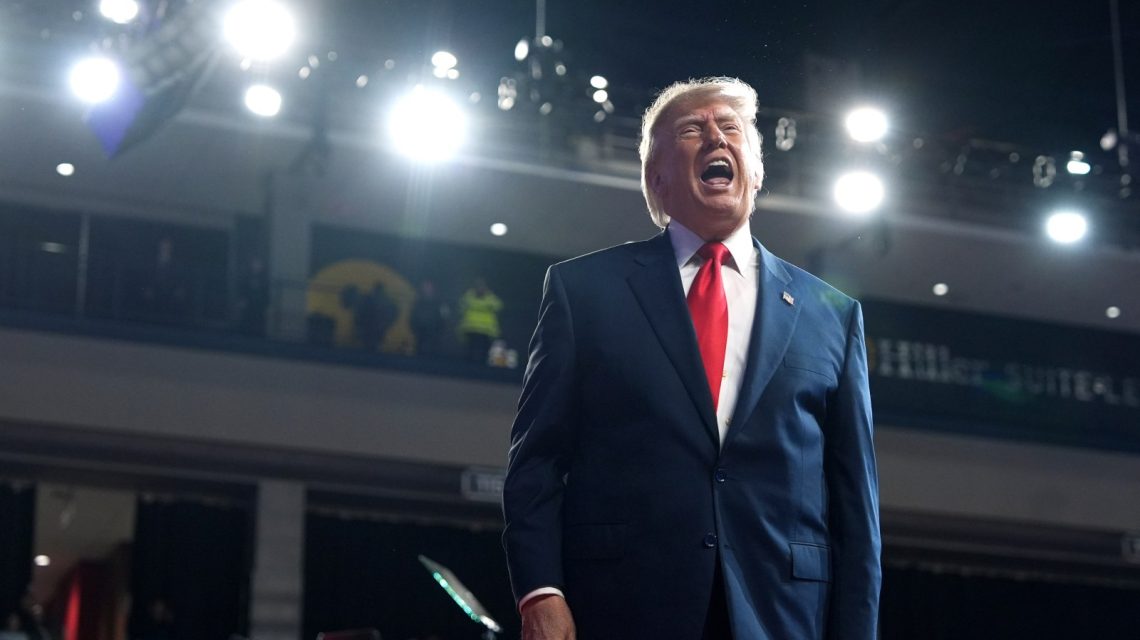
President Donald Trump has restated his commitment to provide $5,000 checks to adult U.S. citizens. He criticized Democratic economic plans, suggesting that Republican control of Congress would bring tangible financial benefits to Americans.
In a recent video posted on Trump’s X account, he promised every adult U.S. citizen $5,000. He accused Democratic policies of preventing this initiative and claimed they would instead increase taxes. Trump warned of an economic depression if Democrats win, while suggesting that Republican victories would ensure financial gains for individuals.
Earlier comments tied this proposal to the November midterm elections. On October 3, Trump reasserted that adult U.S. citizens would receive $5,000 if Republicans maintain power in both the House and Senate.
Despite these announcements, no legislative action has been taken to authorize the payments, nor have eligibility criteria or payment schedules been disclosed. The White House and Democratic National Committee have been contacted for comments but have not yet responded.
Details of Trump’s $5,000 Check Proposal
The president initially presented the “Trump Dividend” plan during the Republican Party’s midterm gathering in Dallas on September 9. He pledged a $5,000 payment contingent on Republican control of Congress.
While Trump described the payment as a dividend for all adult citizens, Vice President JD Vance hinted that higher-income individuals might be excluded from eligibility. Specific income limits have not been set.
The proposal still requires congressional approval, with CNBC noting the necessity of such authorization. However, Trump stated he believes a congressional vote might not be needed.
Timeline of the $5,000 Check Proposal
September 9: Trump unveiled the plan at a convention in Dallas, promising checks if Republicans hold the House and Senate.
September 10: Representative Thomas Massie criticized the proposal, expressing insult at the idea votes could be bought for $5,000 and voicing concerns about inflation.
Same day, Trump told CBS News he doubted congressional approval was necessary, asserting confidence in proceeding without it.
October 3: Trump reaffirmed the $5,000 promise on social media, tying it to Republican retention of Congress.
October 12: Trump promoted the checks in a new video, warning of tax hikes and economic depression under Democratic control.
Opposition and Support for Trump’s Proposal
Trump’s proposition has faced criticism from both parties. Republican Massie disapproved of the electoral motivations and potential inflation outcomes.
Arizona’s Republican Representative David Schweikert opposed the proposal, citing concerns over interest rates.
Democratic representatives voiced disapproval, calling the proposal unrealistic and a potential “political bribe” given Congress’s control over fiscal decisions.
Not all Republicans disagreed. Ohio Senator Bernie Moreno expressed willingness to introduce legislation for the payments.
Economists’ Views on the Checks
Economists have questioned the proposal’s financial implications and inflation risks. Kent Smetters estimated the program’s cost at $1.35 trillion, while CNBC calculated approximately $1.2 trillion based on adult population estimates.
Potential expenses depend on citizens’ spending habits, with predictions of $400 billion spent shortly after distribution, potentially elevating inflation by up to 0.5 percentage points.
Michael Strain from the American Enterprise Institute warned about exacerbating inflation. Marc Goldwein highlighted concerns about deficit impact, noting the absence of budget surpluses to support such payouts.
Legal and Political Debate on Vote-Buying
Legal experts are debating whether Trump’s proposal breaches federal vote-buying laws. Former prosecutor Glenn Kirschner claimed it might violate laws prohibiting expenditures to sway voter decisions.
Conversely, Mohamed Arafa argued the proposal could be seen as a policy promise within political speech protections.
Trump did not specify an individual’s eligibility based on voting behavior, instead linking checks to broader Republican control.
Political Impact and Future Implications
Trump’s proposal frames the midterms as crucial for economic decisions. He warned of economic depression without providing detailed analysis backing this claim.
The proposal challenges Republican messaging on government spending. Overall, the $5,000 checks remain hypothetical as Congress has not approved them. Critical questions about financing, inflation consequences, and budget impacts linger. Whether the proposal can advance and its implications on the political landscape remain to be seen.
 Elon Musk Increases Political Contributions Ahead of Midterms
  ATF Eases Regulatory Burden on Certain Firearm Add-ons
  Ohio Senate Race: Candidate Criticizes Misleading Mail Campaign
  Federal Minimum Wage Increase Proposal Faces Deadline
  Federal Agents Search Home of Rep. Ilhan Omar Amid Ongoing Investigation
  Trump’s Impact on Ohio’s Industrial Landscape