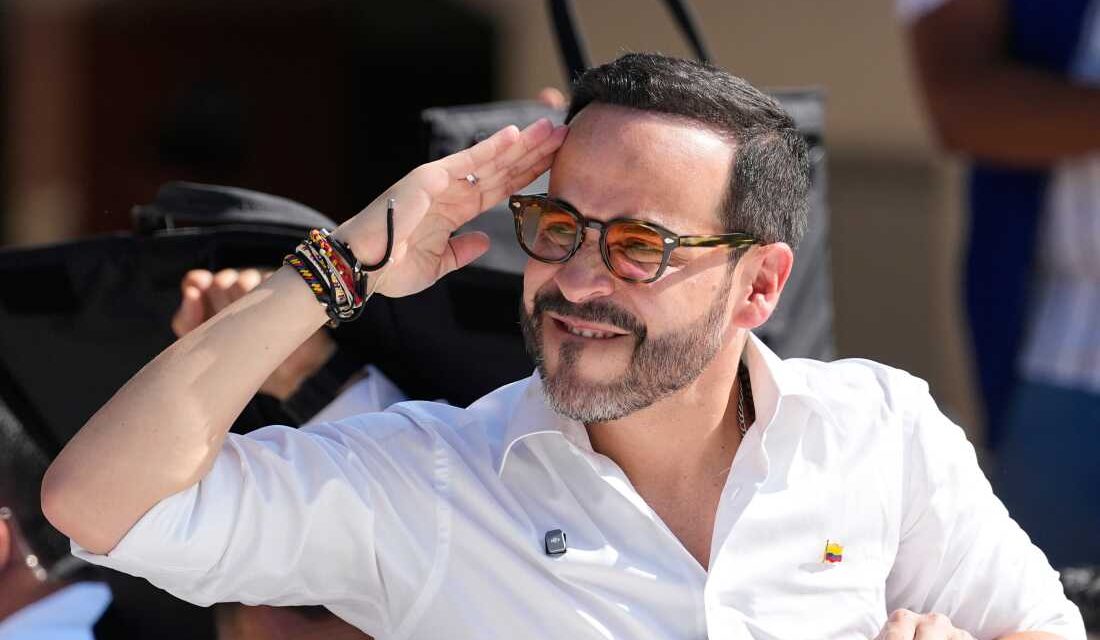
Abelardo de la Espriella, representing the Defenders of the Motherland movement, has taken the lead in Colombia’s presidential race following the first round of voting. This sets up a runoff against Iván Cepeda, an ally of the outgoing President Gustavo Petro. The election is now headed to a second round in June, with no candidate securing an outright majority.
Cepeda and Petro have raised doubts about the election results, alleging manipulation of votes without concrete evidence. Cepeda emphasized that he would only comment on the election outcomes once electoral authorities complete their scrutiny.
Results showed Cepeda garnering 41% of the votes, while de la Espriella secured 44%, with almost all votes counted. Despite leading in polls before the election, Cepeda faced a strong challenge from de la Espriella, who gained momentum by promising a crackdown on armed groups.
“Only when the vote-counting commissions have fully clarified what happened will we comment on tonight’s results,” Cepeda stated.
De la Espriella, known as “El Tigre” or “The Tiger,” has positioned himself as a supporter of former U.S. President Donald Trump. In a speech, he called for monitoring of the runoff election by the United States and democratic parties, echoing a strong security stance.
Election results showed de la Espriella and Cepeda proceeding to the runoff, highlighting a decision between peace negotiations and security crackdowns. Across Latin America, voters are increasingly favoring candidates advocating strict security measures over progressive policies meant to address underlying issues.
Juan Acevedo, a sociologist, articulated that the election outcome could signal the region’s future political orientation, influencing whether progressive policies persist or a shift to the right occurs.
Taking place a decade after Colombia’s historic peace agreement with the Revolutionary Armed Forces of Colombia (FARC), the election is viewed as a referendum on Petro’s policies. Violence has resurfaced, partly due to armed groups exploiting peace talks to gain territory.
Despite progressive efforts by Petro’s administration, violence persisted, as illustrated by attacks and the assassination of presidential candidate Miguel Uribe Turbay. Nonetheless, support for progressive policies like minimum wage increases remains strong among Petro’s and Cepeda’s supporters.
Diverging opinions exist among voters regarding the country’s future. Maria Eugenia, a seamstress, supports de la Espriella’s approach, advocating a firm stance against criminal groups. Acevedo, in contrast, believes continued negotiations can offer an alternative to past cycles of violence.
Colombia faces the challenge of choosing between continued peace efforts and potential military crackdowns, with consequences for the wider region’s political landscape. The outcome will reflect how the nation intends to address its long-standing conflicts.
 DHS Warns Migrant Caravan Heading to U.S.-Mexico Border
  Vandalism at Senator Susan Collins’ Office Amid Election Contest
  Backlash Over Sarah Huckabee Sanders’ Welfare Ad
  Mamdani’s Child Care Initiatives Set a New Standard
  Senate Passes Protect College Sports Act of 2026
  The Challenge of Addressing Global Crises