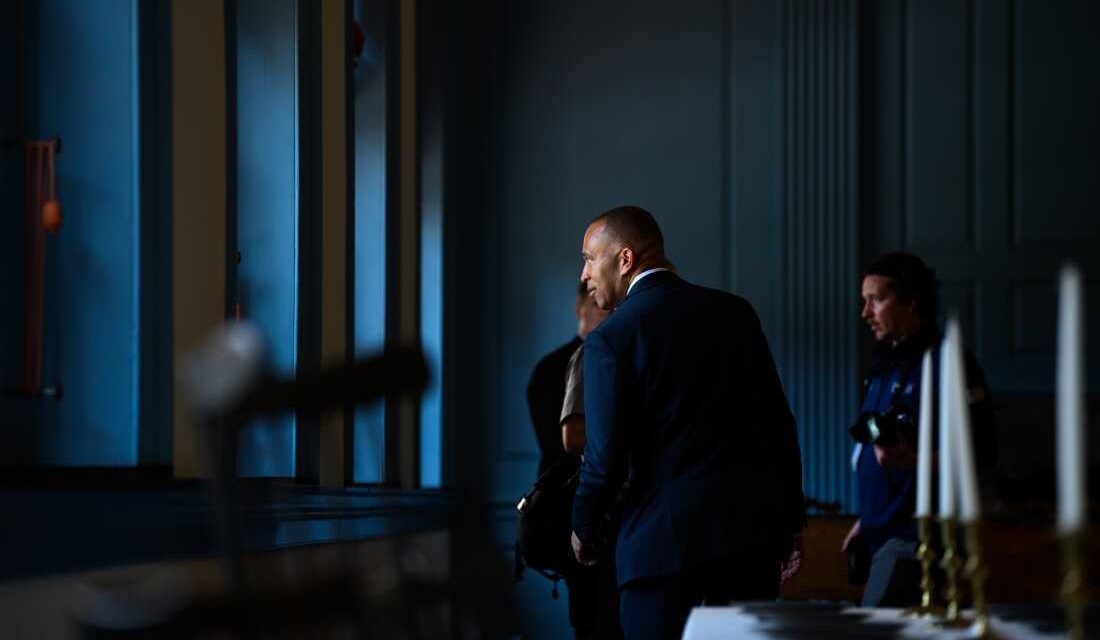
On July 2, 2026, House Minority Leader Hakeem Jeffries looked out a window at Independence Hall in Philadelphia. This historical location, now a site of significant conversation, holds many stories about the origins of the United States.
Every day, visitors to the National Archives in Washington stream into the rotunda to view the country’s foundational documents. A tourist, taken aback by the sight of the Declaration of Independence, remarks on its significance.
The Declaration is not the only contribution of the Second Continental Congress. It laid the foundation for today’s legislative branch. As we celebrate the nation’s 250th anniversary, discussions on Capitol Hill examine whether modern Congress aligns with the aspirations from that era.
Historical Records and Their Significance
Archivist Jane Fitzgerald studies lesser-known records: the journals of the Second Continental Congress. Between 1775 and 1781, Charles Thomson meticulously recorded daily resolutions, motions, and correspondence. Notably, on June 11, 1776, a committee was chosen to draft the declaration, listing familiar names such as Thomas Jefferson and John Adams.
Fitzgerald notes that while these logbooks lack the eloquence of the Declaration itself, they capture the Congress’s intensive efforts. The Declaration’s survival on parchment is due to their diligent work.
Jay Wyatt, director for legislative archives, presents another document by Oliver Ellsworth, connecting the early Congress to today’s institution. Wyatt emphasizes the progress represented by the Declaration and its evolution into the Bill of Rights.
Reflecting on Historical Context
Joanne Freeman, a Yale University history professor, highlights the Continental Congress’s challenges. Initial tensions were high, with colonies maintaining stronger attachments to their regions rather than a unified nation. Only through necessities like war financing did the Congress gradually shape a fledgling government.
Despite its weaknesses, the Continental Congress sowed the seeds for a national government. Public opinion played a crucial role, influencing Congress’s decisions significantly.
The Modern Congress
Today, the U.S. Congress reflects broader diversity and is highly polarized. Representative Brendan Boyle, understanding its historical roots, organized a bipartisan gathering at Independence Hall. This event marked only the second formal convening there since the Capitol’s relocation to Washington, D.C., in 1800.
Boyle encourages remembering Congress’s origins and its intended role. He observes that Congress has allowed the executive branch to overstep its boundaries, mentioning instances like unchecked war declarations and financial decisions.
A time capsule ceremony in Philadelphia included reflections on this modern Congress’s role. Legislators engage with long-standing debates about governance and representation, reminiscent of those faced by early Congresses.
The Capitol Rotunda houses grand paintings, including John Trumbull’s depiction of the Declaration’s presentation to Congress. For Boyle, this artwork represents both pride and a reminder of the responsibilities inherited from the nation’s founders. “We carry the burden of living up to their vision from 250 years ago,” he shares.
 Challenges Facing the Supreme Court’s Public Perception
  California Democratic Aide Arrested for Visa Overstay by Federal Authorities
  Experts Doubt Export Ban Will Lower Fuel Prices
  Trump Delivers Warning to Iran, Cuba at UN General Assembly
  Trump Delivers Stern UN Speech on Iran, AI, and Global Security
  Lukashenko and Putin’s Unique Relationship and Belarus’ Strategic Role