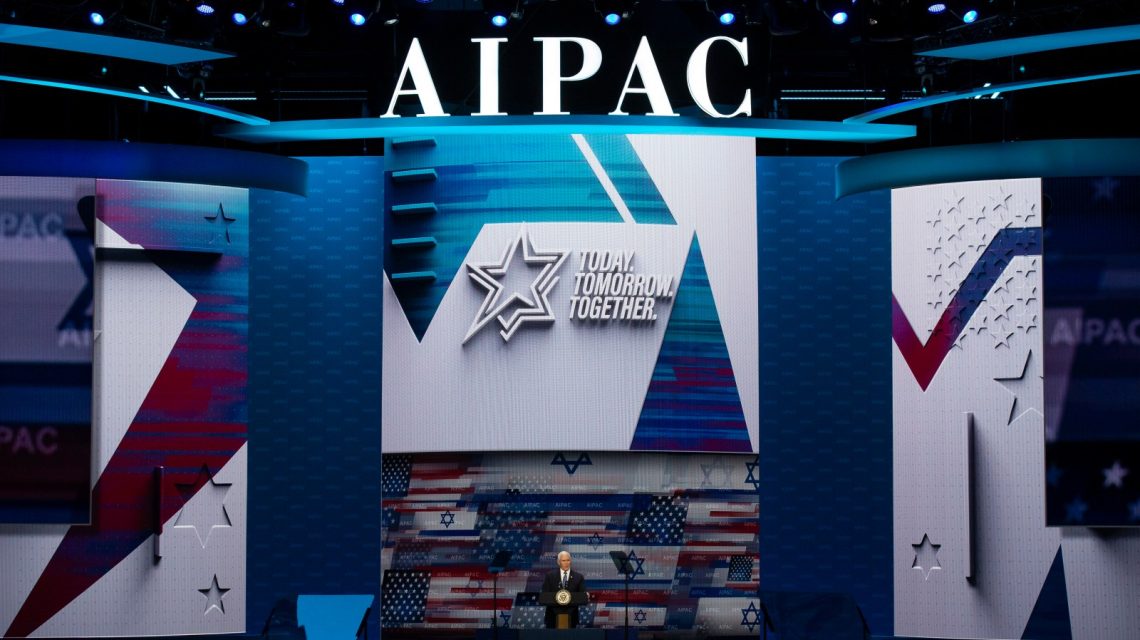
Republican Senate nominee Mike Rogers has requested that the American Israel Public Affairs Committee (AIPAC) refrain from running advertisements against his Democratic opponent, Abdul El-Sayed. This comes as reported by Axios on Saturday. AIPAC and its affiliated political action committees, known for their influence in congressional and statewide races, typically spend millions supporting candidates. However, this support often draws criticism from Democrats and progressive candidates.
During the current election cycle, Democratic primary voters have taken positions against one of Washington’s powerful political organizations, contributing to successes for candidates opposing AIPAC-backed rivals. This scenario was evident in Michigan’s Democratic primary. El-Sayed, a progressive Democrat known for criticizing Israel’s actions in Gaza, triumphed over Representative Haley Stevens. A substantial financial push was observed, with about $30 million spent by AIPAC and related groups in this race.
Mike Rogers, an Israel supporter endorsed by former President Donald Trump, will face El-Sayed in a November election. This contest is anticipated to impact Senate control significantly. According to Axios, Rogers’ campaign urged AIPAC to stay away from intervening in his favor. Rogers reportedly communicated with AIPAC’s chair, Michael Tuchin, leading to the organization’s decision not to proceed with prepared ads targeting El-Sayed. Although AIPAC officials were ready to invest further to prevent El-Sayed’s election, they were reportedly displeased by Rogers’ stance.
The dynamics emphasize the political complexities involved in AIPAC’s participation in electoral campaigns, despite the organization’s continued financial investments in favored candidates. Rogers, previously a congressman and vocal supporter of Israel, refused direct AIPAC backing, a notable shift. In the Democratic Senate primary in Michigan, UDP spent nearly $15 million with significant allocations for Stevens and remaining funds against El-Sayed.
El-Sayed has labeled Israel’s military actions in Gaza as genocide, allegations consistently denied by Israel. He also advocates for halting unconditional U.S. military aid. Critics have accused him of antisemitism, which he addressed after his primary victory, expressing his commitment to Jewish safety.
AIPAC spokesperson Deryn Sousa acknowledged Rogers’ invitation to pro-Israel support, citing members’ high motivation to engage in this race. They stated, “Our members are highly motivated to be involved in this race, and we will be looking at every option to make the case that El-Sayed’s policies are bad for Michigan and bad for America.” Furthermore, democratic nominees throughout Michigan, Minnesota, and congressional races in New York, Illinois, and California succeeded despite AIPAC-affiliated expenditures on their opponents.
As primary victories indicate growing scrutiny over AIPAC’s influence, Democrats continue exploring the future direction of their party. Progressives push for a more left-oriented agenda whereas moderates raise concerns about competitiveness in swing districts and statewide races.
As Rogers and El-Sayed vie for an open Senate seat following Democrat Gary Peters’ retirement, attention is cast on Michigan’s political landscape. The Cook Political Report and Sabato’s Crystal Ball consider this race a “toss-up.” Despite Michigan’s longstanding Democratic hold, the state has shown tendencies for tight races and unexpected outcomes.
Recent polling highlights the race’s competitiveness. An AARP poll shows El-Sayed leading Rogers by a point, 48 to 47 percent, with a margin of error of plus or minus 3.3 percentage points. Other surveys, including from the TechnoMetrica Institute of Policy and Politics, reveal similar close margins. Predictions from markets suggest El-Sayed has an edge, indicating fluctuating voter opinions.
Observations on shifting public opinion toward Israel spotlight divisions over U.S. diplomatic and military support. Recent polls demonstrate a split opinion concerning the aftermath of Hamas’ attacks and U.S.-Israel relations. Among Democrats, perceptions of excessive support for Israel have escalated.
The data reveals shifting trends among various demographics, impacting political strategies and driving conversations around policies related to Israel. This evolving public sentiment plays a role in shaping candidate platforms and influencing electoral strategies.
 Federal Appeals Court Decision Against Trump’s ‘Third-Country’ Deportation Policy
  President Trump’s Controversial Ban on Media Outlets Sparks Press Freedom Concerns
  Ed Sheeran’s Philadelphia Concert Amid Controversy
  U.S. Secures Strategic Control Over Greenland
  U.S. Security Agreement in Greenland Sparks Optimism and Concerns
  Cook County’s Property Tax Bridge Loans