
Cybersecurity expenditure is on the rise, yet the definition of effective cyber defense may be evolving faster than many realize. Vulnerability exploitation has emerged as the primary method for attackers to breach organizations, accounting for 31 percent of incidents for the first time in almost twenty years. With artificial intelligence accelerating the time between vulnerability discovery and exploitation, this gap is now shrinking from months to mere hours.
This shift is prompting cybersecurity leaders to reconsider longstanding assumptions within the industry. For decades, the effectiveness of cyber defenses was largely judged by an organization’s ability to prevent unauthorized access. However, as AI compresses attack timelines and scales up cyber threats, maintaining this standard is proving increasingly challenging.
Instead of focusing solely on preventing breaches, the conversation is shifting towards a fundamental question: If attackers manage to access sensitive data, should cyber resilience be measured by preventing the breach, or by ensuring the stolen data has little or no value once outside the network?
Jan Lane, founder and CEO of Visio Cyber AI, suggests that these developments signify a much larger change than expediting cyberattacks. According to her, organizations have spent decades assessing cybersecurity based on the ability to keep attackers out, whereas the pertinent issue now is whether stolen data retains value if accessed.
“The traditional techniques used to safeguard data are deemed insufficient,” Lane states. “Organizations must assume that their information might eventually be compromised. The focus should be on ensuring that whatever data attackers obtain is unreadable, unusable, or has no business value.”
This perspective challenges the prevention-first model that has governed cybersecurity for decades. While firewalls, endpoint protection, access controls, monitoring systems, and security operations platforms remain essential, Lane argues that merely preventing every breach no longer serves as an adequate measure of cyber resilience.
“AI has sped up reconnaissance, phishing, vulnerability discovery, and intrusion attempts, enabling threat actors to test systems at a speed and scale that human-led teams may struggle to match,” she explains.
The financial implications underscore the urgency. Research indicates that the global average breach cost is $4.44 million. The same study found that 97 percent of organizations experiencing an AI-related security incident lacked proper AI access controls, while 63 percent lacked AI governance policies.
According to Lane, many companies have responded to rising threats by adding more products to already crowded security stacks. This often results in disconnected platforms, competing dashboards, integration challenges, and a deluge of alerts that dilute visibility. “The more tools organizations add, the more challenging it becomes to understand their interactions,” she explains. “Security solutions should enable leaders to quickly perceive crucial information and act before complexity hinders response.”
Lane believes the industry is nearing a pivotal moment. From her perspective, cybersecurity can no longer be judged solely by whether attackers penetrate a system. What matters is whether compromised information retains practical value post-breach.
“The question leaders should ask is what happens if someone gets in,” Lane emphasizes. “If attackers leave with data they cannot read or use, the outcome changes dramatically.”
This philosophy shapes Visio Cyber AI, a cybersecurity strategy and technology company helping organizations achieve AI-driven cyber resilience. One of their innovations, Phantomblox, reflects this evolving mindset. “Instead of relying solely on perimeter defenses, the technology uses AI to transform stored information into an unreadable format if accessed by an intruder,” she explains. “Authorized users can retrieve the original data only after secure authentication, rendering stolen information effectively useless to unauthorized actors.”
Lane sees this as part of a broader evolution occurring in cybersecurity. AI is reshaping both the defensive and offensive aspects of the cyber threat landscape, allowing defenders to automate detection and response, while also enabling attackers to expedite reconnaissance, phishing campaigns, and intrusion attempts. A report by Microsoft highlights that AI accelerates the speed and scale of cyber operations for both defenders and adversaries, reinforcing the need for organizations to reevaluate how resilience is built.
The implications extend beyond technology teams. “Assets such as customer databases, healthcare records, financial transactions, government information, and proprietary research rely on their confidentiality for value,” Lane observes. She believes executives should view cyber resilience as a business strategy and not merely an IT responsibility, as compromised data increasingly impacts operations, reputation, regulatory obligations, and long-term growth.
“For years, cybersecurity assessment hinged on whether attackers breached systems,” Lane states. “The next generation of cyber resilience will be judged by something far more critical: If a breach occurs tomorrow, does the stolen data still hold value for the attacker? If the answer is negative, the economics of cybercrime are fundamentally altered.”
As AI continues to change the cyber landscape, Lane foresees this inquiry becoming one of the defining leadership challenges of the decade. Organizations that rely exclusively on prevention may struggle to keep pace with faster and more automated attacks. Those designing systems in which compromised information holds minimal value might redefine what effective cyber resilience entails in the AI era.
 First Lady Melania Trump’s AI Education Push Amid Concerns
  Expansion of Data Centers Fueled by AI Development
  Beijing’s Tactical Undermining of U.S. Supremacy Through AI
 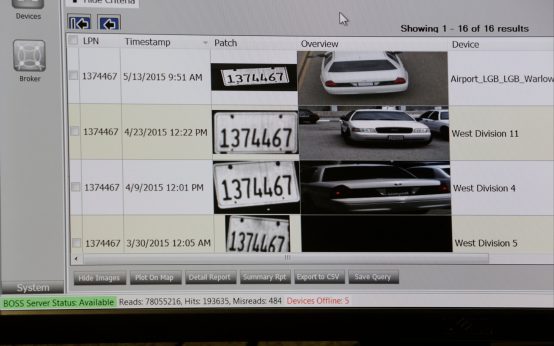 Controversy Surrounds Automated License Plate Readers Across the U.S.
  Trump and Harp Sued Over Truth Social Subscriber Program
  Implications of AI in College Admissions