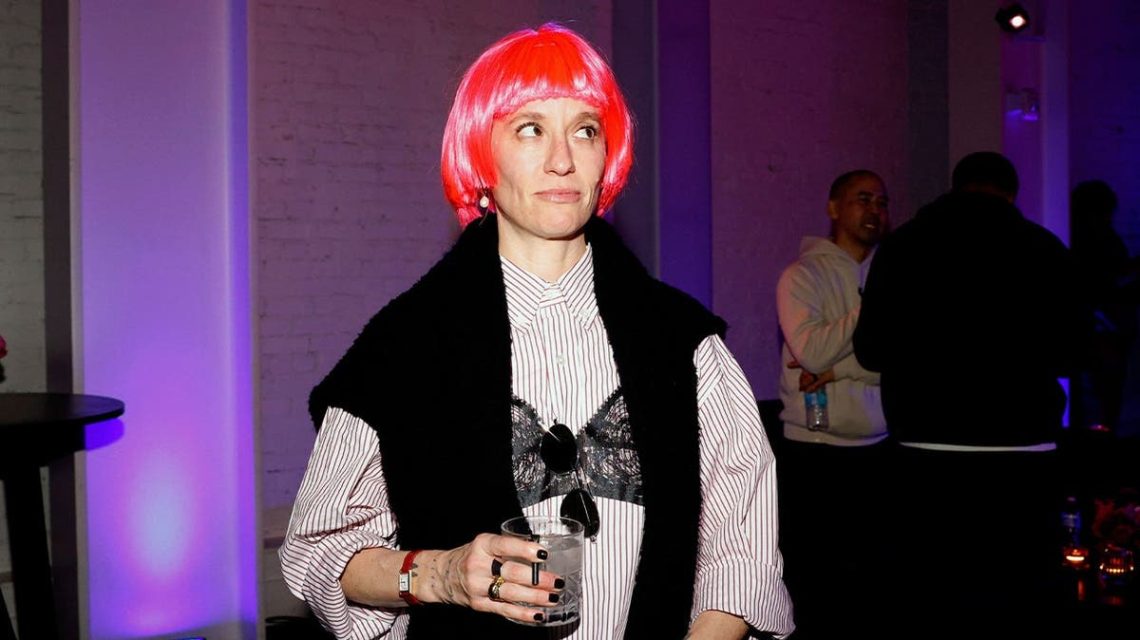
Challenges in Women’s Sports Advocacy
Megan Rapinoe, a renowned figure in women’s sports, has stirred debate following her vocal support for the inclusion of transgender athletes in female sports categories. Her retirement marked a shift from her athletic achievements to activism, questioning traditional norms in athletics.
Rapinoe’s stance has sparked controversy, especially in light of recent legal decisions about women’s sports protection. Her views, expressed in Marie Claire, challenge prevalent narratives about safeguarding female athletes’ opportunities and rights.
Examining Rapinoe’s Arguments
Rapinoe argues that legislative efforts to exclude transgender athletes from women’s sports distract from critical issues affecting women, such as reproductive rights and wage disparities. She labels these efforts as ‘anti-trans,’ suggesting they harm rather than protect women.
Critics highlight inconsistencies in Rapinoe’s points. They refute claims that restricting male participation adversely affects female athletes, pointing out the lack of evidence supporting such a stance.
Rapinoe also raises concerns about invasive physical examinations, portraying potential future scenarios as harmful. This portrayal disregards the fact that routine physicals for athletes are standard, conducted professionally to ensure health and fitness.
Addressing Safety and Fairness
Another contentious argument involves ensuring fairness in sports. Rapinoe mentions sexual violence and pay disparities, aligning them with trans inclusion in sports. Critics argue these issues are unrelated, with pay differences stemming from revenue disparities between men’s and women’s sports.
The WNBA’s financial situation exemplifies market dynamics: as interest grows, female athletes’ earnings increase. Rapinoe’s perspective overlooks these economic realities, focusing instead on ideological arguments.
Broader Implications and Reactions
Rapinoe closes with a call to action, urging solidarity with transgender athletes as a rejection of perceived political division and hatred. Her appeal highlights broader societal debates on inclusion versus tradition in sports.
This stance, while impactful for some, raises questions about Rapinoe’s motivations post-retirement. Without direct involvement in current athletic competition or personal stakes in these changes, her advocacy draws mixed reactions.
Megan Rapinoe’s views influence discussions on gender and sports, prompting reflection on fairness, inclusion, and societal progress. As debates continue, the balance between advocacy and practical sports governance remains a critical focus.
 Chicago Bears’ Week 1 Performance Sparks Rams Comparison
  Rutgers Nearly Upsets USC in Thrilling Match
  Ole Miss Triumphs Over LSU in Kiffin’s Return to Oxford
  Music, Culinary Heritage, and the Legacy of Bayou Bar
  The Decline of Tamales on U.S. Menus
  Aaron Rodgers’ Journey Through High-Profile Relationships to a Secret Marriage