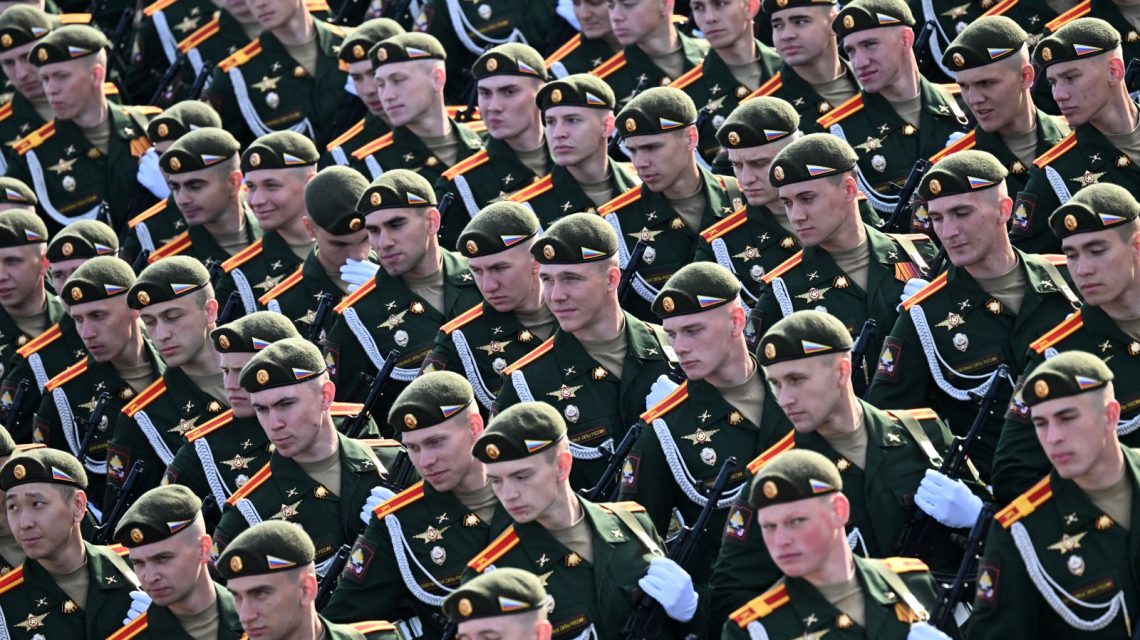
Kremlin’s Strategy on Mobilization
Russia’s partial mobilization, announced by Vladimir Putin in September 2022 for Ukraine, remains unrevoked. Though managed discreetly, reports of a new 500,000-strong draft introduce potential changes to the war dynamics. The Kremlin seeks ways to recruit troops, potentially imposing martial law to quell civil unrest and increasing population restrictions, as per Verstka, a Russian opposition news outlet.
Ukrainian President Volodymyr Zelensky stated that post-Russian parliamentary elections in September, between 300,000 and 500,000 troops might be drafted. This aligns with Putin’s intent to persist at all costs. John Hardie, deputy director at the Foundation for Defense of Democracies (FDD), noted that while further mobilization prolongs the war, it may not alter the outcome. Still, such a draft poses a strategic concern for Ukraine and its Western allies.
The sheer numbers allow Moscow to sustain a prolonged war, absorb heavy losses, and fortify defenses, according to Yuriy Boyechko, CEO of Hope for Ukraine.
Former Russian President Dmitri Medvedev denied imminent mobilization, citing 200,000 volunteers contracting with armed forces in the first half of the year. Newsweek reached out to the Kremlin for comments.
Potential Effects of Mobilization
The Kremlin views the September parliamentary elections as a mandate for militarizing society to sustain long-term warfare. Speculation surrounds a post-election draft meant to replenish massive casualties, reportedly 225,500 this year alone, with 131,000 killed. Hardie from FDD remarked that further mobilization implies Putin recognizes a losing trajectory, choosing to redouble efforts rather than ease demands.
Mobilization carries significant risks and costs, potentially leading to a mass exodus and domestic dissent regarding an unpopular war. To avoid a repeat of Russian queues fleeing conscription into neighboring countries, policies facilitating the next call-up have been proposed. This includes digitizing mobilization, monitoring movements, and automating conscription processes. Putin signed a law to gather more military personnel information, reducing processing times.
According to Hardie, Russia struggles with enough equipment and officers to form additional units, despite potential manpower increases. The decline in force quality limits Russia’s offensive planning capability. Reinforcements may assist in Donetsk, but are unlikely to break Ukraine’s defense or impose settlements.
Challenges Facing Ukraine
Defense analyst Giorgi Revishvili indicated that Russia’s new formations depend on mobilization. Without it, creating major offensive forces is difficult. The outcome depends on the scope of Russia’s mobilization and the integration speed of new personnel, he said. Yet, economic problems, high casualty rates, and Ukraine’s ongoing campaigns put pressure on the Kremlin.
Russia’s denial of mobilization, with Medvedev dismissing rumors as enemy lies, leaves much uncertain. However, the Institute for the Study of War notes that mobilization is tied to Putin’s battlefield perception.
Exiled opposition activist Mikhail Khodorkovsky criticized the draft, saying recruits may go untrained to the front, merely serving as cover for professional units. Ukraine’s drone production means untrained recruits may only increase monthly casualties.
Khodorkovsky noted that new mobilization demands stricter exit controls, binding skilled workers and specialists to the country. Mass draft refusals challenge Russian prison capacity, pushing citizens towards compliance, fleeing, or resistance.
Despite mass conscription not guaranteeing Russia’s territorial gains, Boyechko explained Ukraine’s resource consumption increases significantly. Ukraine will rely more on Western precision weaponry and technology to combat Russia’s manpower capacity.
 Michigan Senate Candidate Faces Scrutiny Over Family Ties
  Trump’s Diesel-Deal Feud with Zelensky Obscures a More Important Effort
  Democratic Endorsement Shift in Montana Senate Race
  Ukraine Requests Stronger U.S. Action as Energy Hostilities Continue
  Arizona Voters Prioritize Water Concerns in Upcoming Midterms
  Trump Links High Energy Costs to Ukraine, Suspends Russia Sanctions