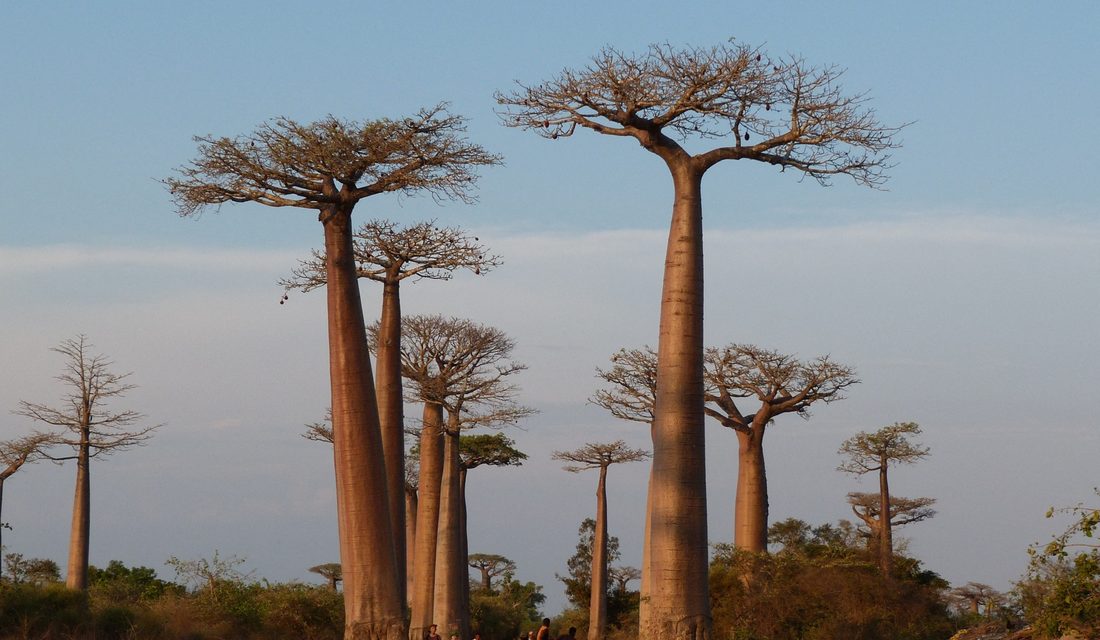
The baobab tree is often referred to as the “tree of life” for its significant role in providing food, water, and shelter in its ecosystem. Known for its thick trunks and branches crowned with twilight-opening flowers, baobabs inspired Rafiki’s home in Disney’s ‘The Lion King’. These trees are technically succulents and include eight distinct species. They are highly adapted to survive in dry climates.
Historically, scientists debated the geographic origin of baobabs, considering areas like sub-Saharan Africa’s savannas, Australia’s Kimberley region, and Madagascar’s dry forests. To resolve this, a global research initiative spearheaded by the Wuhan Botanical Garden at the Chinese Academy of Science utilized genomic data from all baobab species.
Thanks to advances in genetics, which have make sequencing faster and more cost-effective, coupled with ecological assessments, researchers identified Madagascar as the most likely origin of baobabs. They theorize that ocean currents spread baobab fruit to Africa and Australia, allowing the plant to adapt and evolve into different species.
This week, the study’s findings were shared in the journal Nature. Wan Jun-Nan, the study’s first author, experienced inspiration from baobabs since reading “The Little Prince”. Recalling his encounter with a baobab in Madagascar, Wan decided to explore the tree’s evolutionary history further, driven by an emotional connection.
Despite the breakthrough in understanding baobabs, their future remains uncertain. Three Malagasy species face extinction threats. Adansonia perrieri is critically endangered, while Adansonia grandidieri and Adansonia suarezensis are endangered. Issues like deforestation and rising sea levels restrict the trees’ habitat. Baobabs’ pollinators, such as fruit bats and hawks, are also facing habitat threats.
Wan hopes ecologists will leverage the genetic findings from this study to inform conservation efforts. Understanding the genetic diversity can guide efforts to protect baobabs and their ecosystems.
For more fascinating topics, reach out to [email protected]. Discover ‘Short Wave’ on platforms like Spotify, Apple Podcasts, and Google Podcasts. Support our work by subscribing to Short Wave+ at plus.npr.org/shortwave.
Today’s content was crafted by Megan Lim and Rachel Carlson, with editing by Rebecca Ramirez and Christopher Intagliata. Fact-checking was conducted by Emily Kwong, Maria Godoy, and Regina Barber. The audio engineering team included Neil Tevault and Patrick Murray.
 Underwater Discoveries: Exploring the Lost Town of Shipden
  Virginia Tech Researchers Investigate Black Bear Hibernation
 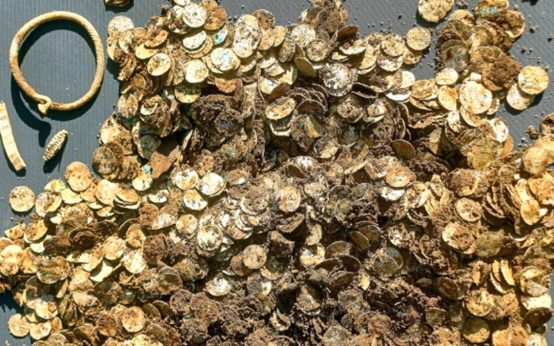 Significant Viking Age Silver Hoard Discovered in Finland
  Dogs Use Similar Language Recognition Techniques as Human Infants
 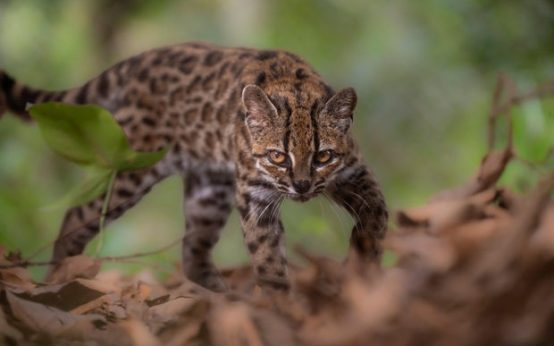 Discovery of Tilcayo Tiger Cat, a New Wild Cat Species in Bolivia
 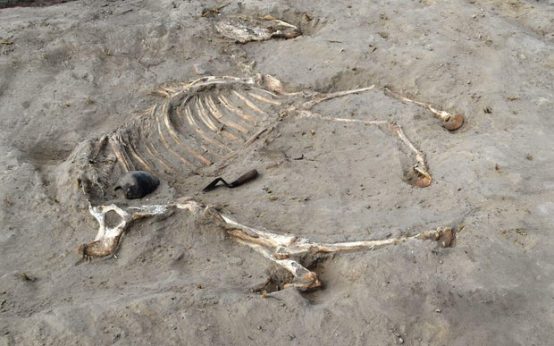 Ancient Egyptian Warhorse Burial Unearthed in Beheira