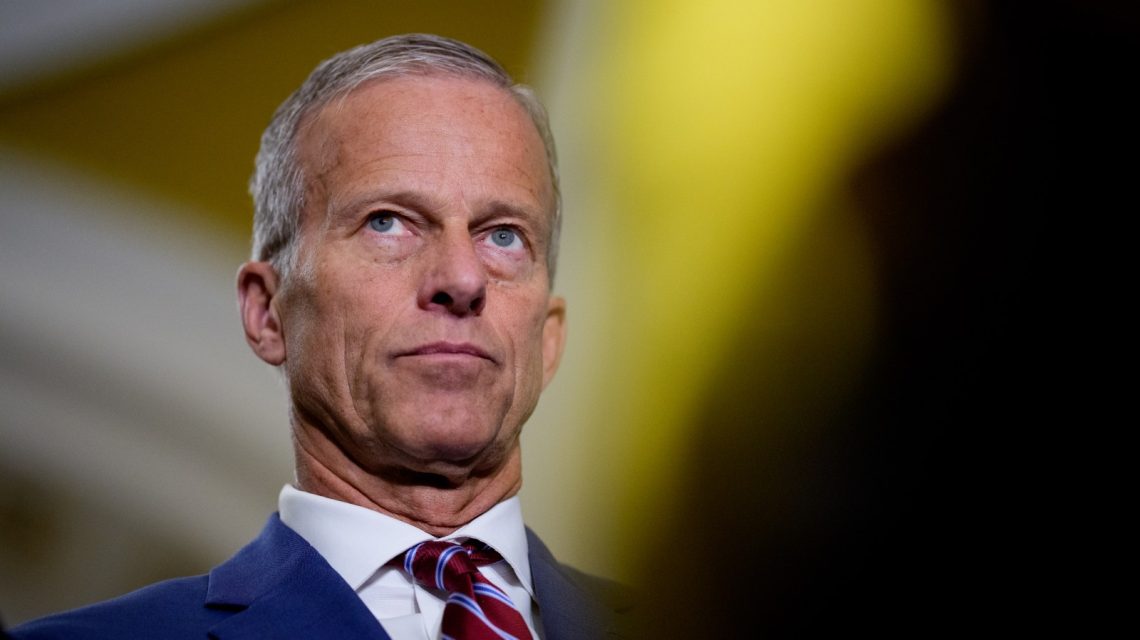
Senate Majority Leader John Thune responded forcefully after White House press secretary Karoline Leavitt announced President Donald Trump’s impatience with Senate Republicans over the stalled SAVE Act. Thune, speaking to reporters, suggested that efforts should focus on securing votes. ‘Maybe she or somebody else ought to get on the phone and get the votes. Right? It’s 50 around here,’ Thune, a Republican from South Dakota, stated.
This interaction underscored the increasing strain between Senate Republican leaders and the White House. As August recess approaches, Trump is ramping up pressure on Senate Republicans to push through one of his key election-focused initiatives.
The Senate, what they’re doing, it’s just… it’s just not right. It’s like the Senate is a place that you send things when you want them to die,Trump expressed during a speech in Georgia.
White House Signals Frustration Over Delays
During a Thursday briefing, Leavitt mentioned that Trump is losing patience due to the slow progress on the SAVE Act. She emphasized that Trump addressed this issue directly with enthusiasm from the audience.
‘His patience is running out.’ Leavitt stated while emphasizing Trump’s desire for the act’s enactment before the August recess. She insisted that voters are in favor of the proposal and urged the Senate to act like the House already has.
Thune’s Direct Response: ‘Target the Correct Opposition’
Thune expressed irritation at the administration’s criticism, indicating Democrats are the main obstacle. ‘Instead of pointing the finger at Republicans, they might think about going after the people who are stopping it on the floor, which is the Democrats,’ he remarked.
This marks a significant moment since Thune usually avoids open confrontation with the White House despite pressure from Trump’s allies.
Trump’s Increased Pressure on Senate Republicans
Trump has consistently pushed Congress to pass the SAVE Act and has recently intensified his efforts. In a primetime address, Trump stressed the Act’s importance for election integrity by mandating proof of citizenship for federal registration. He sees it as a critical step ahead of the midterms, notwithstanding concerns about its potential impact on the 2026 elections.
Numbers and Challenges for the SAVE Act
The Act, which requires documentary proof of citizenship for voter registration, encounters significant opposition, especially from Democrats. With Senate rules requiring 60 votes to move forward, the Act’s passage appears challenging without Democratic support or rule changes.
Thune highlighted this challenge, noting, ‘We’ll have those conversations with the conference. The priority is funding the government.’
The House has already advanced a related budget framework, but its future in the Senate remains uncertain.
Senate Republicans Face Obstacles
Resistance comes from Democrats and a critical group of Republicans. Earlier this year, several Republican senators joined Democrats to block the legislation’s progress. Notably, Senator Lisa Murkowski of Alaska criticized the Act, citing logistical and financial burdens it would place on voters in remote areas like Alaska.
In an opinion piece, Murkowski warned that the Act would impose costly barriers, making it difficult for some, potentially many, to vote in upcoming elections.
What the SAVE Act Proposes
The SAVE Act intends to revamp federal voter registration requirements. The proposal calls for proof of U.S. citizenship, such as a passport or birth certificate, when registering for federal elections. The Trump-backed framework also includes voter ID requirements and mail voting restrictions.
Proponents argue these measures are necessary for strengthening election integrity. However, critics point out potential complications for many Americans, particularly those lacking documentary proof of their citizenship.
Criticism and Barriers
Opponents of the Act, including voting-rights advocates, argue that it can create barriers for eligible voters. They contend that documented cases of noncitizen voting are rare, and the new requirements would impose unnecessary burdens.
Research indicates that millions of voting-age citizens lack ready access to citizenship documents, complicating their registration process.
Related debates have turned the SAVE Act into a divisive topic in Congress as midterms approach.
Pressure Mounts on Republican Leadership
The White House is not the sole entity applying pressure. Conservative activists and some House Republicans demand Senate action. Allies of Trump criticize Senate leadership, with House Republicans threatening to stall other legislation until the Act advances.
Despite pressure, some Senators push back. Senator John Cornyn of Texas remarked that the current situation creates internal conflict among Republicans. ‘We just don’t have the votes,’ Cornyn said, cautioning that any belief in Thune’s ability to force compliance among Republicans is unrealistic.
The Path Ahead for the SAVE Act
The SAVE Act continues to be a priority for Trump, yet lacks a clear pathway to passage. As the White House intensifies efforts ahead of the recess, Senate Republicans face significant hurdles in advancing the Act.
The public dispute between Thune and the Trump administration brings to light a growing reality for Republicans: despite Trump’s prioritization of the SAVE Act, Senate leaders lack the needed votes. Until addressed, Trump’s dissatisfaction with Congress is likely to persist.
 Concerns in U.S.-China Relations Ahead of Summit
  German Chancellor Friedrich Merz Vows to Continue Amid Election Losses
  Nikole Hannah-Jones Reflects on School Choice and Its Impact
  Republican Senator Criticizes Trump’s $5,000 Check Proposal
  Trump’s Approach to Iran at the United Nations
  Trump’s Triumphal Arch Controversy