
An offshore wind energy firm announced a $1.2 billion settlement with the Trump administration, halting planned projects off New York, California, and Louisiana. This latest agreement raises the total spent on these settlements to nearly $4 billion. RWE U.S. Offshore stated that its leases involved years of planning and collaboration with federal agencies. However, they concluded that obtaining permits for the projects was unfeasible for the foreseeable future.
For $1.22 billion, RWE will abandon leases capable of generating approximately seven gigawatts of power, sufficient for over 5 million homes. RWE holds no other offshore wind leases in the United States. President Donald Trump, known for opposing wind energy, aims to prevent the construction of ‘windmills.’ His administration has repurchased offshore wind leases from energy firms to favor fossil fuels, which release carbon pollution upon combustion.
RWE is investing $900 million in a liquefied natural gas initiative in Louisiana and allocating $300 million for natural gas turbines. The company is also working on 15 natural gas projects across the U.S. RWE’s headquarters is located in Germany.
The strategy emerged after federal courts blocked Trump’s executive attempts to cease offshore wind development. Approximately $3.9 billion has been used in these buybacks. States losing wind energy resources are pursuing litigation. California is preparing to sue, while a coalition of renewable energy groups has taken Pentagon officials to court for failing to conduct national security reviews for new onshore wind farms. A federal judge in Oregon ruled in favor of the plaintiffs, ordering the Defense Department to continue its reviews.
Interior Secretary Doug Burgum supported the RWE agreement, stating that Americans need an energy strategy founded on practicality, not reliant on costly subsidies or inadequate technology. Burgum welcomed RWE’s shift to projects that enhance energy security and continue providing affordable, stable power.
Senator Sheldon Whitehouse criticized these buybacks, claiming they financially incentivize companies to abandon clean energy, ultimately raising consumer costs. He argued that the move represents a scheme benefiting fossil fuel interests, alerting Americans to both increased expenses and political influence in energy policy.
Under previous agreements, French company TotalEnergies was refunded nearly $1 billion on the condition of redirecting those funds into fossil fuels. Additional companies like Golden State Wind and Bluepoint Wind ended their leases for nearly $900 million if matched by investments in fossil fuels. Invenergy, a Chicago-based firm, surrendered its early-stage leases for $765 million.
The Associated Press reports on climate and environmental issues with support from various private foundations, maintaining complete editorial independence.
 Fat Bear Week 2026: A Look at the Contest and Its Competitors
  California Governor Declares Statewide Emergency Ahead of El Niño Storms
 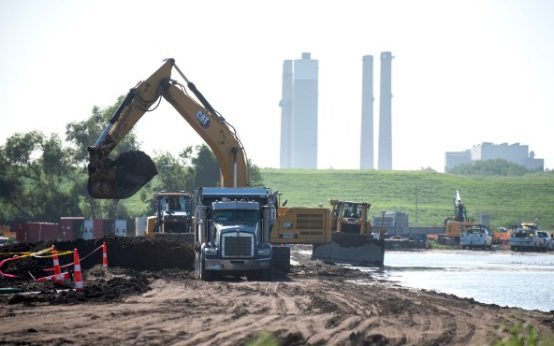 EPA Rollbacks and the Impact on Indiana Communities
 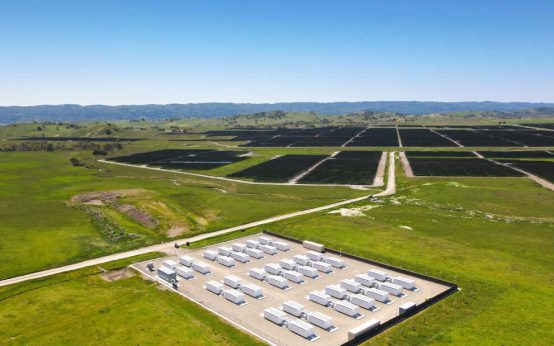 The Impact of Battery Innovations on Renewable Energy
 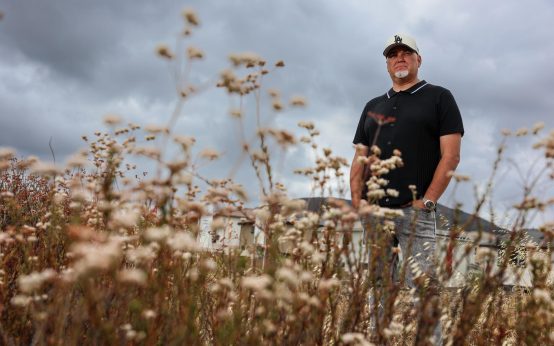 Challenges in California’s Home Insurance Market
 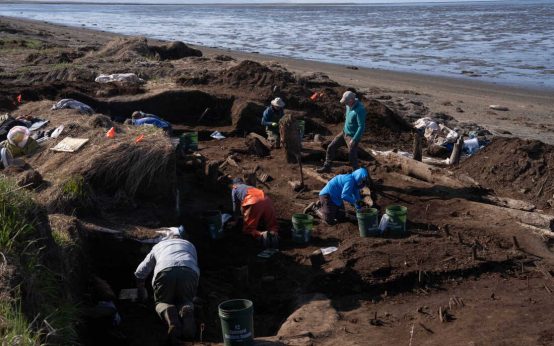 Race Against Time: Preserving Quinhagak’s Archaeological Heritage