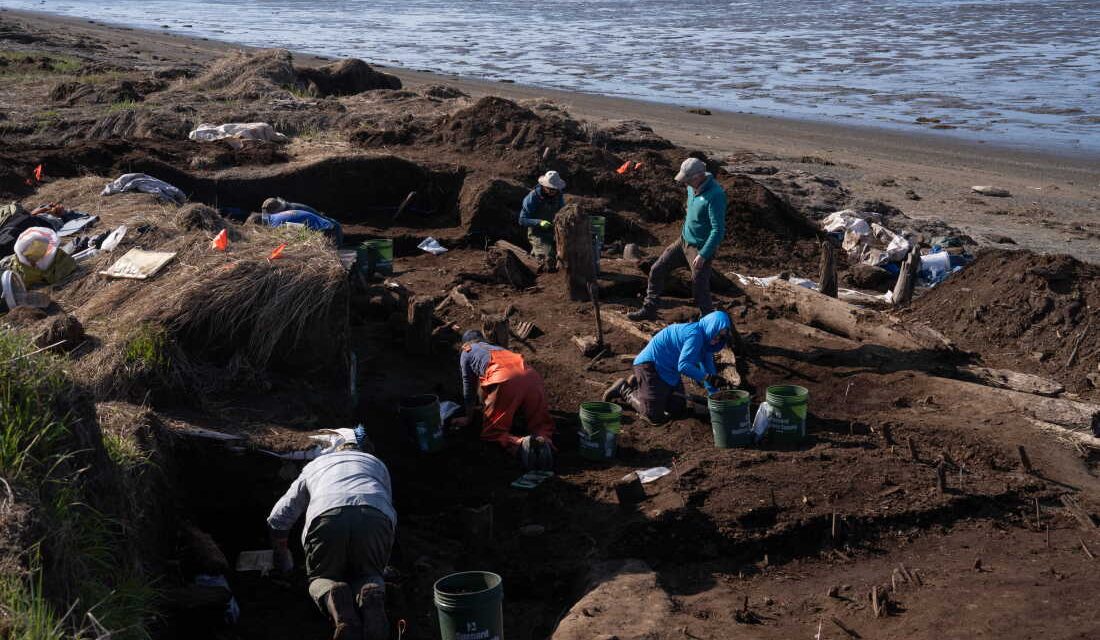
On June 8, a group of volunteer excavators and archaeologists worked diligently at the Nunalleq dig site near Quinhagak, Alaska. Their mission: to recover artifacts before nature reclaims them. The operation, spearheaded by archaeologist Rick Knecht, aims to protect objects that are vital to the cultural identity of the Yup’ik people.
In October, remnants of Typhoon Halong caused extensive flooding, affecting multiple villages in western Alaska. Houses shook, and infrastructure suffered damages in Quinhagak. Jenny Matthew and her husband toured the beach on four-wheelers, observing the aftermath. The storm had exposed layers of tundra, revealing artifacts along the shoreline.
Among the scattered artifacts was a wooden bowl, centuries old. Residents crafted such objects between 400 and 600 years ago. These relics offer a deep connection to the Yup’ik culture before Western contact, uncovering stories of resilience and skill.
Challenges of Erosion and Climate Change
The storm not only scattered artifacts but also heightened erosion threats. Coastal buffers have worn down, leaving less land between the Bering Sea and the dig site. This summer, archaeologists launched an emergency operation to salvage as many artifacts as possible.
Knecht’s team has unearthed numerous cultural items since beginning work in 2009. These include hand-carved animals, wooden masks, and kayak fragments. The frozen ground has preserved many objects that would otherwise have decayed in different conditions.
Urgent Recovery Efforts
Volunteers, operating on limited funds from organizations like the Pacific Northwest Archaeological Society, face mounting pressure. Rising sea levels and reduced permafrost, fueled by climate change, further threaten the dig site. Last October’s storm brought the Bering Sea closer than ever. Now, high tides reach the excavation pit.
With autumn storms nearing, Knecht and his team face a race against time. They are raising funds through a GoFundMe campaign and support from Quinhagak Heritage Inc. Knecht emphasizes the urgency with determination, resisting the idea of surrendering artifacts to the sea.
Cultural Significance and Community Involvement
The Nunalleq Culture and Archaeology Center serves as a repository for these cultural treasures. Elizabeth Church, director of Quinhagak Heritage Inc., underscores the importance of preserving ancestral items for future generations. The center allows both descendants and the public to connect with Quinhagak’s past.
Artifacts symbolize a community’s resourcefulness in adapting to environmental changes. Church highlights the significance of knowing one’s resilient and talented heritage, aiding cultural identity.
As fall approaches, the push to protect Quinhagak’s archaeological heritage grows ever more urgent. Each piece unearthed not only provides historical insight but also fosters a deeper sense of connection and identity among the people of Quinhagak.
 National Museum of African American History Celebrates 10th Anniversary with Powerful Exhibit
  Karen Covell’s Influence on Hollywood’s Prayer Network
  Managing Drying Rivers: The Need for New Approaches
  Coastal Damage from Kelvin Waves and Rising Sea Levels in Southern California
  Review: The Birth of the Pill at TimeLine Theatre
  Heat Dome Tightens Over South-Central US with Triple-Digit Temperatures