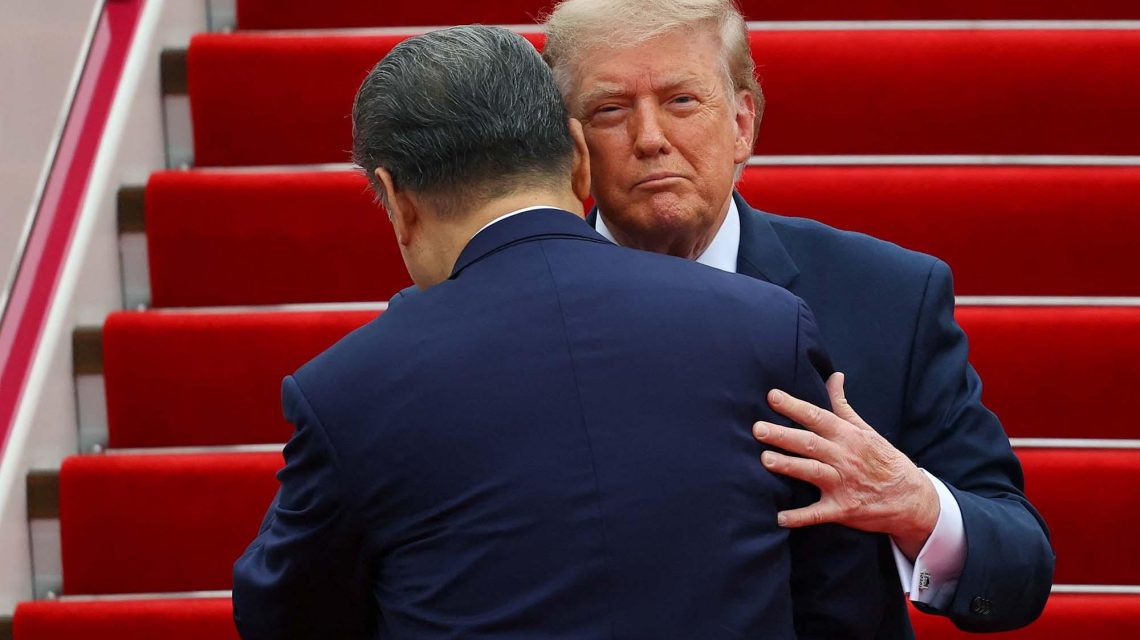
Chinese President Xi Jinping welcomed President Donald Trump at Shenzhen Airport on November 18, 2026, for the Asia-Pacific Economic Cooperation (APEC) Leaders Summit. This event, marked by a surprising hug for Trump, stirred significant reactions in the media. Critics interpreted this as Trump aligning with authoritarian figures.
Despite appearances, Trump’s actions before the summit spoke volumes about his stance towards China. A key move was signing a trade deal with Thailand, allowing duty-free entry for American goods into Thailand. This agreement also aimed to stop China from exploiting Thai ports to bypass tariffs.
Furthermore, Trump reaffirmed the 1951 Mutual Defense Treaty with the Philippines. He also announced the Quad — comprising Australia, Japan, India, and the US — would conduct joint anti-submarine patrols in the South China Sea. This strategic move targeted China’s unauthorized military presence in the region.
Domestically, Trump directed the Commerce Department to halt high-end chip sales to China and Southeast Asia, following issues like the Alice Huang scandal. Sales will only proceed if firm regulations prevent products from reaching China.
Although Trump engaged in diplomatic gestures, it reflected cautious engagement. China’s track record, like failing to uphold a recent trade agreement, influenced this approach. Promised shipments, such as rare earth elements, and agricultural purchases were not fulfilled. Concurrently, fentanyl precursors continued reaching North American cartels, exacerbating domestic issues.
Cybersecurity threats added to tensions, with China accused of cyberattacks and financial cybertheft. These activities extended to supporting North Korea, including monetary laundering for Kim Jong-un. Furthermore, China allegedly supplied Russia and Iran with resources, adding friction to global conflicts.
Despite the presence of advisors advocating cooperation, evidence suggests Trump’s strategy involved cautious balancing. His approach to Xi highlighted the principle of maintaining a close watch on potential adversaries, reflecting pragmatic diplomacy.
Steven W. Mosher, writing in his capacity as President of the Population Research Institute and author, underscores this viewpoint in his analysis of Trump’s strategies towards China.
 Challenges Faced by Military Families and the President’s Military Spouse Commission
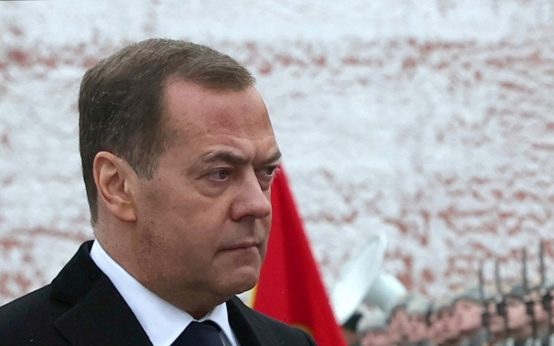 Russia’s Nuclear Strike Warning Amid Tensions with Ukraine and NATO
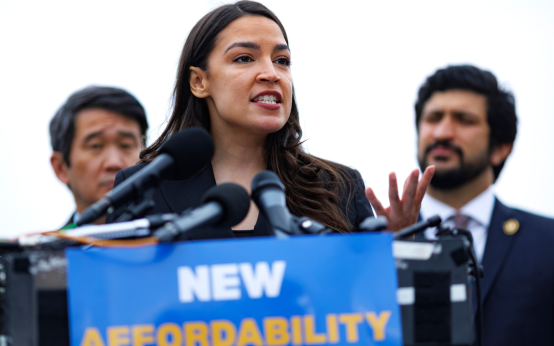 Democrats Push for $25 Federal Minimum Wage After 2026 Midterm Victory
 Bridging Divides: Renewing Connections This Season
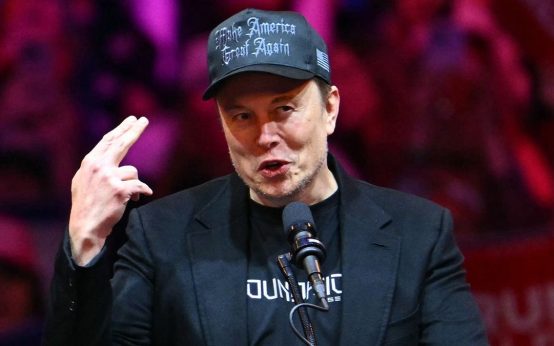 Democrats Call Elon Musk an ‘Opportunist’ After Political Shift
 Massachusetts Sues ICE Over Courthouse Arrests