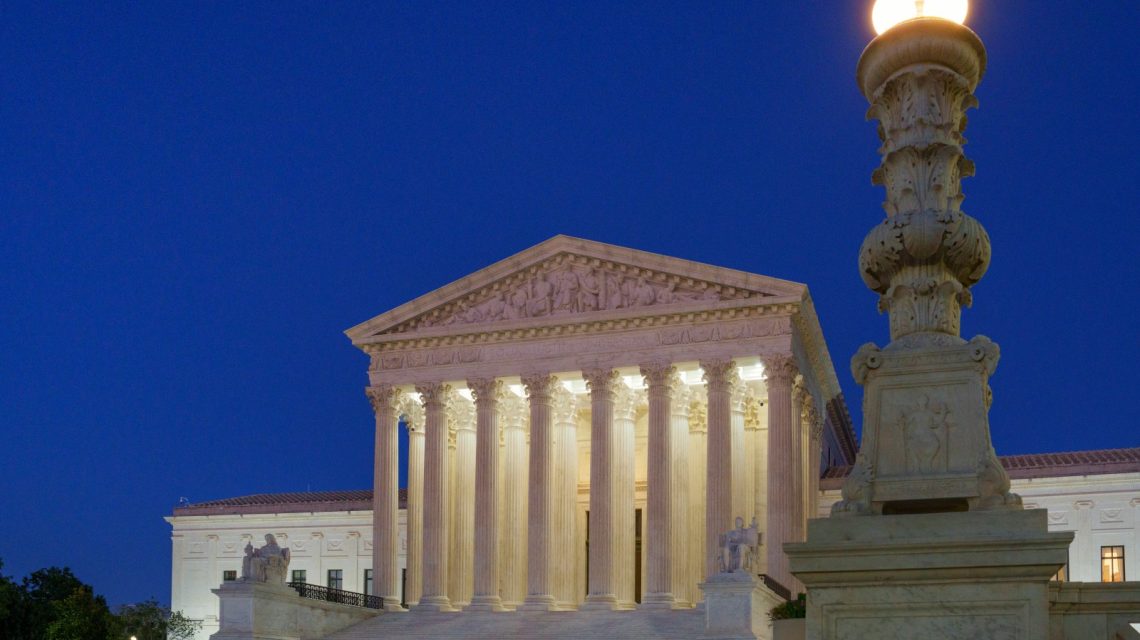
The United States Supreme Court is set to hear a significant case, Johnson v. United States Congress, which will decide if veterans can directly sue in federal district court over unconstitutional federal benefits laws or must use the Veterans Affairs review system. This case, originating from a Florida veteran’s challenge to a law reducing disability benefits for incarcerated veterans, could impact all veterans facing similar issues.
Alison Weir, Executive Director of the Connecticut Veterans Legal Center and Air Force Veteran, emphasized the importance of allowing veterans to challenge the constitutionality of laws through federal courts. She stated, “We do not believe that Congress intended to strip this right from veterans when they passed the Veterans’ Judicial Review Act [VJRA] in 1988.” Johnson’s attorney and the U.S. Department of Justice were contacted for further comment.
Background of ‘Johnson v. United States Congress’
Floyd D. Johnson, an ex-U.S. Army infantryman, was convicted and imprisoned for 40 years in 2013. While incarcerated, he applied for VA disability benefits due to PTSD linked to military service. Initially receiving 70 percent, Johnson’s benefits rose to 80 percent before being reduced to 10 percent due to a cap on payments for veterans incarcerated longer than 60 days.
Johnson’s lawsuit, claiming the cap violates the Constitution, was dismissed by the District Court in 2022. In August 2025, the 11th Circuit Court of Appeals upheld the dismissal, noting Johnson’s incorrect target in the lawsuit and affirming the requirement to challenge decisions through the VA system as per VJRA.
Johnson’s argument draws from the 1974 Supreme Court ruling in Johnson v. Robison, where the court held that constitutional challenges to veteran benefits laws could bypass the VA system. Kristin E. Hickman of the University of Minnesota remarked on the Supreme Court’s historical reluctance to allow Congress to restrict judicial review of constitutional issues.
The Supreme Court’s Agreement to Hear the Case
The reason for the Supreme Court’s decision to hear the appeal in April was not specified, but conflicts in interpreting the VJRA and the 1974 precedent likely influenced it. Hickman noted that lower courts have disagreed on whether the VJRA allows district courts to directly hear constitutional challenges of benefits laws.
Johnson argues that Congress never removed the district courts’ power to hear such challenges when enacting the VJRA. The government, conversely, contends that the VJRA provides an exclusive system for reviewing benefits-related laws.
Implications for Veterans’ Legal Challenges
The Supreme Court’s decision will clarify whether veterans can challenge benefits laws directly in district courts. Victory for Johnson could allow veterans to file constitutional challenges without using the VA system. According to advocacy groups, this would protect veterans’ rights against potentially unconstitutional laws enacted by Congress. Military-Veterans Advocacy maintains that the VJRA’s intent was to broaden judicial review avenues, not limit them.
If the government prevails, veterans must continue using the VA’s review process, facing delays in bringing constitutional challenges to court. The Supreme Court’s oral arguments on this issue are set for Monday, with a decision expected in the ongoing 2026/2027 term.
 Israel Condemns British Green Party’s View on Zionism
  AI Reduces Political Ad Costs, Sparking Debate on Impact
  Spain’s Prime Minister Announces Early Elections
  Former Special Counsel Jack Smith’s Notable Appearance at Music Festival
  Public Discontent with Trump’s Second Term
  The Ongoing Debate Over the Death Penalty: A Case in Tennessee