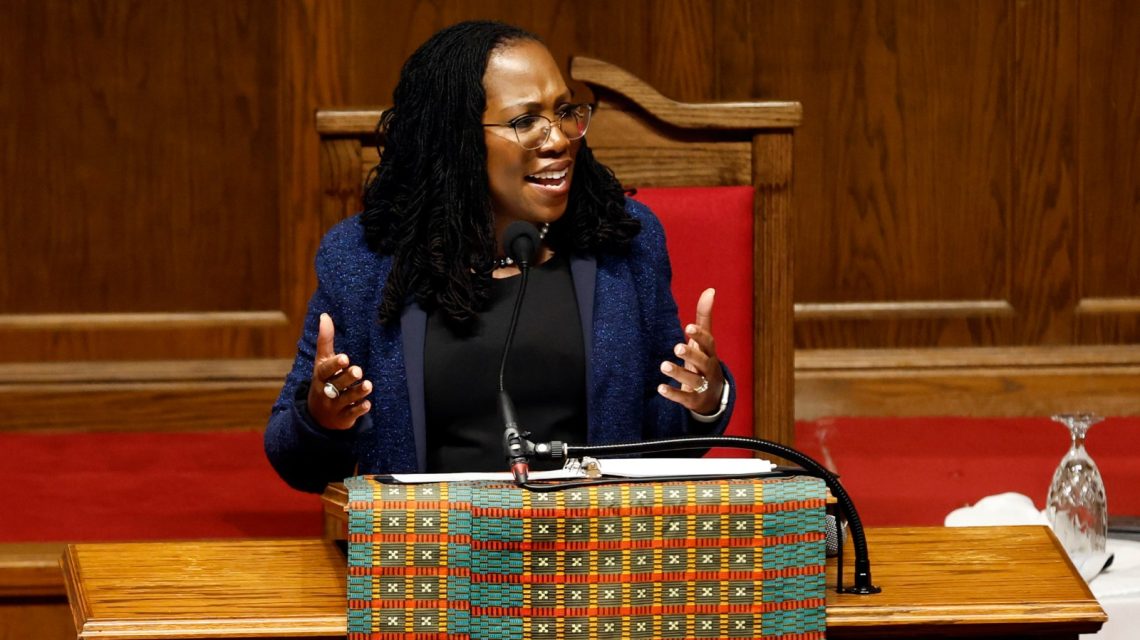
The Supreme Court has significantly restricted the ability of federal prisoners to seek early release. The Court decided that claims challenging the validity of a conviction cannot be raised through the compassionate release statute. This decision met resistance from Justice Ketanji Brown Jackson, who disagreed with her peers.
The Court’s Decision
The ruling, led by Justice Amy Coney Barrett, emphasized that challenges to the legality of convictions should be pursued through the traditional habeas process. The Court argued this approach is consistent with federal law and ensures prisoners do not bypass the strict limits Congress set on post-conviction challenges.
Jackson, the sole dissenter, argued that the majority’s decision improperly narrowed the compassionate release statute. She emphasized that this law serves as a safety mechanism to correct unjust sentences. Jackson raised concerns that the ruling could prevent legitimate claims from being heard, criticizing the majority for creating a rule that denies courts the ability to address such issues.
The Case in Focus
The case involved Joe Fernandez, who received a life sentence for a murder-for-hire in the Bronx, New York, in 2000. Sentenced in 2013, Fernandez has repeatedly contested his sentence. A trial judge had previously granted his release on compassionate grounds, citing doubts about the key testimony against him. However, the Supreme Court’s decision overturns this outcome, reinforcing the separation between legal challenges to convictions and sentence reductions, which are traditionally reserved for reasons like illness or age.
The Majority’s Perspective
The Supreme Court’s conservative majority stressed federal prisoners cannot leverage compassionate release to challenge their convictions. Instead, such claims should proceed through the habeas process, designed for post-conviction challenges. The Court underlined the importance of maintaining the integrity of federal habeas law, which includes strict deadlines and limits on repeat filings. The justices warned that allowing conviction-related claims through compassionate release could lead to endless relitigation of cases long after their conclusion.
Opinions of Sotomayor and Kagan
Justices Sonia Sotomayor and Elena Kagan agreed with reversing Fernandez’s release but rejected the majority’s rationale. Sotomayor’s concurring opinion argued the Court unnecessarily imposed sweeping limits on compassionate release not supported by the statute. She cautioned that the ruling could curtail judicial discretion and block valid claims due to overlap with conviction arguments.
Sotomayor proposed a narrower test, focusing on whether new significant circumstances had arisen since sentencing. She contended compassionate release should address post-sentencing changes, not revisit issues already decided. Applying her framework, Sotomayor noted Fernandez failed to present new evidence or substantial changed circumstances, justifying the denial of relief without the broad restrictions imposed by the majority.
Jackson’s Concerns
Justice Jackson warned of the decision’s wider implications, notably in cases hinting at potential innocence. She stressed that courts should retain discretion in extreme situations, like the emergence of new evidence questioning guilt. By closing off this option, the majority, Jackson argued, compromises a congressional tool intended to ensure fair treatment and maintain the justice system’s capacity for mercy. She noted the difficulty in defining the line between a valid compassionate release claim and a habeas claim, suggesting the majority’s chosen limitation may not fit well with compassionate release’s purpose.
For Fernandez, the invalidation of his compassionate release means he remains imprisoned for the murder-for-hire conviction.