Every morning, hundreds of individuals gather at Beijing’s Temple of Heaven to practice tai chi, a routine resembling birds spreading their wings. This ancient practice, born over 300 years ago, remains a vital part of Chinese culture.
‘The environment is great and the air is good too,’ said Ye Guirong, 64, surrounded by trees.
Most practitioners are in their 60s, utilizing group and solitary exercises often set to calming music. Ye first engaged with tai chi in 2010, later leading a dedicated group.
When new participants join, leaders teach fundamental moves, such as ‘White Crane Spreads Its Wings’ and ‘Part the Wild Horse’s Mane’. Progress is periodically evaluated.
The tai chi group, Cypress Grove, consists of about 30 members. Recently, Zu Hong, 59, completed a 24-movement routine, eager to learn more. Zu aimed for exercise, drawn to the Temple of Heaven’s beauty.
Founded in the 15th century under a Ming dynasty ruler, this site bridges heaven and earth. The Hall of Prayer for Good Harvests, central to this complex, served as the ceremonial hub for emperor-led rituals.
Today, it stands largely as a tourist landmark, with accessible gardens.
In China, tai chi embraces martial art and philosophy. Central to it is the concept of qi, life energy flowing throughout the body.
Traditional Chinese medicine views health through qi’s path via meridians. Acupuncture and such practices regulate qi.
According to James Miller, professor at Duke Kunshan University, practices like tai chi activate qi, integral to Daoism and broader Chinese perspectives.
Qi exists beyond the body, infusing nature with life.
‘This is also why it’s traditional to establish temples on mountains,’ Miller noted.
Several tai chi styles employ unique forms. Ye’s group meets daily at 7:40 a.m., practicing Yang-style. Sessions often last an hour and a half, exploring various sets, some adding swords or fans.
Ye emphasizes the health benefits, noting increased vitality among participants.
Recognized as the earliest tai chi style, Chen-style originated in the 17th century with Chen Wangting, a military leader turned spiritual seeker.
Tai Chi master Chen Haitao spoke of Wangting’s transformative awakening, where his body meridians opened, achieving enlightenment.
Wangting, driven to share this discovery, crafted movement to convey his awakening. Both tai chi as a martial art and its philosophy aim to harmonize.
‘Taijiquan suits everyone who applies its principles correctly,’ Chen Haitao remarked.
 Navy Veteran Generald Wilson Reflects on Emotional National Anthem Performance
 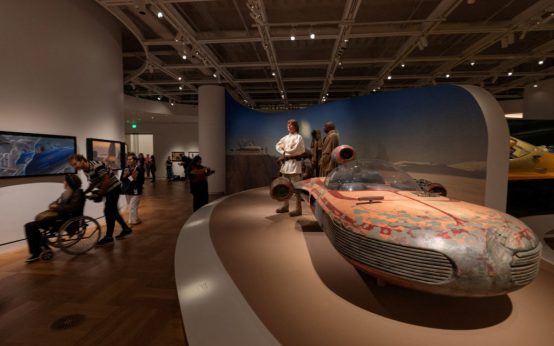 Lucas Museum of Narrative Art: A New Cultural Landmark
 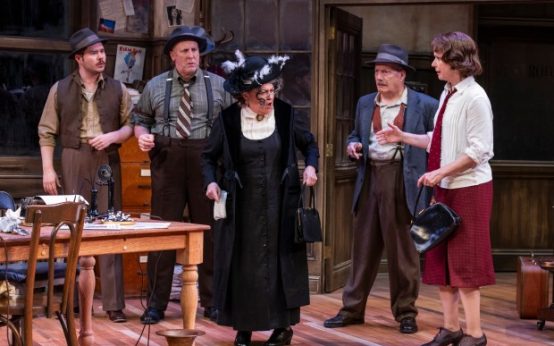 Northlight Theatre’s ‘The Front Page’: A Satirical Nod to Chicago’s Journalistic Past
  The Value of Unsupervised Play in Child Development
  Why the Creative Class and Global City Concepts Lost Momentum
  Aurora’s Moon Festival Showcases Cultural Diversity and Community Engagement